

Crypto Whale Data
@0x1d7a9641dcccfe07c722bede8b3c2221cc19d4ca
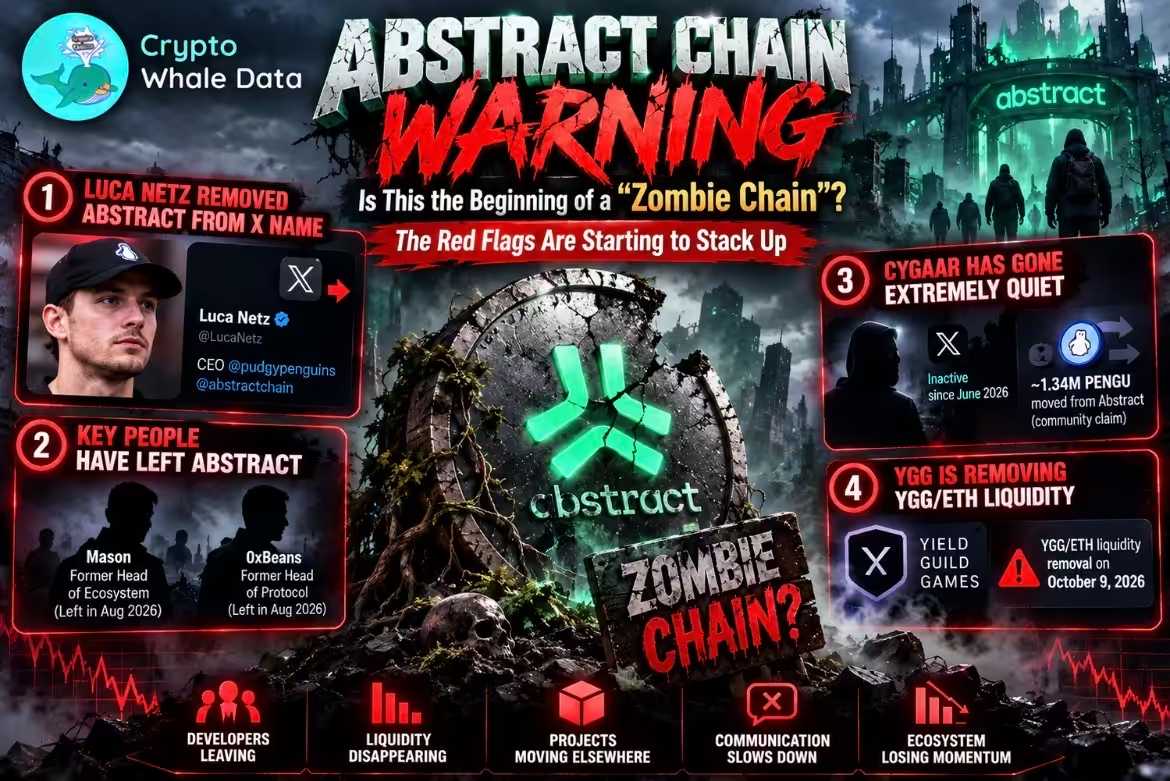
ABSTRACT CHAIN WARNING: Is This the Beginning of a “Zombie Chain”? The Red Flags Are Starting to Stack Up
Something feels increasingly uncomfortable around Abstract Chain.
No, Abstract has not officially announced that it is shutting down. There is currently no confirmed statement saying the blockchain is being discontinued.
But crypto investors have learned this lesson many times before:
A blockchain rarely dies with one dramatic announcement.
Sometimes it happens slowly.
The builders leave.
Important people become quiet.
Liquidity disappears.
Projects start moving elsewhere.
Communication slows down.
And eventually, users wake up to discover that the ecosystem they were farming, building, or investing in has become a shadow of what it once promised to be.
Right now, several warning signs surrounding Abstract are beginning to appear at the same time.
That does not prove the chain is dying.
But it is enough to justify serious caution.
RED FLAG 1: Luca Netz Removed the Abstract Identifier From His X Name
One of the developments triggering the latest wave of FUD involves Luca Netz, CEO of Pudgy Penguins and one of the most recognizable figures associated with the Abstract ecosystem.
Reports circulated on October 1 that Netz had removed the Abstract identifier from his X account name.
Importantly, this point needs context.
His profile has continued to reference @abstractchain in his bio, so claims that he completely removed Abstract from his profile appear to exaggerate what happened.
Still, in crypto, symbolism matters.
Founders understand that even the smallest social-media change can trigger speculation, especially when confidence in an ecosystem is already weakening.
By itself?
Probably nothing.
Combined with everything else happening?
People are paying attention.
RED FLAG 2: Key People Have Already Left Abstract
This is where the situation becomes more difficult to dismiss.
In August 2026, Mason, who served as Abstract’s Head of Ecosystem, announced that his time at Abstract had ended.
Mason had been deeply involved with builders even before the chain launched.
His departure was therefore significant.
However, there is important context: Abstract did not simply eliminate the ecosystem role. Raj Patel subsequently announced that he was becoming the new Head of Ecosystem, while Abstract introduced its Builder XP program.
Then there is 0xBeans.
The former Head of Protocol at Abstract also wrapped up his time at the project in August 2026 to focus on other on-chain protocols and experiments.
One senior departure can happen anywhere.
Two departures do not automatically mean disaster.
But when several important people leave within a relatively short period, investors are justified in asking:
What exactly is changing behind the scenes?
RED FLAG 3: Cygaar Has Gone Extremely Quiet
Another name attracting attention is Cygaar, one of the developers strongly associated with Abstract.
Reports circulating this week noted that his X account has been largely inactive since June 2026.
Even more concerning, community posts have claimed that a wallet associated with Cygaar moved assets away from Abstract.
One report puts the movement at approximately 1.34 million PENGU, although the wallet attribution itself should be treated as a community claim rather than definitive proof of Cygaar’s intentions.
Again:
Moving assets does not mean abandoning a blockchain.
Silence does not mean a shutdown.
But crypto markets do not operate purely on confirmed facts.
They operate on confidence.
And confidence becomes fragile when influential developers suddenly disappear from public view while rumors about capital leaving the ecosystem begin spreading.
RED FLAG 4: YGG Is Removing Its YGG/ETH Liquidity From Abstract
This may be the most concrete development of all.
Yield Guild Games is removing its YGG/ETH liquidity pair from Abstract Chain on October 9, 2026.
Users have been advised to swap or bridge their tokens from Abstract before the liquidity pair is removed.
That sounds alarming.
But there is a crucial detail:
The move follows the shutdown of YGG Play, meaning YGG’s withdrawal from Abstract should not automatically be interpreted as YGG declaring that Abstract itself is failing.
Even so, from the perspective of an Abstract user, the result is the same:
Liquidity is leaving.
And liquidity is the bloodstream of every blockchain ecosystem.
When meaningful liquidity disappears, users should pay attention.
Is Abstract Becoming a “Zombie Chain”?
This is the question circulating through parts of the community.
A “Zombie Chain” doesn’t necessarily mean a blockchain literally stops producing blocks.
The infrastructure can continue running.
Transactions can continue working.
Wallets can continue connecting.
The website can remain online.
But the ecosystem can slowly lose the things that actually make a blockchain valuable:
Developers. Users. Liquidity. Applications. Attention. Capital. Momentum.
That is the real danger.
A chain does not need to technically shut down to become economically irrelevant.
And this is why the current situation around Abstract deserves attention.
But Don’t Confuse FUD With Confirmed Collapse
There is another side to this story that should not be ignored.
Abstract is still operating.
In August, it launched Builder XP, designed to reward projects contributing to the ecosystem.
Raj Patel stepped into the Head of Ecosystem position after Mason’s departure.
And reports discussing the shutdown rumors themselves acknowledge that Abstract was still publishing XP-related updates as recently as September 29.
These are not the actions you would normally expect from a network that has publicly decided to shut down tomorrow.
Therefore:
There is currently no solid evidence that Abstract Chain is about to close.
The shutdown narrative remains speculation.
But there is also a dangerous mistake investors make repeatedly:
Waiting for official confirmation after the market has already reacted.
The Biggest Risk Right Now Isn’t Technology — It’s Uncertainty
Crypto markets can survive bad news.
What they struggle with is uncertainty.
If Abstract publicly explains its direction, updates its roadmap, clarifies the status of key developers, demonstrates meaningful ecosystem growth, and reassures developers about its long-term strategy, much of this FUD could disappear quickly.
But until that happens, unanswered questions remain.
Why have multiple important people left?
Why has Cygaar become so quiet?
What is Abstract’s next major growth catalyst?
Which major applications are committed to staying?
Where is new liquidity coming from?
What does the next 12 months of Abstract actually look like?
Those are the questions that matter.
Not memes.
Not XP.
Not speculation about an airdrop.
Execution.
Staying on the Sidelines May Be the Safer Position Until We Get Answers
There is an old rule in crypto:
You don’t have to participate in every opportunity.
Sometimes protecting capital is more important than chasing the next reward.
That doesn’t mean everyone needs to panic, dump assets, or immediately bridge everything away from Abstract.
But anyone holding significant assets on the chain, providing liquidity, buying ecosystem tokens, or farming purely in expectation of future incentives should understand that the risk profile has changed.
This is no longer just another quiet week.
There are now enough warning signals to justify watching Abstract much more carefully.
Personally, I would want to see stronger confirmation of the project’s long-term direction before taking additional risk.
Until Abstract provides clearer answers, staying cautious — and possibly staying on the sidelines — is not unreasonable.
Because in crypto, sometimes the most expensive mistake isn’t selling too early.
It’s ignoring warning signs until everyone else sees them too.
Abstract isn’t dead.
Abstract hasn’t announced a shutdown.
But right now, the ecosystem is facing a confidence test.
And the next few weeks could tell us whether this is simply another wave of FUD…
or the beginning of something much more serious.

⚠️ ABSTRACT CHAIN WARNING: Is This the Beginning of a “Zombie Chain”? The Red Flags Are Starting to Stack Up Something feels increasingly uncomfortable around Abstract Chain. No, Abstract has not officially announced that it is shutting down. There is currently no confirmed statement saying the blockchain is being discontinued. But crypto investors have learned this lesson many times before: A blockchain rarely dies with one dramatic announcement. Sometimes it happens slowly. The builders leave. Important people become quiet. Liquidity disappears. Projects start moving elsewhere. Communication slows down. And eventually, users wake up to discover that the ecosystem they were farming, building, or investing in has become a shadow of what it once promised to be. Right now, several warning signs surrounding Abstract are beginning to appear at the same time. That does not prove the chain is dying. But it is enough to justify serious caution. ⸻ 🚨 RED FLAG #1: Luca Netz Removed the Abstract Identifier From His X Name One of the developments triggering the latest wave of FUD involves Luca Netz, CEO of Pudgy Penguins and one of the most recognizable figures associated with the Abstract ecosystem. Reports circulated on October 1 that Netz had removed the Abstract identifier from his X account name. Importantly, this point needs context. His profile has continued to reference @abstractchain in his bio, so claims that he completely removed Abstract from his profile appear to exaggerate what happened. Still, in crypto, symbolism matters. Founders understand that even the smallest social-media change can trigger speculation, especially when confidence in an ecosystem is already weakening. By itself? Probably nothing. Combined with everything else happening? People are paying attention. ⸻ 🚨 RED FLAG #2: Key People Have Already Left Abstract This is where the situation becomes more difficult to dismiss. In August 2026, Mason, who served as Abstract’s Head of Ecosystem, announced that his time at Abstract had ended. Mason had been deeply involved with builders even before the chain launched. His departure was therefore significant. However, there is important context: Abstract did not simply eliminate the ecosystem role. Raj Patel subsequently announced that he was becoming the new Head of Ecosystem, while Abstract introduced its Builder XP program. Then there is 0xBeans. The former Head of Protocol at Abstract also wrapped up his time at the project in August 2026 to focus on other on-chain protocols and experiments. One senior departure can happen anywhere. Two departures do not automatically mean disaster. But when several important people leave within a relatively short period, investors are justified in asking: What exactly is changing behind the scenes? ⸻ 🚨 RED FLAG #3: Cygaar Has Gone Extremely Quiet Another name attracting attention is Cygaar, one of the developers strongly associated with Abstract. Reports circulating this week noted that his X account has been largely inactive since June 2026. Even more concerning, community posts have claimed that a wallet associated with Cygaar moved assets away from Abstract. One report puts the movement at approximately 1.34 million PENGU, although the wallet attribution itself should be treated as a community claim rather than definitive proof of Cygaar’s intentions. Again: Moving assets does not mean abandoning a blockchain. Silence does not mean a shutdown. But crypto markets do not operate purely on confirmed facts. They operate on confidence. And confidence becomes fragile when influential developers suddenly disappear from public view while rumors about capital leaving the ecosystem begin spreading. ⸻ 🔥 RED FLAG #4: YGG Is Removing Its YGG/ETH Liquidity From Abstract This may be the most concrete development of all. Yield Guild Games is removing its YGG/ETH liquidity pair from Abstract Chain on October 9, 2026. Users have been advised to swap or bridge their tokens from Abstract before the liquidity pair is removed. That sounds alarming. But there is a crucial detail: The move follows the shutdown of YGG Play, meaning YGG’s withdrawal from Abstract should not automatically be interpreted as YGG declaring that Abstract itself is failing. Even so, from the perspective of an Abstract user, the result is the same: Liquidity is leaving. And liquidity is the bloodstream of every blockchain ecosystem. When meaningful liquidity disappears, users should pay attention. ⸻ 🧟 Is Abstract Becoming a “Zombie Chain”? This is the question circulating through parts of the community. A “Zombie Chain” doesn’t necessarily mean a blockchain literally stops producing blocks. The infrastructure can continue running. Transactions can continue working. Wallets can continue connecting. The website can remain online. But the ecosystem can slowly lose the things that actually make a blockchain valuable: Developers. Users. Liquidity. Applications. Attention. Capital. Momentum. That is the real danger. A chain does not need to technically shut down to become economically irrelevant. And this is why the current situation around Abstract deserves attention. ⸻ ⚠️ But Don’t Confuse FUD With Confirmed Collapse There is another side to this story that should not be ignored. Abstract is still operating. In August, it launched Builder XP, designed to reward projects contributing to the ecosystem. Raj Patel stepped into the Head of Ecosystem position after Mason’s departure. And reports discussing the shutdown rumors themselves acknowledge that Abstract was still publishing XP-related updates as recently as September 29. These are not the actions you would normally expect from a network that has publicly decided to shut down tomorrow. Therefore: There is currently no solid evidence that Abstract Chain is about to close. The shutdown narrative remains speculation. But there is also a dangerous mistake investors make repeatedly: Waiting for official confirmation after the market has already reacted. ⸻ 🚨 The Biggest Risk Right Now Isn’t Technology — It’s Uncertainty Crypto markets can survive bad news. What they struggle with is uncertainty. If Abstract publicly explains its direction, updates its roadmap, clarifies the status of key developers, demonstrates meaningful ecosystem growth, and reassures developers about its long-term strategy, much of this FUD could disappear quickly. But until that happens, unanswered questions remain. Why have multiple important people left? Why has Cygaar become so quiet? What is Abstract’s next major growth catalyst? Which major applications are committed to staying? Where is new liquidity coming from? What does the next 12 months of Abstract actually look like? Those are the questions that matter. Not memes. Not XP. Not speculation about an airdrop. Execution. ⸻ 🔥 Staying on the Sidelines May Be the Safer Position Until We Get Answers There is an old rule in crypto: You don’t have to participate in every opportunity. Sometimes protecting capital is more important than chasing the next reward. That doesn’t mean everyone needs to panic, dump assets, or immediately bridge everything away from Abstract. But anyone holding significant assets on the chain, providing liquidity, buying ecosystem tokens, or farming purely in expectation of future incentives should understand that the risk profile has changed. This is no longer just another quiet week. There are now enough warning signals to justify watching Abstract much more carefully. Personally, I would want to see stronger confirmation of the project’s long-term direction before taking additional risk. Until Abstract provides clearer answers, staying cautious — and possibly staying on the sidelines — is not unreasonable. Because in crypto, sometimes the most expensive mistake isn’t selling too early. It’s ignoring warning signs until everyone else sees them too. Abstract isn’t dead. Abstract hasn’t announced a shutdown. But right now, the ecosystem is facing a confidence test. And the next few weeks could tell us whether this is simply another wave of FUD… or the beginning of something much more serious. Ref: https://paykalken.com #AbstractChain #Abstract #CryptoWarning #ZombieChain #CryptoNews #Blockchain #Web3 #PudgyPenguins #CryptoRisk #CryptoFUD