In the world of decentralized finance (DeFi), swapping tokens is one of the most common activities users perform. Whether you are trading on a decentralized exchange (DEX), providing liquidity, or interacting with a blockchain-based application, you will eventually encounter an important concept called slippage.
Table of Contents

For many beginners, the word slippage can be confuseing. Why does the price change between the moment you submit a trade and when it is executed? Why does a swap sometimes fail? And why do most decentralized exchanges allow users to set something called slippage tolerance?
Understanding slippage is critical for anyone participating in the crypto ecosystem. Without understanding how it works, traders may end up receiving fewer tokens than expected or losing value due to rapid price changes.
In this comprehensive guide, we will explore everything you need to know about slippage in crypto swaps, including:
- What slippage means in trading
- Why slippage happens
- How slippage affects decentralized exchanges
- The role of liquidity pools
- How to adjust slippage tolerance
- Strategies to reduce slippage
- How Web3 communities like Animalverse.social can educate users about DeFi trading risks
By the end of this article, you will have a clear understanding of slippage and how to manage it effectively when swapping cryptocurrencies.
What Is Slippage?
Slippage refers to the difference between the expected price of a trade and the actual price at which the trade is executed.
In crypto swaps, slippage occurs when the price of a token changes between the time a user submits a transaction and the moment it is confirmed on the blockchain.
For example:
- You attempt to swap 1 ETH for 2000 USDT
- During the transaction confirmation process, the price changes
- You receive 1985 USDT instead
The difference between 2000 USDT and 1985 USDT is caused by slippage.
Slippage can happen in both directions:
Positive slippage
You receive more tokens than expected
Negative slippage
You receive fewer tokens than expected
However, most traders worry about negative slippage, since it reduces the value of their trade.
Why Slippage Happens in Crypto Swaps
There are several reasons why slippage occurs in decentralized exchanges.
Understanding these causes helps traders make better decisions when swapping tokens.
1. Market Volatility
Cryptocurrency markets are extremely volatile.
Prices can change within seconds due to:
- Large trades
- News events
- Market sentiment
- Whale activity
If a token’s price moves while your transaction is waiting for confirmation, slippage occurs.
This is particularly common during:
- Bull markets
- Token launches
- High trading activity
2. Low Liquidity
Liquidity refers to how easily an asset can be bought or sold without affecting its price.
In decentralized exchanges, liquidity comes from liquidity pools.
If a token has low liquidity, even small trades can move the price significantly.
Example:
Liquidity pool contains:
- 10 ETH
- 20,000 USDT
A large swap will dramatically change the ratio of the pool.
This causes high slippage.
3. Large Trade Size
The bigger the trade, the more likely it will cause price impact.
In automated market maker (AMM) systems like Uniswap, prices are determined by the formula:
x * y = k
Where:
x = token A in the pool
y = token B in the pool
When someone swaps a large amount of tokens, it shifts the ratio in the pool and changes the price.
This creates slippage.
4. Network Congestion
Blockchain networks sometimes experience congestion.
This causes transactions to take longer to confirm.
Examples include:
When confirmation takes longer, prices may move before the swap completes.
This increases slippage risk.
Slippage in Decentralized Exchanges (DEX)
Unlike centralized exchanges, decentralized exchanges use Automated Market Makers (AMMs) instead of traditional order books.
Popular DEX platforms include:
AMMs rely on liquidity pools instead of buyers and sellers.
When a user performs a swap, the pool price changes instantly.
Because of this mechanism, slippage is a natural part of AMM trading.
Slippage Tolerance Explained
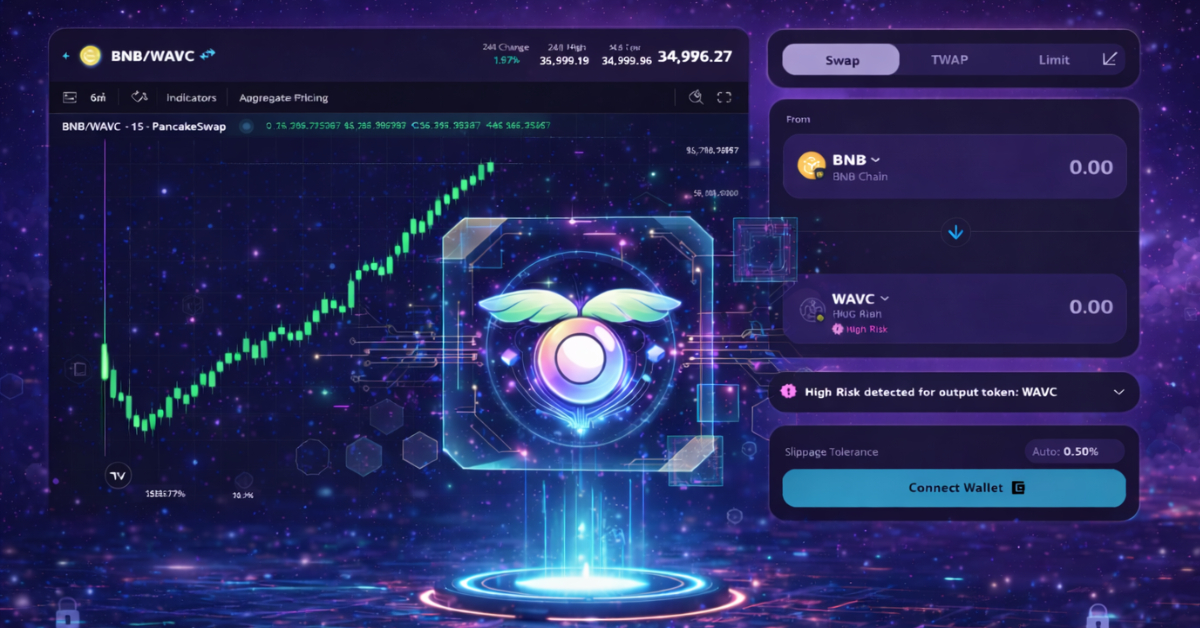
Most decentralized exchanges allow users to set a slippage tolerance before executing a swap.
Slippage tolerance is the maximum percentage difference between the expected price and the executed price that a user is willing to accept.
Example settings:
0.1%
0.5%
1%
3%
If the price moves beyond the selected tolerance, the transaction fails.
This protects users from unexpected losses.
Example of Slippage Tolerance
Suppose you are swapping tokens worth $1000.
You set slippage tolerance to 1%.
This means the transaction will only execute if the price difference stays within $10.
If the difference becomes larger, the swap will revert.
High Slippage vs Low Slippage
Understanding when to use higher or lower slippage tolerance is important.
Low Slippage (0.1% – 0.5%)
Best for:
- Stablecoins
- High liquidity pairs
- Large liquidity pools
Advantages:
- Protects from price manipulation
- Reduces losses
Disadvantages:
- Transactions may fail frequently
Medium Slippage (0.5% – 1%)
Common setting for most swaps.
Balanced approach between execution success and price protection.
High Slippage (2% – 5% or more)
Used for:
- New tokens
- Low liquidity coins
- Meme tokens
Advantages:
- Higher chance of transaction success
Disadvantages:
- Risk of receiving significantly fewer tokens
How Slippage Affects Token Swaps
Slippage directly affects how many tokens you receive.
Let’s examine a scenario.
You want to swap:
1000 USDT → TOKEN X
Expected output:
500 TOKEN X
But due to slippage you receive:
485 TOKEN X
That difference represents trading cost.
Over time, frequent slippage can reduce trading profits significantly.
Slippage and MEV (Maximum Extractable Value)
Another important concept connected to slippage is MEV (Maximum Extractable Value).
MEV occurs when bots observe pending transactions in the blockchain mempool.
These bots may perform actions like:
Front-running
Back-running
Sandwich attacks
Example of a sandwich attack:
- Bot sees your swap transaction
- Bot buys the token first
- Your trade executes at a worse price
- Bot sells after your trade
This increases slippage losses for the user.
How to Reduce Slippage When Swapping
There are several strategies traders can use to reduce slippage risk.
1. Trade in High Liquidity Pools
Tokens with larger liquidity pools have smaller price impacts.
Examples:
ETH / USDC
BTC / ETH
Stablecoin pairs
High liquidity = lower slippage.
2. Break Large Trades into Smaller Trades
Instead of swapping $50,000 at once, split the trade into multiple smaller swaps.
This reduces price impact on the liquidity pool.
3. Adjust Slippage Tolerance Carefully
Never set extremely high slippage unless necessary.
A safe range for most trades is:
0.5% – 1%
Higher settings should only be used when liquidity is low.
4. Trade During Lower Network Activity
When the network is less congested:
- Transactions confirm faster
- Prices move less
This reduces slippage risk.
5. Use Aggregator Platforms
DEX aggregators search multiple liquidity pools to find the best price.
Popular aggregators include:
1inch
Matcha
Paraswap
These platforms help reduce slippage by splitting trades across multiple pools.
Slippage in Web3 Gaming and SocialFi
As Web3 gaming and SocialFi platforms grow, more users interact with tokens directly inside applications.
Platforms like Animalverse.social introduce communities to blockchain ecosystems where token swaps, rewards, and decentralized markets become common features.
Understanding slippage becomes essential for users who:
- Swap tokens
- Earn rewards
- Trade in-game assets
- Participate in DeFi ecosystems
Educational content about slippage helps communities become more financially literate in the Web3 space.
Slippage vs Price Impact
Many beginners confuse slippage and price impact.
They are related but not identical.
Price Impact
The change in token price caused directly by your trade.
Slippage
The difference between expected and executed price.
Price impact often leads to slippage, especially for large swaps.
Real Example of Slippage in DeFi
Suppose a liquidity pool contains:
10,000 TOKEN A
10,000 TOKEN B
Price:
1 TOKEN A = 1 TOKEN B
Now a trader swaps 2,000 TOKEN A.
The pool ratio changes dramatically.
New price may become:
1 TOKEN A = 0.83 TOKEN B
This difference causes slippage.
Slippage Risks for New Tokens
New crypto tokens typically experience high slippage because:
- Liquidity pools are small
- Trading activity is unpredictable
- Bots actively monitor trades
This is why many DEX interfaces suggest higher slippage tolerance for new tokens.
However, traders must be cautious because extremely high slippage may lead to:
- Poor trade execution
- MEV attacks
- Unexpected losses
How Slippage Works on Different Blockchains
Slippage behavior varies depending on the blockchain network.
Ethereum
- High gas fees
- Slower confirmation during congestion
- Slippage risk increases during busy periods
BNB Chain
- Faster transactions
- Lower fees
- Slippage mostly related to liquidity
Solana
- Very fast confirmation
- Lower slippage caused by network delays
Layer 2 Networks
Examples:
Arbitrum
Optimism
Base
Layer 2 networks reduce congestion, helping minimize slippage caused by transaction delays.
Slippage in Automated Trading Bots
Many advanced traders use trading bots that automatically adjust slippage settings.
These bots can:
- Monitor liquidity pools
- Detect price changes
- Optimize trade timing
However, beginners should understand the basics before using automation tools.
Best Slippage Settings for Beginners
For most users, the following guidelines work well.
Stablecoin swaps
0.1% – 0.3%
Major crypto pairs
0.3% – 0.8%
Low liquidity tokens
1% – 3%
New tokens
3% – 10% (high risk)
The Future of Slippage Reduction
DeFi technology continues to evolve.
New solutions are being developed to reduce slippage.
These include:
Intent-based trading
MEV protection
Batch auctions
Cross-chain liquidity aggregation
These innovations aim to create fairer and more efficient trading environments.
Conclusion
Slippage is a fundamental concept in decentralized trading.
It represents the difference between the expected price of a swap and the price at which the transaction actually executes.
Slippage occurs due to factors such as:
- Market volatility
- Low liquidity
- Large trade size
- Network congestion
- MEV attacks
By understanding how slippage works, traders can protect themselves from unexpected losses and improve their DeFi trading strategies.
For Web3 communities like Animalverse.social, educating users about concepts like slippage is an important step toward building a smarter and safer decentralized ecosystem.
As decentralized finance continues to grow, understanding slippage will remain a key skill for anyone participating in the blockchain economy.
Join our gang by purchasing the Animalverse Club NFT, which is the key to accessing a ton of benefits.
Animalverse SoicialFi is a web3 social media platform de signed to connect users around the world without the influence of algorithms, promoting equal access to information. The platform aims to create a decentralized environment where users can freely share and consume content and send crypto, which is fully consistent with the principles of blockchain technology. Let’s be a part of AVC ecosystem Community Trending BlackMarketplace Groups Games Jobs Financial Blog News
FAQ: Slippage in Crypto Swaps
What is slippage in crypto trading?
Slippage in crypto trading refers to the difference between the expected price of a trade and the price at which the trade is actually executed. This usually happens because cryptocurrency prices can change quickly between the moment a transaction is submitted and when it is confirmed on the blockchain.
Why does slippage happen during a token swap?
Slippage occurs because of several factors including market volatility, low liquidity, large trade size, and network congestion. When the price of a token changes before a transaction is confirmed, the final execution price may differ from the expected price.
What is slippage tolerance?
Slippage tolerance is the maximum price difference a trader is willing to accept between the expected price and the executed price. Most decentralized exchanges allow users to set slippage tolerance as a percentage before performing a token swap.
What happens if slippage exceeds the tolerance level?
If the price moves beyond the user’s slippage tolerance, the transaction will automatically fail or revert. This protects traders from executing swaps at significantly worse prices than expected.
Is slippage always negative?
No, slippage can be positive or negative.
Negative slippage means you receive fewer tokens than expected, while positive slippage means you receive more tokens than expected due to favorable price movement.
How does liquidity affect slippage?
Liquidity plays a major role in determining slippage. Tokens with high liquidity pools experience smaller price changes during trades, while tokens with low liquidity often have higher slippage because even small trades can significantly affect the price.
Why do new tokens have higher slippage?
New tokens often have small liquidity pools and limited trading activity, which makes their prices more sensitive to trades. Because of this, decentralized exchanges may require higher slippage tolerance when swapping newly launched tokens.
What is the difference between slippage and price impact?
Price impact refers to the change in token price caused by your own trade.
Slippage refers to the difference between the expected price and the final execution price. Price impact can contribute to slippage but they are not exactly the same.
What is a good slippage tolerance setting?
A common slippage tolerance range is:
0.1% – 0.5% for stablecoin swaps
0.5% – 1% for major cryptocurrencies
1% – 3% for lower liquidity tokens
Higher slippage tolerance may be required for newly launched tokens.
Can high slippage cause a transaction to fail?
Yes. If the slippage tolerance is set too low, the trade may fail because the price moves outside the allowed range before the transaction confirms.
How can traders reduce slippage?
Traders can reduce slippage by:
Trading in high liquidity pools
Splitting large trades into smaller transactions
Using DEX aggregators
Trading during periods of low network congestion
What is slippage in decentralized exchanges (DEX)?
In decentralized exchanges, slippage occurs because DEX platforms use Automated Market Makers (AMMs) instead of traditional order books. The price of tokens is determined by the ratio of assets inside liquidity pools, which changes whenever trades are executed.
Does network congestion affect slippage?
Yes. When a blockchain network is congested, transactions take longer to confirm. During this delay, token prices may change, which increases the likelihood of slippage.
What are liquidity pools?
Liquidity pools are smart contracts that contain pairs of tokens used for trading on decentralized exchanges. These pools allow users to swap tokens without relying on traditional buyers and sellers.
What is a sandwich attack related to slippage?
A sandwich attack happens when bots detect a pending transaction and place trades before and after it to profit from the price movement. This can increase slippage and cause traders to receive worse prices during swaps.
Why do decentralized exchanges require slippage settings?
DEX platforms require slippage settings because blockchain transactions cannot be instantly executed. The slippage tolerance ensures that users are protected from major price changes before their trades are finalized.
Does slippage affect small trades?
Small trades usually experience less slippage because they have minimal impact on liquidity pools. Larger trades are more likely to cause significant price changes and higher slippage.
Can slippage be avoided completely?
Slippage cannot be completely avoided in decentralized trading, but it can be minimized by choosing liquid trading pairs, appropriate slippage settings, and optimal trading times.
Do centralized exchanges have slippage?
Yes, centralized exchanges can also experience slippage. However, they use order books, which typically reduce slippage compared to automated market maker systems used in decentralized exchanges.
Why is understanding slippage important for Web3 users?
Understanding slippage helps Web3 users make smarter trading decisions, avoid unexpected losses, and navigate decentralized finance platforms safely. As DeFi and Web3 communities grow, learning about slippage becomes essential for anyone swapping tokens or participating in blockchain ecosystems.