
Animalverse.social

Login Now

Create an account
  • Home
  • Blackmarketplace
  • Groups
  • Game
  • Watch
  • Jobs
  • Financial
  • Digital Assets
  • Login
  • Register

CNBC

Profile picture of CNBC

CNBC

@0x39fbc393693d8fba1c4ffe51702e1d1326aed25a

Active 2 days, 18 hours ago
  • Activity
  • Profile
  • Shop
  • Friends
  • Groups
  • Forums
  • Media 115
  • 0

    Friends

  • 0

    Groups

My photos
  • Traders work on the floor of the New York Stock Exchange (NYSE) on October 17, 2025 in New York City. Spencer Platt | Getty Images News | Getty Images This is CNBC’s Morning Squawk newsletter. Subscribe here to receive future editions in your inbox. Here are five key things investors need to know to start the trading day: 1. Pump the breaks The stock market’s recovery rally grinded to a halt yesterday. The culprit: A slide in cryptocurrencies, which put a damper on risk-on investing. Here’s what to know: The three major indexes all broke five-day win streaks. Small-cap stocks also felt the pullback, with the Russell 2000 sliding more than 1%. Investor sentiment was soiled by a sell-off in crypto assets. Bitcoin fell 6% for its worst day since March. Crypto-related stocks and some artificial intelligence plays also dropped in the session, signaling that animal spirits were spooked. But retail stocks bucked the downtrend, with the State Street SPDR S&P Retail ETF (XRT) pushing its one-week gain above 6% as the holiday shopping season kicks into full swing. Follow live markets updates here. 2. Fed head U.S. White House economic adviser Kevin Hassett speaks to reporters at the White House in Washington, D.C., U.S., November 13, 2025. Kevin Lamarque | Reuters President Donald Trump has said he knows who he will nominate to be the next Federal Reserve chair, but the public will have to wait. Even so, people seem to be coming to the same conclusion: National Economic Council Director Kevin Hassett. Across the board, prediction markets are placing a high likelihood that Hassett will succeed Jerome Powell in the role. Hassett told Fox News this weekend that he’d “be happy to serve” if asked. As CNBC’s Jeff Cox writes, the central bank’s next chair will enter the role at a pivotal time for the U.S. economy. They will also have to navigate a Fed that is currently divided on the direction of monetary policy. 3. Charging ahead Hakan Nural | Anadolu | Getty Images Apple said yesterday that its head of artificial intelligence, John Giannandrea, is stepping down and will be replaced by Microsoft and Google alum Amar Subramanya. As CNBC’s Kif Leswing writes, it’s the biggest shakeup to the company’s AI efforts since it launched the Apple Intelligence suite last year. The move also comes as experts warn that Apple’s AI technology is lagging that of its peers. Meanwhile, Nvidia announced that it bought $2 billion of Synopsys stock as part of a partnership to accelerate computing and AI engineering work. Nvidia CEO Jensen Huang called the agreement a “huge deal” on CNBC’s “Squawk on the Street” yesterday. Synopsys shares surged nearly 5% in Monday’s session, while Nvidia added more than 1%. 4. Cost-co A Costco logo is displayed outside one of their stores on Nov. 21, 2025 in San Diego, CA. Kevin Carter | Getty Images Costco is taking the White House to court over President Donald Trump’s tariffs. The wholesaler filed a lawsuit last week asking for a full refund of the new tariffs it has paid this year. The suit also seeks to block those levies from being collected as the Supreme Court weighs the tariffs’ legality. Dozens of other companies have filed similar lawsuits in hopes of securing refunds if the Supreme Court rules against Trump’s tariffs. Even if the court finds the duties are illegal, Costco warned in its suit that it may not be able to get paid back later, pointing to a Dec. 15 deadline that could prevent refunds of any duties it’s already paid. White House spokesman Kush Desai said in a statement that Costco’s suit underscores “the economic consequences of the failure to uphold” Trump’s tariffs. 5. Cyber Monday Thomas Trutschel | Getty Images Yesterday was slated to be one of the most important online shopping events of the year. But companies using Shopify faced an hours-long outage, sending shares of the e-commerce firm down nearly 6% in yesterday’s session. Shopify said some merchants had trouble logging in, while others were not able to access point-of-sale systems. By midafternoon, Shopify — which says it handles more than 10% of all U.S. e-commerce transactions — said its platform was beginning to recover.
  • Silver hit record highs in 2025 – here's why the 'Devil’s metal' has further to run Silver, often nicknamed the ‘Devil’s metal’ because of its volatility, has reached record highs this year and still has further to run despite a supply crunch, according to experts. The metal’s growth value has been running alongside gold’s, which has seen its own rally with the price surging past $4,000 an ounce this year. Silver prices reached a historic peak of $54.47 per troy ounce in mid October, marking a 71% rise year-on-year. They’ve since pared back gains somewhat, but are now growing again, despite low supply levels. “Some people were having to transport silver by plane rather than on cargo ships to meet delivery demand,” Paul Syms, head of EMEA ETF Fixed Income and commodity product management at Invesco, told CNBC. “While we’ve seen the spike up, we’ve seen the price come down a little bit. Longer term, there’s a different dynamic this time that could keep silver at reasonably high prices and maybe continuing to go up for some time to come,” he added. October was only the third time in the past 50 years where silver prices peaked. Other silver price highs include January 1980, when the Hunt brothers amassed a third of the world’s supply as they attempted to corner the market, as well as 2011, following the U.S. debt ceiling crisis when silver and gold were embraced as safe haven assets.
  • The UK’s Autumn Budget included a swathe of tax hikes that will impact most of the British population.
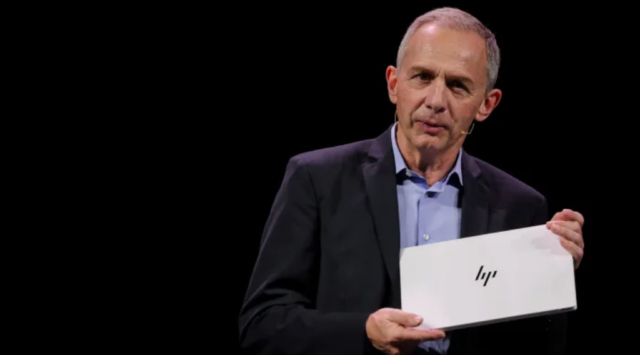
  • HP Inc shares fall on layoffs, weak guidance due to U.S. trade regulations PC and printer maker HP Inc. said Tuesday it’ll lower its headcount by 4,000 to 6,000 people, representing a cut of up to 10%. HP also issued a lower-than-expected earnings projection for the new fiscal year. Shares of the company fell 6% in extended trading. Here’s how HP did versus LSEG consensus estimates: EPS: 93 cents adjusted vs. 92 cents expected Revenue: $14.64 billion vs. $14.48 billion expected HP’s revenue increased 4% year over year in the quarter, which ended on Oct. 31, according to a statement. Net income of $795 million, or 84 cents per share, was up from $763 million, or 80 cents per share, in the same quarter a year ago. For the first quarter of HP’s fiscal 2026, the company called for 73 cents to 81 cents in adjusted net earnings per share, while the LSEG consensus was 79 cents. For all of fiscal 2026, HP sees $2.90 to $3.20 in adjusted per share, below the LSEG consensus of $3.33. “HP’s outlook reflects the added cost driven by the current U.S. trade-related regulations in place, and associated mitigations,” the company said in the statement. The company’s personal systems unit that includes desktop and laptop computers contributed $10.35 billion in revenue, up 8% and above StreetAccount’s $10.15 billion consensus. HP said it expects to complete the headcount reduction by the end of fiscal 2028. The company said the restructuring will result in savings of at least $1 billion in annualized gross run rate by the end of fiscal 2028. HP said it expects to incur about $650 million in charges, of which $250 million will happen in fiscal 2026. “As we look ahead, we see a significant opportunity to embed AI into HP to accelerate product innovation, improve customer satisfaction and boost productivity,” HP CEO Enrique Lores said on a conference call with analysts. Corporate executives across industries are hoping to draw on generative artificial intelligence products to speed up software developers and automate customer service. Cloud providers are buying large supplies of memory to meet computing demand from companies that build AI models, such as Anthropic and OpenAI, leading to a rise in the cost per gigabyte of RAM this year. HP, whose headcount stood at 58,000 as of December, announced a similarly sized round of layoffs in 2022. Several other technology companies have announced layoffs in recent months as U.S. consumers face higher prices and interest rates. “Memory costs are currently 15 to 18% of the cost of a typical PC, and while an increase was expected, its rate has accelerated in the last few weeks,” Lores said. The company does expect to benefit after Microsoft stopped supporting its Windows 10 operating system in October, which will lead people to buy new machines, Lores said. Around 60% of HP’s installed base has moved to Windows 11, he said. HP’s printing business did $4.3 billion in revenue, down 4%. The pricing environment is competitive, and customers are putting off purchases of new models, said Karen Parkhill, the company’s finance chief. As of Tuesday’s close, HP shares were down 25% for the year, while the S&P 500 index has gained 15% in the same period.
  • Alibaba has seen hundreds of billions of dollars wiped off its share price from its peak. The company has faced a regulatory crackdown from Beijing as well as internal turmoil. Click here to read the full story
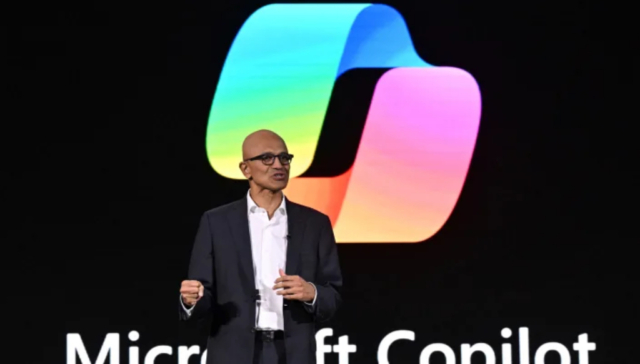
  • Microsoft faces uphill climb to turn enterprise dominance into widespread AI chatbot adoption This Cookie Notice (“Notice”) explains how NBCUniversal and its affiliates (“NBCUniversal” or “we”), along with our partners, including advertisers and vendors, use cookies and similar tracking technologies when you use our websites, applications, such as games, interactive TV, voice-activated assistants, and other services that link to this policy, as well as connected devices, including those used in our theme parks (“Services”). This Notice provides more information about these technologies, your choices, and is part of the NBCUniversal Privacy Policy available here. You should read the Privacy Policy and this Notice for a full picture of NBCUniversal’s use of your information. WHAT ARE COOKIES AND HOW ARE THEY USED? Like many companies, we use cookies (small text files placed on your computer or device) and other tracking technologies on the Services (referred to together from this point forward as “Cookies”, unless otherwise stated), including HTTP cookies, HTML5 and Flash local storage/flash cookies, web beacons/GIFs, embedded scripts, ETags/cache browsers, and software development kits. First-party Cookies First-party Cookies are placed by us (including through the use of third-party service providers) and are used to allow you to use the Services and their features and to assist in analytics activities. Third-party Cookies Certain third parties may place their Cookies on your device and use them to recognize your device when you visit the Services and when you visit other websites or online services. These third parties collect and use this information pursuant to their own privacy policies. Third-party Cookies enable certain features or functionalities, and advertising, to be provided on the Services. Types of Cookies The Services use the following types of first and third-party Cookies for these purposes: Strictly Necessary Cookies: These Cookies are required for Service functionality, including for system administration, security and fraud prevention, and to enable any purchasing capabilities. You can set your browser to block these Cookies, but some parts of the site may not function properly. Information Storage and Access: These Cookies allow us and our partners to store and access information on the device, such as device identifiers. Measurement and Analytics: These Cookies collect data regarding your usage of and performance of the Services, apply market research to generate audiences, and measure the delivery and effectiveness of content and advertising. We and our third-party vendors use these Cookies to perform analytics, so we can improve the content and user experience, develop new products and services, and for statistical purposes. They are also used to recognize you and provide further insights across platforms and devices for the above purposes. Personalization Cookies: These Cookies enable us to provide certain features, such as determining if you are a first-time visitor, capping message frequency, remembering choices you have made (e.g., your language preferences, time zone), and assist you with logging in after registration (including across platforms and devices). These Cookies also allow your device to receive and send information, so you can see and interact with ads and content. Content Selection and Delivery Cookies: Data collected under this category can also be used to select and deliver personalized content, such as news articles and videos. Ad Selection and Delivery Cookies: These Cookies are used to collect data about your browsing habits, your use of the Services, your preferences, and your interaction with advertisements across platforms and devices for the purpose of delivering interest-based advertising content on the Services and on third-party sites. Third-party sites and services also use interest-based Advertising Cookies to deliver content, including advertisements relevant to your interests on the Services and third-party services. If you reject these Cookies, you may see contextual advertising that may be less relevant to you. Social Media Cookies: These Cookies are set by social media platforms on the Services to enable you to share content with your friends and networks. Social media platforms have the ability to track your online activity outside of the Services. This may impact the content and messages you see on other services you visit. We and third parties may associate Measurement And Analytics Cookies, Personalization Cookies, Content Selection, Delivery Cookies, and Reporting, Ad Selection, Delivery and Reporting Cookies, and Social Media Cookies with other information we have about you. COOKIE MANAGEMENT Depending on where you live, you may be able to adjust your Cookie preferences at any time via the “Cookie Settings” link in the footer of relevant websites. You can also use the methods described below to manage Cookies. You must take such steps on each browser or device that you use. If you replace, change or upgrade your browser or device, or delete your cookies, you may need to use these opt-out tools again. As some Cookie-management solutions also rely on Cookies, please adjust your browser Cookie settings carefully, following the relevant instructions below. Browser Controls: You may be able to disable and manage some Cookies through your browser settings. If you use multiple browsers on the same device, you will need to manage your settings for each browser. Please click on any of the below browser links for instructions: Google Chrome Apple Safari Mozila Firefox Microsoft Internet Explorer If the browser you use is not listed above, please refer to your browser’s help menu for information on how to manage Cookies. Please be aware that disabling cookies will not disable other analytics tools we may use to collect information about you or your use of our Services. Analytics Provider Opt-Outs: To disable analytics Cookies you can use the browser controls discussed above or, for some of our providers, you can use their individual opt-out mechanisms: Google’s Privacy Policy and Google Analytics Opt-Out Omniture’s Privacy Policy and Omniture’s Opt-Out Mixpanel’s Privacy Policy and Mixpanel’s Opt-Out The above are examples of our analytics providers and this is not an exhaustive list. We are not responsible for the effectiveness of any other providers’ opt-out mechanisms. Flash Local Storage: These cookies are also known as local shared objects and may be used to store your preferences or display content by us, advertisers and other third-parties. Flash cookies need to be deleted in the storage section of your Flash Player Settings Manager. Interest-Based Advertising: Most third-party advertisers offer a way to opt out of their interest-based advertising. For more information or to opt out of receiving interest-based advertising from participating third-party advertisers, depending on your country of residence, please visit: Digital Advertising Alliance in the US Digital Advertising Alliance of Canada European Interactive Digital Advertising Alliance Australian Digital Advertising Alliance You can also opt out of some of the advertising providers we use by visiting their opt-out pages: Google’s Privacy Policy and Google Analytics Opt-Out Page Facebook Privacy Policy and Facebook’s Opt-Out Page Twitter Privacy Policy and Twitter’s Opt-Out Page Liveramp’s Privacy Policy and Liveramp Opt-Out Page These are examples of our advertising providers and this is not an exhaustive list. In addition, we are not responsible for the effectiveness of any of these providers’ opt-out mechanisms. After you opt out, you will still see advertisements, but they may not be as relevant to you. Mobile Settings: You may manage the collection of information for interest-based advertising purposes in mobile apps via the device’s settings, including managing the collection of location data. To opt out of mobile ad tracking from Nielsen or other third parties, you can do so by selecting the “Limit Ad Tracking” (for iOS devices) or “Opt out of Ads Personalization” (for Android devices) options in your device settings. Connected Devices: For connected devices, such as smart TVs or streaming devices, you should review the device’s settings and select the option that allows you to disable automatic content recognition or ad tracking. Typically, to opt out, such devices require you to select options like “limit ad tracking” or to disable options such as “interest-based advertising,” “interactive TV,” or “smart interactivity”. These settings vary by device type. Cross-Device Tracking: If you would like to opt out of our browser-based cross-device tracking for advertising purposes, you may do so by using the various methods described above. You must opt out separately on each device and each browser that you use. For more information about cross-device matching, please visit the Network Advertising Initiative or the Digital Advertising Alliance. If you opt out of cross-device tracking for advertising purposes, we may still conduct cross-device tracking for other purposes, such as analytics. Consequences of Deactivation of Cookies: If you disable or remove Cookies, some parts of the Services may not function properly. Information may still be collected and used for other purposes, such as research, online services analytics or internal operations, and to remember your opt-out preferences. CONTACT US For inquiries about this Cookies Notice, please contact us at Privacy@nbcuni.com or Chief Privacy Officer, NBCUniversal Legal Department, 30 Rockefeller Plaza, New York, NY 10112, US. For inquiries from users who reside in the European Economic Area, the United Kingdom or Switzerland, please contact us at Privacy@nbcuni.com or Privacy, Legal Department, Central Saint Giles, St Giles High Street, London, WC2H 8NU, UK CHANGES TO THIS NOTICE This Notice may be revised occasionally and in accordance with legal requirements. Please revisit this Cookie Notice regularly to stay informed about our and our analytic and advertising partners’ use of Cookies.
  • Russia's Ryabkov says potential Putin-Trump summit is on the agenda U.S. President Donald Trump speaks with Russian President Vladimir Putin, as they meet to negotiate for an end to the war in Ukraine, at Joint Base Elmendorf-Richardson in Anchorage, Alaska, U.S., August 15, 2025. Kevin Lamarque | Reuters The possibility of another meeting between Russian President Vladimir Putin and U.S. President Donald Trump is on the agenda, a senior Russian diplomat has said. "I wouldn't rule anything out," Deputy Foreign Minister Sergei Ryabkov said in an interview for the state-owned International Affairs magazine, published on Saturday. "The search for a way forward continues," he said. Ryabkov said contacts between Russia and the United States had not been suspended, and channels for dialogue continued to function. Trump and Putin last met in Alaska in August, but failed to produce any agreement to resolve or pause Moscow's war in Ukraine. A subsequent plan to meet in Budapest was suspended indefinitely. "We are working on an ongoing basis. We have well-established formats and channels. Not all of these channels are visible or audible, not all of them need to be discussed publicly, but the fact remains that everything is in working order." Ryabkov said the progress in establishing dialogue between Russia and the U.S. was "impressive". Ryabkov also commented on the possibility of a trilateral meeting with China and the United States on nuclear stability, saying that Moscow did not intend to push Beijing towards it. "We have no questions for China on the subject of arms control and strategic stability," Ryabkov said, adding that Russia had not received any formal proposals from the U.S. regarding such a meeting. Trump has expressed interest in getting China involved in nuclear arms reduction efforts alongside Russia and the U.S. Last month, he said Putin had raised the prospect of a bilateral nuclear de-escalation, and China could be added to that effort.
  • The Arctic’s geostrategic importance is becoming increasingly clear as countries scramble to shore up their resource security. The U.S., Canada and Russia are among the Arctic states jostling for influence in the region.
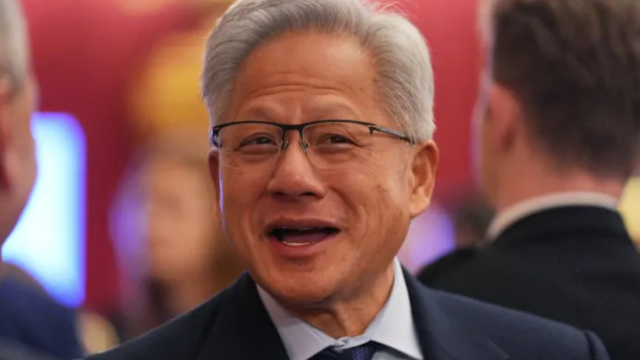
  • Nvidia CEO Jensen Huang surprised investors with a 'half a trillion' forecast. It'll come up at earnings This Cookie Notice (“Notice”) explains how NBCUniversal and its affiliates (“NBCUniversal” or “we”), along with our partners, including advertisers and vendors, use cookies and similar tracking technologies when you use our websites, applications, such as games, interactive TV, voice-activated assistants, and other services that link to this policy, as well as connected devices, including those used in our theme parks (“Services”). This Notice provides more information about these technologies, your choices, and is part of the NBCUniversal Privacy Policy available here. You should read the Privacy Policy and this Notice for a full picture of NBCUniversal’s use of your information. WHAT ARE COOKIES AND HOW ARE THEY USED? Like many companies, we use cookies (small text files placed on your computer or device) and other tracking technologies on the Services (referred to together from this point forward as “Cookies”, unless otherwise stated), including HTTP cookies, HTML5 and Flash local storage/flash cookies, web beacons/GIFs, embedded scripts, ETags/cache browsers, and software development kits. First-party Cookies First-party Cookies are placed by us (including through the use of third-party service providers) and are used to allow you to use the Services and their features and to assist in analytics activities. Third-party Cookies Certain third parties may place their Cookies on your device and use them to recognize your device when you visit the Services and when you visit other websites or online services. These third parties collect and use this information pursuant to their own privacy policies. Third-party Cookies enable certain features or functionalities, and advertising, to be provided on the Services. Types of Cookies The Services use the following types of first and third-party Cookies for these purposes: Strictly Necessary Cookies: These Cookies are required for Service functionality, including for system administration, security and fraud prevention, and to enable any purchasing capabilities. You can set your browser to block these Cookies, but some parts of the site may not function properly. Information Storage and Access: These Cookies allow us and our partners to store and access information on the device, such as device identifiers. Measurement and Analytics: These Cookies collect data regarding your usage of and performance of the Services, apply market research to generate audiences, and measure the delivery and effectiveness of content and advertising. We and our third-party vendors use these Cookies to perform analytics, so we can improve the content and user experience, develop new products and services, and for statistical purposes. They are also used to recognize you and provide further insights across platforms and devices for the above purposes. Personalization Cookies: These Cookies enable us to provide certain features, such as determining if you are a first-time visitor, capping message frequency, remembering choices you have made (e.g., your language preferences, time zone), and assist you with logging in after registration (including across platforms and devices). These Cookies also allow your device to receive and send information, so you can see and interact with ads and content. Content Selection and Delivery Cookies: Data collected under this category can also be used to select and deliver personalized content, such as news articles and videos. Ad Selection and Delivery Cookies: These Cookies are used to collect data about your browsing habits, your use of the Services, your preferences, and your interaction with advertisements across platforms and devices for the purpose of delivering interest-based advertising content on the Services and on third-party sites. Third-party sites and services also use interest-based Advertising Cookies to deliver content, including advertisements relevant to your interests on the Services and third-party services. If you reject these Cookies, you may see contextual advertising that may be less relevant to you. Social Media Cookies: These Cookies are set by social media platforms on the Services to enable you to share content with your friends and networks. Social media platforms have the ability to track your online activity outside of the Services. This may impact the content and messages you see on other services you visit. We and third parties may associate Measurement And Analytics Cookies, Personalization Cookies, Content Selection, Delivery Cookies, and Reporting, Ad Selection, Delivery and Reporting Cookies, and Social Media Cookies with other information we have about you. COOKIE MANAGEMENT Depending on where you live, you may be able to adjust your Cookie preferences at any time via the “Cookie Settings” link in the footer of relevant websites. You can also use the methods described below to manage Cookies. You must take such steps on each browser or device that you use. If you replace, change or upgrade your browser or device, or delete your cookies, you may need to use these opt-out tools again. As some Cookie-management solutions also rely on Cookies, please adjust your browser Cookie settings carefully, following the relevant instructions below. Browser Controls: You may be able to disable and manage some Cookies through your browser settings. If you use multiple browsers on the same device, you will need to manage your settings for each browser. Please click on any of the below browser links for instructions: Google Chrome Apple Safari Mozila Firefox Microsoft Internet Explorer If the browser you use is not listed above, please refer to your browser’s help menu for information on how to manage Cookies. Please be aware that disabling cookies will not disable other analytics tools we may use to collect information about you or your use of our Services. Analytics Provider Opt-Outs: To disable analytics Cookies you can use the browser controls discussed above or, for some of our providers, you can use their individual opt-out mechanisms: Google’s Privacy Policy and Google Analytics Opt-Out Omniture’s Privacy Policy and Omniture’s Opt-Out Mixpanel’s Privacy Policy and Mixpanel’s Opt-Out The above are examples of our analytics providers and this is not an exhaustive list. We are not responsible for the effectiveness of any other providers’ opt-out mechanisms. Flash Local Storage: These cookies are also known as local shared objects and may be used to store your preferences or display content by us, advertisers and other third-parties. Flash cookies need to be deleted in the storage section of your Flash Player Settings Manager.
  • All115
  • Albums1
  • Photos115
  • Videos0
  • Music0

Create an Album

Please login

You need to be logged in to upload Media or to create Album.

Click HERE to login.

Upload

All Photos

  • traders-work-on-the-floor-of-the-new-york-stock-exchange-nyse-on-october-17-2025-in-new-york-city-spencer-platt-getty-images-news-getty-images-this-is-cnbcs-morning-squawk-newsletter

    Traders work on the floor of the New York Stock Exchange (NYSE) on October 17, 2025 in New York City. Spencer Platt | Getty Images News | Getty Images This is CNBC’s Morning Squawk newsletter. Subscribe here to receive future editions in your inbox. Here are five key things investors need to know to start the trading day: 1. Pump the breaks The stock market’s recovery rally grinded to a halt yesterday. The culprit: A slide in cryptocurrencies, which put a damper on risk-on investing. Here’s what to know: The three major indexes all broke five-day win streaks. Small-cap stocks also felt the pullback, with the Russell 2000 sliding more than 1%. Investor sentiment was soiled by a sell-off in crypto assets. Bitcoin fell 6% for its worst day since March. Crypto-related stocks and some artificial intelligence plays also dropped in the session, signaling that animal spirits were spooked. But retail stocks bucked the downtrend, with the State Street SPDR S&P Retail ETF (XRT) pushing its one-week gain above 6% as the holiday shopping season kicks into full swing. Follow live markets updates here. 2. Fed head U.S. White House economic adviser Kevin Hassett speaks to reporters at the White House in Washington, D.C., U.S., November 13, 2025. Kevin Lamarque | Reuters President Donald Trump has said he knows who he will nominate to be the next Federal Reserve chair, but the public will have to wait. Even so, people seem to be coming to the same conclusion: National Economic Council Director Kevin Hassett. Across the board, prediction markets are placing a high likelihood that Hassett will succeed Jerome Powell in the role. Hassett told Fox News this weekend that he’d “be happy to serve” if asked. As CNBC’s Jeff Cox writes, the central bank’s next chair will enter the role at a pivotal time for the U.S. economy. They will also have to navigate a Fed that is currently divided on the direction of monetary policy. 3. Charging ahead Hakan Nural | Anadolu | Getty Images Apple said yesterday that its head of artificial intelligence, John Giannandrea, is stepping down and will be replaced by Microsoft and Google alum Amar Subramanya. As CNBC’s Kif Leswing writes, it’s the biggest shakeup to the company’s AI efforts since it launched the Apple Intelligence suite last year. The move also comes as experts warn that Apple’s AI technology is lagging that of its peers. Meanwhile, Nvidia announced that it bought $2 billion of Synopsys stock as part of a partnership to accelerate computing and AI engineering work. Nvidia CEO Jensen Huang called the agreement a “huge deal” on CNBC’s “Squawk on the Street” yesterday. Synopsys shares surged nearly 5% in Monday’s session, while Nvidia added more than 1%. 4. Cost-co A Costco logo is displayed outside one of their stores on Nov. 21, 2025 in San Diego, CA. Kevin Carter | Getty Images Costco is taking the White House to court over President Donald Trump’s tariffs. The wholesaler filed a lawsuit last week asking for a full refund of the new tariffs it has paid this year. The suit also seeks to block those levies from being collected as the Supreme Court weighs the tariffs’ legality. Dozens of other companies have filed similar lawsuits in hopes of securing refunds if the Supreme Court rules against Trump’s tariffs. Even if the court finds the duties are illegal, Costco warned in its suit that it may not be able to get paid back later, pointing to a Dec. 15 deadline that could prevent refunds of any duties it’s already paid. White House spokesman Kush Desai said in a statement that Costco’s suit underscores “the economic consequences of the failure to uphold” Trump’s tariffs. 5. Cyber Monday Thomas Trutschel | Getty Images Yesterday was slated to be one of the most important online shopping events of the year. But companies using Shopify faced an hours-long outage, sending shares of the e-commerce firm down nearly 6% in yesterday’s session. Shopify said some merchants had trouble logging in, while others were not able to access point-of-sale systems. By midafternoon, Shopify — which says it handles more than 10% of all U.S. e-commerce transactions — said its platform was beginning to recover.

    Profile Photo

    CNBC

  • silver-hit-record-highs-in-2025-heres-why-the-devils-metal-has-further-to-run-silver-often-nicknamed-the-devils-metal-because-of-its-volatility-ha

    Silver hit record highs in 2025 – here's why the 'Devil’s metal' has further to run Silver, often nicknamed the ‘Devil’s metal’ because of its volatility, has reached record highs this year and still has further to run despite a supply crunch, according to experts. The metal’s growth value has been running alongside gold’s, which has seen its own rally with the price surging past $4,000 an ounce this year. Silver prices reached a historic peak of $54.47 per troy ounce in mid October, marking a 71% rise year-on-year. They’ve since pared back gains somewhat, but are now growing again, despite low supply levels. “Some people were having to transport silver by plane rather than on cargo ships to meet delivery demand,” Paul Syms, head of EMEA ETF Fixed Income and commodity product management at Invesco, told CNBC. “While we’ve seen the spike up, we’ve seen the price come down a little bit. Longer term, there’s a different dynamic this time that could keep silver at reasonably high prices and maybe continuing to go up for some time to come,” he added. October was only the third time in the past 50 years where silver prices peaked. Other silver price highs include January 1980, when the Hunt brothers amassed a third of the world’s supply as they attempted to corner the market, as well as 2011, following the U.S. debt ceiling crisis when silver and gold were embraced as safe haven assets.

    Profile Photo

    CNBC

  • the-uks-autumn-budget-included-a-swathe-of-tax-hikes-that-will-impact-most-of-the-british-population

    The UK’s Autumn Budget included a swathe of tax hikes that will impact most of the British population.

    Profile Photo

    CNBC

  • hp-inc-shares-fall-on-layoffs-weak-guidance-due-to-u-s-trade-regulations-pc-and-printer-maker-hp-inc-said-tuesday-itll-lower-its-headcount-by-4000-to-6000-people-representing-a-cut-of-u

    HP Inc shares fall on layoffs, weak guidance due to U.S. trade regulations PC and printer maker HP Inc. said Tuesday it’ll lower its headcount by 4,000 to 6,000 people, representing a cut of up to 10%. HP also issued a lower-than-expected earnings projection for the new fiscal year. Shares of the company fell 6% in extended trading. Here’s how HP did versus LSEG consensus estimates: EPS: 93 cents adjusted vs. 92 cents expected Revenue: $14.64 billion vs. $14.48 billion expected HP’s revenue increased 4% year over year in the quarter, which ended on Oct. 31, according to a statement. Net income of $795 million, or 84 cents per share, was up from $763 million, or 80 cents per share, in the same quarter a year ago. For the first quarter of HP’s fiscal 2026, the company called for 73 cents to 81 cents in adjusted net earnings per share, while the LSEG consensus was 79 cents. For all of fiscal 2026, HP sees $2.90 to $3.20 in adjusted per share, below the LSEG consensus of $3.33. “HP’s outlook reflects the added cost driven by the current U.S. trade-related regulations in place, and associated mitigations,” the company said in the statement. The company’s personal systems unit that includes desktop and laptop computers contributed $10.35 billion in revenue, up 8% and above StreetAccount’s $10.15 billion consensus. HP said it expects to complete the headcount reduction by the end of fiscal 2028. The company said the restructuring will result in savings of at least $1 billion in annualized gross run rate by the end of fiscal 2028. HP said it expects to incur about $650 million in charges, of which $250 million will happen in fiscal 2026. “As we look ahead, we see a significant opportunity to embed AI into HP to accelerate product innovation, improve customer satisfaction and boost productivity,” HP CEO Enrique Lores said on a conference call with analysts. Corporate executives across industries are hoping to draw on generative artificial intelligence products to speed up software developers and automate customer service. Cloud providers are buying large supplies of memory to meet computing demand from companies that build AI models, such as Anthropic and OpenAI, leading to a rise in the cost per gigabyte of RAM this year. HP, whose headcount stood at 58,000 as of December, announced a similarly sized round of layoffs in 2022. Several other technology companies have announced layoffs in recent months as U.S. consumers face higher prices and interest rates. “Memory costs are currently 15 to 18% of the cost of a typical PC, and while an increase was expected, its rate has accelerated in the last few weeks,” Lores said. The company does expect to benefit after Microsoft stopped supporting its Windows 10 operating system in October, which will lead people to buy new machines, Lores said. Around 60% of HP’s installed base has moved to Windows 11, he said. HP’s printing business did $4.3 billion in revenue, down 4%. The pricing environment is competitive, and customers are putting off purchases of new models, said Karen Parkhill, the company’s finance chief. As of Tuesday’s close, HP shares were down 25% for the year, while the S&P 500 index has gained 15% in the same period.

    Profile Photo

    CNBC

  • alibaba-has-seen-hundreds-of-billions-of-dollars-wiped-off-its-share-price-from-its-peak-the-company-has-faced-a-regulatory-crackdown-from-beijing-as-well-as-internal-turmoil-click-here-to-read-the

    Alibaba has seen hundreds of billions of dollars wiped off its share price from its peak. The company has faced a regulatory crackdown from Beijing as well as internal turmoil. Click here to read the full story

    Profile Photo

    CNBC

  • microsoft-faces-uphill-climb-to-turn-enterprise-dominance-into-widespread-ai-chatbot-adoption-this-cookie-notice-notice-explains-how-nbcuniversal-and-its-affiliates-nbcun

    Microsoft faces uphill climb to turn enterprise dominance into widespread AI chatbot adoption This Cookie Notice (“Notice”) explains how NBCUniversal and its affiliates (“NBCUniversal” or “we”), along with our partners, including advertisers and vendors, use cookies and similar tracking technologies when you use our websites, applications, such as games, interactive TV, voice-activated assistants, and other services that link to this policy, as well as connected devices, including those used in our theme parks (“Services”). This Notice provides more information about these technologies, your choices, and is part of the NBCUniversal Privacy Policy available here. You should read the Privacy Policy and this Notice for a full picture of NBCUniversal’s use of your information. WHAT ARE COOKIES AND HOW ARE THEY USED? Like many companies, we use cookies (small text files placed on your computer or device) and other tracking technologies on the Services (referred to together from this point forward as “Cookies”, unless otherwise stated), including HTTP cookies, HTML5 and Flash local storage/flash cookies, web beacons/GIFs, embedded scripts, ETags/cache browsers, and software development kits. First-party Cookies First-party Cookies are placed by us (including through the use of third-party service providers) and are used to allow you to use the Services and their features and to assist in analytics activities. Third-party Cookies Certain third parties may place their Cookies on your device and use them to recognize your device when you visit the Services and when you visit other websites or online services. These third parties collect and use this information pursuant to their own privacy policies. Third-party Cookies enable certain features or functionalities, and advertising, to be provided on the Services. Types of Cookies The Services use the following types of first and third-party Cookies for these purposes: Strictly Necessary Cookies: These Cookies are required for Service functionality, including for system administration, security and fraud prevention, and to enable any purchasing capabilities. You can set your browser to block these Cookies, but some parts of the site may not function properly. Information Storage and Access: These Cookies allow us and our partners to store and access information on the device, such as device identifiers. Measurement and Analytics: These Cookies collect data regarding your usage of and performance of the Services, apply market research to generate audiences, and measure the delivery and effectiveness of content and advertising. We and our third-party vendors use these Cookies to perform analytics, so we can improve the content and user experience, develop new products and services, and for statistical purposes. They are also used to recognize you and provide further insights across platforms and devices for the above purposes. Personalization Cookies: These Cookies enable us to provide certain features, such as determining if you are a first-time visitor, capping message frequency, remembering choices you have made (e.g., your language preferences, time zone), and assist you with logging in after registration (including across platforms and devices). These Cookies also allow your device to receive and send information, so you can see and interact with ads and content. Content Selection and Delivery Cookies: Data collected under this category can also be used to select and deliver personalized content, such as news articles and videos. Ad Selection and Delivery Cookies: These Cookies are used to collect data about your browsing habits, your use of the Services, your preferences, and your interaction with advertisements across platforms and devices for the purpose of delivering interest-based advertising content on the Services and on third-party sites. Third-party sites and services also use interest-based Advertising Cookies to deliver content, including advertisements relevant to your interests on the Services and third-party services. If you reject these Cookies, you may see contextual advertising that may be less relevant to you. Social Media Cookies: These Cookies are set by social media platforms on the Services to enable you to share content with your friends and networks. Social media platforms have the ability to track your online activity outside of the Services. This may impact the content and messages you see on other services you visit. We and third parties may associate Measurement And Analytics Cookies, Personalization Cookies, Content Selection, Delivery Cookies, and Reporting, Ad Selection, Delivery and Reporting Cookies, and Social Media Cookies with other information we have about you. COOKIE MANAGEMENT Depending on where you live, you may be able to adjust your Cookie preferences at any time via the “Cookie Settings” link in the footer of relevant websites. You can also use the methods described below to manage Cookies. You must take such steps on each browser or device that you use. If you replace, change or upgrade your browser or device, or delete your cookies, you may need to use these opt-out tools again. As some Cookie-management solutions also rely on Cookies, please adjust your browser Cookie settings carefully, following the relevant instructions below. Browser Controls: You may be able to disable and manage some Cookies through your browser settings. If you use multiple browsers on the same device, you will need to manage your settings for each browser. Please click on any of the below browser links for instructions: Google Chrome Apple Safari Mozila Firefox Microsoft Internet Explorer If the browser you use is not listed above, please refer to your browser’s help menu for information on how to manage Cookies. Please be aware that disabling cookies will not disable other analytics tools we may use to collect information about you or your use of our Services. Analytics Provider Opt-Outs: To disable analytics Cookies you can use the browser controls discussed above or, for some of our providers, you can use their individual opt-out mechanisms: Google’s Privacy Policy and Google Analytics Opt-Out Omniture’s Privacy Policy and Omniture’s Opt-Out Mixpanel’s Privacy Policy and Mixpanel’s Opt-Out The above are examples of our analytics providers and this is not an exhaustive list. We are not responsible for the effectiveness of any other providers’ opt-out mechanisms. Flash Local Storage: These cookies are also known as local shared objects and may be used to store your preferences or display content by us, advertisers and other third-parties. Flash cookies need to be deleted in the storage section of your Flash Player Settings Manager. Interest-Based Advertising: Most third-party advertisers offer a way to opt out of their interest-based advertising. For more information or to opt out of receiving interest-based advertising from participating third-party advertisers, depending on your country of residence, please visit: Digital Advertising Alliance in the US Digital Advertising Alliance of Canada European Interactive Digital Advertising Alliance Australian Digital Advertising Alliance You can also opt out of some of the advertising providers we use by visiting their opt-out pages: Google’s Privacy Policy and Google Analytics Opt-Out Page Facebook Privacy Policy and Facebook’s Opt-Out Page Twitter Privacy Policy and Twitter’s Opt-Out Page Liveramp’s Privacy Policy and Liveramp Opt-Out Page These are examples of our advertising providers and this is not an exhaustive list. In addition, we are not responsible for the effectiveness of any of these providers’ opt-out mechanisms. After you opt out, you will still see advertisements, but they may not be as relevant to you. Mobile Settings: You may manage the collection of information for interest-based advertising purposes in mobile apps via the device’s settings, including managing the collection of location data. To opt out of mobile ad tracking from Nielsen or other third parties, you can do so by selecting the “Limit Ad Tracking” (for iOS devices) or “Opt out of Ads Personalization” (for Android devices) options in your device settings. Connected Devices: For connected devices, such as smart TVs or streaming devices, you should review the device’s settings and select the option that allows you to disable automatic content recognition or ad tracking. Typically, to opt out, such devices require you to select options like “limit ad tracking” or to disable options such as “interest-based advertising,” “interactive TV,” or “smart interactivity”. These settings vary by device type. Cross-Device Tracking: If you would like to opt out of our browser-based cross-device tracking for advertising purposes, you may do so by using the various methods described above. You must opt out separately on each device and each browser that you use. For more information about cross-device matching, please visit the Network Advertising Initiative or the Digital Advertising Alliance. If you opt out of cross-device tracking for advertising purposes, we may still conduct cross-device tracking for other purposes, such as analytics. Consequences of Deactivation of Cookies: If you disable or remove Cookies, some parts of the Services may not function properly. Information may still be collected and used for other purposes, such as research, online services analytics or internal operations, and to remember your opt-out preferences. CONTACT US For inquiries about this Cookies Notice, please contact us at Privacy@nbcuni.com or Chief Privacy Officer, NBCUniversal Legal Department, 30 Rockefeller Plaza, New York, NY 10112, US. For inquiries from users who reside in the European Economic Area, the United Kingdom or Switzerland, please contact us at Privacy@nbcuni.com or Privacy, Legal Department, Central Saint Giles, St Giles High Street, London, WC2H 8NU, UK CHANGES TO THIS NOTICE This Notice may be revised occasionally and in accordance with legal requirements. Please revisit this Cookie Notice regularly to stay informed about our and our analytic and advertising partners’ use of Cookies.

    Profile Photo

    CNBC

  • russias-ryabkov-says-potential-putin-trump-summit-is-on-the-agenda-u-s-president-donald-trump-speaks-with-russian-president-vladimir-putin-as-they-meet-to-negotiate-for-an-end-to-the-war-in-ukrain

    Russia's Ryabkov says potential Putin-Trump summit is on the agenda U.S. President Donald Trump speaks with Russian President Vladimir Putin, as they meet to negotiate for an end to the war in Ukraine, at Joint Base Elmendorf-Richardson in Anchorage, Alaska, U.S., August 15, 2025. Kevin Lamarque | Reuters The possibility of another meeting between Russian President Vladimir Putin and U.S. President Donald Trump is on the agenda, a senior Russian diplomat has said. "I wouldn't rule anything out," Deputy Foreign Minister Sergei Ryabkov said in an interview for the state-owned International Affairs magazine, published on Saturday. "The search for a way forward continues," he said. Ryabkov said contacts between Russia and the United States had not been suspended, and channels for dialogue continued to function. Trump and Putin last met in Alaska in August, but failed to produce any agreement to resolve or pause Moscow's war in Ukraine. A subsequent plan to meet in Budapest was suspended indefinitely. "We are working on an ongoing basis. We have well-established formats and channels. Not all of these channels are visible or audible, not all of them need to be discussed publicly, but the fact remains that everything is in working order." Ryabkov said the progress in establishing dialogue between Russia and the U.S. was "impressive". Ryabkov also commented on the possibility of a trilateral meeting with China and the United States on nuclear stability, saying that Moscow did not intend to push Beijing towards it. "We have no questions for China on the subject of arms control and strategic stability," Ryabkov said, adding that Russia had not received any formal proposals from the U.S. regarding such a meeting. Trump has expressed interest in getting China involved in nuclear arms reduction efforts alongside Russia and the U.S. Last month, he said Putin had raised the prospect of a bilateral nuclear de-escalation, and China could be added to that effort.

    Profile Photo

    CNBC

  • the-arctics-geostrategic-importance-is-becoming-increasingly-clear-as-countries-scramble-to-shore-up-their-resource-security-the-u-s-canada-and-russia-are-among-the-arctic-states-jostling

    The Arctic’s geostrategic importance is becoming increasingly clear as countries scramble to shore up their resource security. The U.S., Canada and Russia are among the Arctic states jostling for influence in the region.

    Profile Photo

    CNBC

  • nvidia-ceo-jensen-huang-surprised-investors-with-a-half-a-trillion-forecast-itll-come-up-at-earnings-this-cookie-notice-notice-explains-how-nbcuniversal-and-its-affiliates

    Nvidia CEO Jensen Huang surprised investors with a 'half a trillion' forecast. It'll come up at earnings This Cookie Notice (“Notice”) explains how NBCUniversal and its affiliates (“NBCUniversal” or “we”), along with our partners, including advertisers and vendors, use cookies and similar tracking technologies when you use our websites, applications, such as games, interactive TV, voice-activated assistants, and other services that link to this policy, as well as connected devices, including those used in our theme parks (“Services”). This Notice provides more information about these technologies, your choices, and is part of the NBCUniversal Privacy Policy available here. You should read the Privacy Policy and this Notice for a full picture of NBCUniversal’s use of your information. WHAT ARE COOKIES AND HOW ARE THEY USED? Like many companies, we use cookies (small text files placed on your computer or device) and other tracking technologies on the Services (referred to together from this point forward as “Cookies”, unless otherwise stated), including HTTP cookies, HTML5 and Flash local storage/flash cookies, web beacons/GIFs, embedded scripts, ETags/cache browsers, and software development kits. First-party Cookies First-party Cookies are placed by us (including through the use of third-party service providers) and are used to allow you to use the Services and their features and to assist in analytics activities. Third-party Cookies Certain third parties may place their Cookies on your device and use them to recognize your device when you visit the Services and when you visit other websites or online services. These third parties collect and use this information pursuant to their own privacy policies. Third-party Cookies enable certain features or functionalities, and advertising, to be provided on the Services. Types of Cookies The Services use the following types of first and third-party Cookies for these purposes: Strictly Necessary Cookies: These Cookies are required for Service functionality, including for system administration, security and fraud prevention, and to enable any purchasing capabilities. You can set your browser to block these Cookies, but some parts of the site may not function properly. Information Storage and Access: These Cookies allow us and our partners to store and access information on the device, such as device identifiers. Measurement and Analytics: These Cookies collect data regarding your usage of and performance of the Services, apply market research to generate audiences, and measure the delivery and effectiveness of content and advertising. We and our third-party vendors use these Cookies to perform analytics, so we can improve the content and user experience, develop new products and services, and for statistical purposes. They are also used to recognize you and provide further insights across platforms and devices for the above purposes. Personalization Cookies: These Cookies enable us to provide certain features, such as determining if you are a first-time visitor, capping message frequency, remembering choices you have made (e.g., your language preferences, time zone), and assist you with logging in after registration (including across platforms and devices). These Cookies also allow your device to receive and send information, so you can see and interact with ads and content. Content Selection and Delivery Cookies: Data collected under this category can also be used to select and deliver personalized content, such as news articles and videos. Ad Selection and Delivery Cookies: These Cookies are used to collect data about your browsing habits, your use of the Services, your preferences, and your interaction with advertisements across platforms and devices for the purpose of delivering interest-based advertising content on the Services and on third-party sites. Third-party sites and services also use interest-based Advertising Cookies to deliver content, including advertisements relevant to your interests on the Services and third-party services. If you reject these Cookies, you may see contextual advertising that may be less relevant to you. Social Media Cookies: These Cookies are set by social media platforms on the Services to enable you to share content with your friends and networks. Social media platforms have the ability to track your online activity outside of the Services. This may impact the content and messages you see on other services you visit. We and third parties may associate Measurement And Analytics Cookies, Personalization Cookies, Content Selection, Delivery Cookies, and Reporting, Ad Selection, Delivery and Reporting Cookies, and Social Media Cookies with other information we have about you. COOKIE MANAGEMENT Depending on where you live, you may be able to adjust your Cookie preferences at any time via the “Cookie Settings” link in the footer of relevant websites. You can also use the methods described below to manage Cookies. You must take such steps on each browser or device that you use. If you replace, change or upgrade your browser or device, or delete your cookies, you may need to use these opt-out tools again. As some Cookie-management solutions also rely on Cookies, please adjust your browser Cookie settings carefully, following the relevant instructions below. Browser Controls: You may be able to disable and manage some Cookies through your browser settings. If you use multiple browsers on the same device, you will need to manage your settings for each browser. Please click on any of the below browser links for instructions: Google Chrome Apple Safari Mozila Firefox Microsoft Internet Explorer If the browser you use is not listed above, please refer to your browser’s help menu for information on how to manage Cookies. Please be aware that disabling cookies will not disable other analytics tools we may use to collect information about you or your use of our Services. Analytics Provider Opt-Outs: To disable analytics Cookies you can use the browser controls discussed above or, for some of our providers, you can use their individual opt-out mechanisms: Google’s Privacy Policy and Google Analytics Opt-Out Omniture’s Privacy Policy and Omniture’s Opt-Out Mixpanel’s Privacy Policy and Mixpanel’s Opt-Out The above are examples of our analytics providers and this is not an exhaustive list. We are not responsible for the effectiveness of any other providers’ opt-out mechanisms. Flash Local Storage: These cookies are also known as local shared objects and may be used to store your preferences or display content by us, advertisers and other third-parties. Flash cookies need to be deleted in the storage section of your Flash Player Settings Manager.

    Profile Photo

    CNBC

  • samsung-and-other-south-korean-firms-pledge-larger-domestic-investments-after-u-s-tariff-deal-u-s-president-donald-trump-is-presented-with-the-grand-order-of-mugunghwa-during-a-meeting-with-sout

    Samsung and other South Korean firms pledge larger domestic investments after U.S. tariff deal U.S. President Donald Trump is presented with the "Grand Order of Mugunghwa" during a meeting with South Korean President Lee Jae Myung on the sidelines of the Asia-Pacific Economic Cooperation (APEC) leaders' summit in Gyeongju, South Korea, October 29, 2025. Evelyn Hockstein | Reuters Samsung Electronics and other major South Korean companies on Sunday announced fresh domestic investment plans at a meeting with President Lee Jae Myung, who hopes the moves will counter concerns that the firms would prioritize U.S. investments under a trade deal. Lee's meeting with business leaders came days after his government finalized a trade deal with the United States, in which Seoul pledged to invest $350 billion in U.S. industries in exchange for averting the Trump administration's highest tariffs. Samsung, a global leader in computer chips, said it will invest 450 trillion won ($310 billion) over the next five years to expand its domestic operations, including building another production line at its Pyeongtaek manufacturing hub to meet surging global semiconductor demands fueled by artificial intelligence. Samsung said the new line, set to begin operations in 2028, is part of its broader effort to secure additional production capacity in anticipation of rising mid- to long-term demands for memory chips. The company also plans to build AI data centers in the country's southwest South Jeolla Province and the southeastern city of Gumi to support government efforts to reduce the development gap between the greater Seoul metropolitan area and other regions. Hyundai Motor, South Korea's largest automaker, said it plans to invest 125 trillion won ($86.3 billion) from 2026 to 2030 to expand domestic research and development and advance new technologies such as AI, robotics and self-driving cars. SK Group, another semiconductor powerhouse, and shipbuilders Hanwha Ocean and HD Hyundai also announced plans to increase their domestic investments. Both are central to South Korean commitments to boost the U.S. shipbuilding industry, a sector highlighted by President Donald Trump in negotiations with Seoul. In his meeting with the companies' chiefs, Lee credited the business sector for helping his government negotiate the trade deal with Washington but urged the companies to maintain strong domestic investments to ease concerns they might cut spending at home to invest more in America. He said his government is exploring various policy steps, including easing regulations, to help create a more favorable business environment for the companies. SK Chair Chey Tae-won, whose group plans to invest at least 128 trillion won ($88.3 billion) domestically through 2028 with a focus on AI, said the finalization of trade talks with the United States eases uncertainties and paves the way for bolder domestic investment. The two governments released the details of the trade agreement on Friday, including $150 billion in South Korean investments in the U.S. shipbuilding sector and an additional $200 billion in other American industries. Seoul says this will be capped at $20 billion per year to prevent financial instability. The United States agreed to reduce tariffs on South Korean cars and auto parts from 25% to 15%, and to apply tariffs on South Korean semiconductors on terms "no less favorable" than those granted to comparable competitors in the future.

    Profile Photo

    CNBC

  • lawmakers-just-released-a-much-awaited-crypto-market-structure-bill-heres-what-it-means-for-digital-assets-and-what-comes-next-the-u-s-capitol-is-shown-the-morning-after-the-senate-passed-legislat

    Lawmakers just released a much-awaited crypto market structure bill. Here's what it means for digital assets and what comes next The U.S. Capitol is shown the morning after the Senate passed legislation to reopen the federal government on Nov. 11, 2025 on Capitol Hill in Washington, DC. The Senate Agriculture Committee has released a draft of its portion of a much-awaited digital assets market structure bill — a critical step toward accelerating institutional and retail adoption of cryptocurrencies. Unveiled on Monday by Agriculture Chair John Boozman, R-Ark., and Sen. Cory Booker, D-N.J., the bipartisan discussion draft lays the groundwork for creating guardrails for the crypto industry in the U.S. It also establishes guidelines for institutions that want to work with digital assets, from bitcoin and ether to tokenized financial instruments. "This is the most consequential roadmap for how an institution is going to integrate digital assets into their business," Cody Carbone, CEO of crypto trade association Digital Chamber, told CNBC. "It's like the best possible step-by-step of what type of compliance rules requirements they would need to follow to work with crypto." Here are five key takeaways from the discussion draft. 1. Grants favorable regulatory status to some cryptocurrencies The text classifies some of the largest digital assets by market capitalization such as bitcoin and ether as "digital commodities," placing them under the Commodity Futures Trading Commission's purview. This provision removes a major blocker to digital asset adoption for institutional fiduciaries, Juan Leon, an analyst at crypto-focused asset manager Bitwise, told CNBC. "Compliance and risk departments will finally have a federal statute to point to," Leon said. "This shifts the internal conversation … [and] it provides the legal certainty required to move assets into a formal, strategic allocation." It will also create "a starkly bifurcated market" consisting of regulated and unregulated tokens, with the former class of assets seeing "a massive influx of institutional capital, deep liquidity and a robust derivatives ecosystem." 2. Requires crypto firms to segregate funds and manage conflicts of interest The draft calls for crypto companies to "establish governance, personnel, and financial resource separation among affiliated entities that perform distinct regulated functions." Bitwise's Leon interprets the provision as a challenge to the "all-in-one" business model that is common among crypto exchanges. According to those models, an exchange, broker, custodian, and proprietary trading desk are all wrapped up into one entity. In other words, digital asset firms could be required to keep their various businesses separated like traditional financial companies, according to Leon. The change would serve as "a foundational pillar for institutional adoption." 3. Gives the CFTC more power to regulate digital assets The text gives more power to the CFTC, empowering it to work in tandem with the Securities and Exchange Commission to issue joint rulemaking on crypto-related matters. "There's a lot more power or authority delegated to the CFTC to have jurisdiction over this industry," Carbone said. The shift comes after the SEC for years served as the main regulator of digital assets, after it edged out the CFTC to gain authority over the industry. 4. Allows the CFTC to collect fees The draft calls for regulated entities to pay fees to the CFTC. Those fees would go toward registering digital commodity exchanges, brokers and dealers, in addition to conducting oversight of regulated entities and carrying out education and outreach. 5. Establishes listing standards for tokens The text calls for crypto exchanges to only permit trading of digital commodities that are "not readily susceptible to manipulation." It's a provision that could reduce the number of "rug pulls" and other scams that are still common in some parts of the crypto industry, with the goal of establishing standards and building confidence in the market. What's next? The Senate Agriculture Committee's discussion draft is far from final, but it does offer critical insights into the direction of efforts to pass crypto-friendly regulations in the U.S., according to Carbone. "It's not final, it's not done, but this gives a good sense of where Congress is going and what the final rules may be," Carbone said. The committee will likely spend the next few weeks getting feedback on their draft, meaning it may be "almost impossible to get [a final version of this part of the bill] done by the end of the year," he added. However, that period will give lawmakers time to offer more concrete guidance on several issues that are bracketed – or not yet finalized – in the discussion draft. Those include provisions on anti-money laundering rules and regulations specific to decentralized finance players. Several crypto players plan to work in tandem with lawmakers to help iron out those details, among others. "We've long said crypto is a bipartisan issue, and this draft from Chairman Boozman and Senator Booker reflects that," Moonpay President Keith Grossman told CNBC. "It's critical that legislation distinguishes between centralized intermediaries and decentralized systems, and we look forward to working with the Committee to get it right." The discussion draft is only one piece of larger legislative efforts to overhaul regulations for the crypto industry, according to Carbone. Ultimately, the text will be combined with the Senate Banking Committee's draft on the digital assets market structure in a bid to create one comprehensive bill. And although lawmakers are nowhere near the finish line in that process, crypto firms are finding other ways to work with regulators and other authorities to meaningfully advance their industry, Grayscale Investments Chief Legal Officer Craig Salm told CNBC. "In the absence of comprehensive legislation, we've still seen meaningful progress on the regulatory front," Salm said, adding that the SEC, Internal Revenue Service and Treasury Department have recently provided guidance around staking in crypto exchange-traded products. "That said, thoughtful legislation will be critical to solidifying the foundation of the digital asset industry in the U.S. and unlocking even greater value for investors and consumers."

    Profile Photo

    CNBC

  • sony-group-on-tuesday-posted-a-stronger-than-expected-rise-in-second-quarter-operating-profit-and-announced-a-share-buyback-of-up-to-100-billion-japanese-yen-648-million

    Sony Group on Tuesday posted a stronger-than-expected rise in second-quarter operating profit and announced a share buyback of up to 100 billion Japanese yen ($648 million).

    Profile Photo

    CNBC

  • meta-reportedly-projected-10-of-2024-sales-came-from-scam-fraud-ads-meta-projected-that-10-of-its-overall-sales-in-2024-or-about-16-billion-came-from-running-online-ads-for-scams-and-banned-goods

    Meta reportedly projected 10% of 2024 sales came from scam, fraud ads Meta projected that 10% of its overall sales in 2024, or about $16 billion, came from running online ads for scams and banned goods, according to a Thursday report from Reuters. Those kinds of ads included promotions for “fraudulent e-commerce and investment schemes, illegal online casinos and the sale of banned medical products,” according to the Reuters report, which was based on internal company documents. Those documents showed the company’s attempts to measure the prevalence of fraudulent advertising on its apps like Facebook and Instagram. Meta brought in more than $164.5 billion in overall sales for 2024. Last week, the company said that third-quarter sales rose 26% year-over-year to $51.24 billion and that it lifted the low end of its total expenses for the year by $2 billion as part of its massive investments into artificial intelligence. The Reuters report cited a December 2024 document that showed how Meta each year generates roughly $7 billion in annualized sales from so-called “higher risk” scam ads, which are promotions that are clearly deceptive. Each day, Meta shows users an estimated 15 billion of these higher risk scam ads, the Reuters report said, citing a separate document. Although some of the documents show that Meta aims to reduce the amount of bogus ads on its platform, the Reuters report also said that other documents suggest the company is concerned that its business projections could be impacted by any abrupt removal of the fraudulent promotions. A Meta spokesperson said that the company “aggressively” addresses scam and fraud ads on its apps. The projections that 10% of the company’s 2024 ad sales came from bunk ads “was a rough and overly-inclusive estimate rather than a definitive or final figure; in fact, subsequent review revealed that many of these ads weren’t violating at all,” the spokesperson said in a statement. “Unfortunately, the leaked documents present a selective view that distorts Meta’s approach to fraud and scams by focusing on our efforts to assess the scale of the challenge, not the full range of actions we have taken to address the problem,” the spokesperson said.

    Profile Photo

    CNBC

  • nvidia-deepens-india-footprint-with-2-billion-deep-tech-alliance-to-mentor-ai-startups-nvidia-will-help-train-and-mentor-emerging-deep-tech-startups-in-india-as-a-founding-member-of-a-2-billion-inve

    Nvidia deepens India footprint with $2 billion deep tech alliance to mentor AI startups Nvidia will help train and mentor emerging deep tech startups in India as a founding member of a $2 billion investment alliance, deepening its presence in the world’s third-largest startup ecosystem. The U.S. chipmaker has joined the India Deep Tech Alliance (IDTA) — a group of private equity and venture capital investors pledging $2 billion for deep tech investments — as a founding member. Deep tech startups are an umbrella term for emerging companies in semiconductors, space, AI, biotech, robotics, and energy. The world’s most valuable company will offer technical talks and training through its Nvidia Deep Learning Institute to emerging startups in India. Nvidia wants to “provide guidance on AI systems, developer enablement, and responsible deployment, and to collaborate with policymakers, investors, and entrepreneurs,” Vishal Dhupar, Nvidia’s managing director of South Asia, said. Nvidia did not disclose any financial investment, timeline, or training targets, and did not immediately respond to a CNBC request for comment. “Nvidia’s depth of expertise in AI systems, software, and ecosystem-building will benefit our network of investors and entrepreneurs,” said Sriram Viswanathan, founding executive council member of the IDTA. He told CNBC that the pace of innovation is accelerating in India and there could be a “significant number of Indian deep tech companies of global repute” in the next five years. The Indian government is also actively encouraging research and innovation in the deep tech space through major initiatives, including over 100 billion rupees ($1.1 billion USD) under its AI Mission and a separate 1 trillion rupees ($11.2 billion) Research, Development and Innovation Scheme Fund targeting deep tech companies. On Monday, Indian Prime Minister Narendra Modi announced that the country will host the AI Impact Summit in February next year. The event is likely to see the participation of heads of state and top policymakers, along with business leaders such as Jensen Huang, chief executive officer of NVIDIA, and Demis Hassabis, CEO of Google DeepMind. Nvidia’s commitment in India coincides with rising global interest in India’s AI market, where OpenAI counts the country as its second-largest user base. U.S. rivals are also deepening ties: Google recently pledged $15 billion to build an AI hub in the southern city of Visakhapatnam.

    Profile Photo

    CNBC

  • openai-introduces-safety-models-that-other-sites-can-use-to-classify-harms-openai-on-wednesday-announced-two-reasoning-models-that-developers-can-use-to-classify-a-range-of-online-safety-harms-on-thei

    OpenAI introduces safety models that other sites can use to classify harms OpenAI on Wednesday announced two reasoning models that developers can use to classify a range of online safety harms on their platforms. The artificial intelligence models are called gpt-oss-safeguard-120b and gpt-oss-safeguard-20b, and their names reflect their sizes. They are fine-tuned, or adapted, versions of OpenAI's gpt-oss models, which the company announced in August. OpenAI is introducing them as so-called open-weight models, which means their parameters, or the elements that improve the outputs and predictions during training, are publicly available. Open-weight models can offer transparency and control, but they are different from open-source models, whose full source code becomes available for users to customize and modify. Organizations can configure the new models to their specific policy needs, OpenAI said. And since they are reasoning models that show their work, developers will have more direct insight into how they arrive at a particular output. For instance, a product reviews site could develop a policy and use gpt-oss-safeguard models to screen reviews that might be fake, OpenAI said. Similarly, a video game discussion forum could classify posts that discuss cheating. OpenAI developed the models in partnership with Discord, SafetyKit and Robust Open Online Safety Tools, or ROOST, an organization dedicated to building safety infrastructure for AI. The models are initially available in a research preview, and OpenAI said it will seek feedback from researchers and members of the safety community. The announcement could help OpenAI placate some critics who have accused the startup of commercializing and scaling too quickly at the expense of AI ethics and safety. The startup is valued at $500 billion, and its consumer chatbot, ChatGPT, has surpassed 800 million weekly active users. On Tuesday, OpenAI said it's completed its recapitalization, cementing its structure as a nonprofit with a controlling stake in its for-profit business. OpenAI was founded in 2015 as a nonprofit lab, but has emerged as the most valuable U.S. tech startup in the years since releasing ChatGPT in late 2022. "As AI becomes more powerful, safety tools and fundamental safety research must evolve just as fast — and they must be accessible to everyone," ROOST President Camille François, said in a statement. Eligible users can download the model weights on Hugging Face, OpenAI said.

    Profile Photo

    CNBC

  • amazon-layoffs-qualcomms-ai-chips-airbnb-cracks-down-on-halloween-and-more-in-morning-squawk-amazon-logo-on-brick-office-building-facade-with-windows-san-francisco-california-aug-29-2025-smi

    Amazon layoffs, Qualcomm's AI chips, Airbnb cracks down on Halloween and more in Morning Squawk Amazon logo on brick office building facade with windows, San Francisco, California, Aug. 29, 2025. Smith Collection | Gado | Archive Photos | Getty Images This is CNBC's Morning Squawk newsletter. Subscribe here to receive future editions in your inbox. Here are five key things investors need to know to start the trading day: 1. Amazon's cull Amazon is laying off 14,000 workers in its latest round of corporate cuts, the company announced this morning. The layoffs are expected to be the biggest reduction in the company's history, CNBC's Annie Palmer reported yesterday. Nearly every business is expected to be impacted by the cuts, according to a person familiar with the matter. Beth Galetti, Amazon's senior vice president of people experience and technology, wrote in a blog post that the company needs to be "organized more leanly" and have fewer layers. Amazon is the second-largest private employer in the U.S. with upwards of 1.5 million employees. The 14,000 cuts announced this morning represent about 4% of its corporate and tech workforce. Amazon CEO Andy Jassy said earlier this year that the Washington-based company could shrink its workforce by embracing AI. The firm is part of a cohort of large-cap companies that have seen their AI-related productivity increase as the technology becomes mainstream. 2. Chips on the table Budrul Chukrut | SOPA Images | Lightrocket | Getty Images 3. Running a list U.S. Treasury Secretary Scott Bessent speaks to reporters as U.S. President Donald Trump stands next to him aboard Air Force One en route to Tokyo, Japan, for the second stop on his Asia tour, Oct. 27, 2025. Evelyn Hockstein | Reuters Treasury Secretary Scott Bessent confirmed there are five finalists left in the running to succeed Federal Reserve Chair Jerome Powell. On the list: Fed Governors Christopher Waller and Michelle Bowman, National Economic Council Director Kevin Hassett, former Fed Governor Kevin Warsh and BlackRock's Rick Rieder. That's the same group of candidates CNBC reported earlier this month. President Donald Trump said he will likely announce his pick by the end of 2025. Meanwhile, the Federal Open Market Committee will kick off its two-day meeting today, with all eyes on its interest rate decision due tomorrow. 4. iBuyer Roomba vacuums by iRobot are displayed at Best Buy store on January 19, 2024 in San Rafael, California. Justin Sullivan | Getty Images Shares of iRobot tumbled more than 33% yesterday after the company warned in a securities filling that its search for a buyer has reached an impasse. The Roomba maker said negotiations with its last remaining bidder fell through following a "lengthy period of exclusive negotiations" last week. iRobot has been trying to find a buyer for its business since March. The company has been in a rough spot since Amazon dropped its acquisition bid last year. Get Morning Squawk directly in your inbox 5. Party crashers Austin Andres and her son Quinn, 2, shop for pumpkins at Maple Acres Farm in Plymouth Meeting, Pa., Tuesday, Oct. 17, 2017. Matt Rourke | AP If you're in the market for pumpkin carving materials or candy this Halloween season, you're likely in for some sticker shock. An analysis of retail pricing data shows these goods have seen jumps as big as 300% as tariffs raise costs for suppliers. Joe Ens, CEO of Pumpkin Masters parent Signature Brands, told CNBC he hopes shoppers will accept price increases to continue traditions like pumpkin decorating. The average consumer is expected to spend a record $114 tied to Halloween this year, according to the National Retail Federation. Meanwhile, Airbnb is hoping for a quiet Halloween weekend at its rental properties. The company said it will use anti-party technology to quell large gatherings held at bookings in the U.S. and Canada. The Daily Dividend In an exclusive interview with CNBC, Microsoft co-founder Bill Gates said climate change is "super important but has to be considered in terms of overall human welfare." In a letter published ahead of a U.N. climate summit next week, Gates wrote that too many resources are going toward the environment and that more money should go toward fighting poverty and disease.

    Profile Photo

    CNBC

  • amazon-web-services-outage-hits-major-websites-what-we-know-so-far-as-recovery-begins-amazon-web-services-a-leader-in-the-cloud-infrastructure-market-reported-a-major-outage-on-monday-taking-down

    Amazon Web Services outage hits major websites: What we know so far as recovery begins Amazon Web Services, a leader in the cloud infrastructure market, reported a major outage on Monday, taking down numerous big-name websites. AWS cited an "operational issue" affecting "multiple services" and said it was "working on multiple parallel paths to accelerate recovery," in an update at 2:01 a.m. PDT. More than 70 of its own services were affected. Shortly afterward, AWS said it was seeing "significant signs of recovery." By 3:35 a.m. PDT, the issue had been "fully mitigated," AWS said in an update, adding that most AWS service operations "are succeeding normally now." "Some requests may be throttled while we work toward full resolution," it said, noting some services were continuing to work through a backlog. The website Downdetector said that user reports indicated problems at sites including Amazon, Disney+, Lyft, the McDonald's app, The New York Times, Reddit, Ring, Robinhood, Snapchat, T-Mobile, United Airlines, Venmo and Verizon. British government websites Gov.uk and HM Revenue and Customs were also experiencing issues, per Downdetector. A government spokesperson told CNBC: "We are aware of an incident affecting Amazon Web Services, and several online services which rely on their infrastructure. Through our established incident response arrangements, we are in contact with the company, who are working to restore services as quickly as possible." Lloyds Banking Group confirmed some of its services were affected and asked customers "to bear with us" while it works to restore them. Some 20 minutes later, it added that services were coming back online. Some United and Delta customers reported on social media that they couldn't find their reservations online, check in or drop bags. Other social media users cited disruption across cloud-based games, including Roblox and Fortnite, while crypto exchange Coinbase said many users were unable to access the service due to the outage. Graphic design tool Canva said it was "experiencing significantly increased error rates which are impacting functionality on Canva. There is a major issue with our underlying cloud provider." Generate AI search tool Perplexity is also affected. "The root cause is an AWS issue. We're working on resolving it," CEO Aravind Srinivas said in a post on X. It's not the first time major companies have been affected by a technical issue; in July 2024, a faulty software upgrade by cybersecurity firm Crowdstrike revealed just how fragile global technology infrastructure is when it caused Microsoft Windows systems to go dark, creating millions of dollars worth of chaos and grounding thousands of flights in the process. It also affected hospitals and banks. "There's no sign that this AWS outage was caused by a cyber attack - it looks like a technical fault affecting one of Amazon's main data centres," Rob Jardin, chief digital officer at cybersecurity company NymVPN said in a statement. "These issues can happen when systems become overloaded or a key part of the network goes down, and because so many websites and apps rely on AWS, the impact spreads quickly." "This incident is a reminder that cybersecurity isn't only about defending against threats - it's also about resilience. Businesses should plan for technical failures as seriously as they do for cyber attacks, ensuring they have redundancy, backup systems, and multi-cloud strategies to keep services running when the unexpected happens," he added.

    Profile Photo

    CNBC

  • marc-benioffs-call-for-troops-in-sf-leads-tech-investor-ron-conway-to-leave-salesforce-foundation-board-days-after-suggesting-that-president-donald-trump-should-send-federal-troops-to-san-francisco

    Marc Benioff's call for troops in SF leads tech investor Ron Conway to leave Salesforce Foundation board Days after suggesting that President Donald Trump should send federal troops to San Francisco, Salesforce CEO Marc Benioff is facing some consequences. Prominent startup investor Ron Conway, who backed companies including Google, Airbnb and Stripe, resigned from the board of the Salesforce Foundation on Thursday, CNBC has confirmed. Conway is a longtime Democratic donor who was a member of VCs for Kamala, and donated around $500,000 to at least two funds tied to Kamala Harris' unsuccessful 2024 election campaign. The New York Times was first to report on Conway's departure from the Salesforce Foundation. A Salesforce spokesperson confirmed his exit in an e-mailed statement. "We have deep gratitude for Ron Conway and his incredible contributions to the Salesforce Foundation Board for over a decade," the spokesperson said, noting that the group has donated, "$250 million to public schools and education nonprofits to advance opportunity and access for young people, including $30 million announced this week." The Trump administration recently deployed the National Guard to Portland, Oregon and Chicago, sparking protests and lawsuits and resulting in citizens and immigrants being detained without legal representation. In a story published late last week in the New York Times, Benioff indicated that he would welcome troops to San Francisco, home to Salesforce. The company's annual Dreamforce conference began in downtown San Francisco on Tuesday. "We don't have enough cops, so if they can be cops, I'm all for it," Benioff told the Times. Benioff later appeared to walk back his comments, writing on X that safety is "first and foremost, the responsibility of our city and state leaders." However, by that point Tesla CEO Elon Musk and other right-wing figures had seized on his original comments, amplifying them to their audiences. Musk, who has drawn criticism for his personal drug use, characterized downtown San Francisco as a "drug zombie apocalypse." And on Wednesday, Trump called San Francisco "a mess," and suggested possibly sending in the National Guard. According to the Times, Conway told Benioff in an email that their "values were no longer aligned." While Benioff has donated to members of both parties, he has supported Democrats for president, including Barack Obama, Hillary Clinton and Kamala Harris. Conway is founder and managing partner of SV Angel, an early-stage venture firm. He has long been an advocate for tech in San Francisco, having founded trade organization sf.citi and helping start FWD.us, which focused on immigration reform. The Salesforce Foundation isn't his only connection to Benioff's philanthropic efforts. Conway is also a large donor to the UCSF Benioff Children's Hospital. Conway didn't respond to a request for comment. California Governor Gavin Newsom and San Francisco leaders on Wednesday issued statements and held press conferences to deliver the message that federal troops are not welcome in the city, and that crime is coming down. Conway has supported Newsom, including in 2021, when he opposed a recall effort against the Democratic governor.

    Profile Photo

    CNBC

  • musk-calls-for-federal-troops-in-san-francisco-even-as-benioff-softens-stance-as-salesforce-welcomes-tens-of-thousands-of-people-to-san-francisco-for-its-annual-dreamforce-conference-ceo-marc-benioff

    Musk calls for federal troops in San Francisco even as Benioff softens stance As Salesforce welcomes tens of thousands of people to San Francisco for its annual Dreamforce conference, CEO Marc Benioff has found himself in the center of local controversy on a national issue. In an interview with The New York Times published on Friday, Benioff appeared eager for President Donald Trump to send federal troops to his company's hometown, inserting himself into a national debate about whether the president should call the National Guard into various Democrat-led cities that Trump has maligned. The Trump administration recently deployed the National Guard to Portland and Chicago, sparking protests and lawsuits. "We don't have enough cops, so if they can be cops, I'm all for it," Benioff told the Times. Benioff subsequently softened his comments, writing on X on Sunday that safety is "first and foremost, the responsibility of our city and state leaders." But a heated online conversation was already well underway. Tesla CEO Elon Musk, who moved to Texas from California, said federal intervention is needed to deal with crime in San Francisco. In posts on his social network X on Sunday, he said it would be "the only solution at this point," and that "nothing else has or will work." A day earlier Musk characterized downtown San Francisco as a "drug zombie apocalypse." Musk still has big business in and around San Francisco. His artificial intelligence startup xAI, which owns X, has a sizable office in the city, and his brain computer interface company, Neuralink, recently leased a large property in South San Francisco. Tesla relocated to Texas, but the automaker's engineering headquarters remains in Palo Alto, just south of San Francisco. Musk's call for U.S. troops came in response to social media posts by Tom Wolf, who describes himself as a "a formerly homeless recovering addict in San Francisco," and an "advocate for addiction recovery." "If you want to keep federal troops out of San Francisco, remove the organized drug dealers and 80% of the problem goes away," Wolf wrote. "If you don't, you reap what you sow." Musk shared Wolf's post to his more than 227 million listed followers on X. Neither Benioff nor Musk immediately responded to requests for comment. CNBC also reached out to Tesla, xAI and Salesforce for comment but did not hear back. Local officials loudly opposed the idea of bringing in federal troops. Brooke Jenkins, San Francisco’s district attorney, wrote on X after the Benioff interview that, “I can’t be silent any longer.” Jenkins accused Trump and Homeland Security Secretary Kristi Noem of turning “so-called public safety and immigration enforcement into a form of government sponsored violence against U.S. citizens, families, and ethnic groups,” and said that if anyone is using excessive force or illegally harassing residents, “I will not hesitate to do my job and hold you accountable just like I do other violators of the law every single day.” San Francisco Mayor Daniel Lurie, who defeated incumbent London Breed in November in part by promising to clean up San Francisco’s streets, wrote on X on Sunday that “crime is down 30% and tent encampments are at an all-time low.” He didn’t directly address Benioff or Dreamforce, but noted that tens of thousand of people are coming to the city for activities including concerts and Fleet Week, and that public safety is critical. “San Francisco is on the rise,” he wrote In Benioff’s follow-up comments after his interview with the Times, the Salesforce CEO praised Lurie’s efforts to increase police hiring and retain law enforcement. Dreamforce, which launched in 2003, kicks off on Tuesday and runs through Thursday. The event is being held at the Moscone Center and occupies much of the surrounding area in downtown San Francisco. Garry Tan, CEO of startup incubator Y Combinator, wrote on X that “We don’t need the National Guard,” but he used his post to go after a frequent local target for techies: Chesa Boudin and progressives. Boudin was district attorney in San Francisco until 2022, when he was removed in a recall election after critics railed against what they viewed as his unwillingness to prosecute violent criminals. Now the judges are the problem, Tan said. “We need new judges who are not hardcore Chesa Boudin-style activists who work to keep drug dealers out of jail even though the police, the district attorney and the people of SF want them locked up,” he wrote. “It’s shockingly that simple in SF.”

    Profile Photo

    CNBC

  • broadcoms-chip-president-says-mystery-10-billion-customer-isnt-openai-charlie-kawwas-president-of-the-semiconductor-solutions-group-at-broadcom-on-monday-said-that-openai-is-not-the-mystery-10

    Broadcom's chip president says mystery $10 billion customer isn't OpenAI Charlie Kawwas, president of the semiconductor solutions group at Broadcom, on Monday said that OpenAI is not the mystery $10 billion customer that it announced during its earnings call in September. Kawwas appeared on CNBC's "Squawk on The Street" with OpenAI's President Greg Brockman to discuss their plans to jointly build and deploy 10 gigawatts of custom artificial intelligence accelerators. The deal was largely expected after analysts were quick to point to OpenAI as Broadcom's potential new $10 billion partner. But after the companies officially unveiled their plans on Monday, Kawwas said OpenAI does not fit that description. "I would love to take a $10 billion [purchase order] from my good friend Greg," Kawwas said. "He has not given me that PO yet." Broadcom did not immediately respond to CNBC's request for additional comment. OpenAI has been on an AI infrastructure dealmaking blitz as the company looks to scale up its compute capacity to meet anticipated demand. The startup, which is valued at $500 billion, has inked multi-billion dollar agreements with Advanced Micro Devices, Nvidia and CoreWeave in recent weeks. Broadcom does not disclose its large web-scale customers, but analysts have pointed to Google, Meta and TikTok parent ByteDance as three of its large clients. During its quarterly call with analysts in September, Broadcom CEO Hock Tan said a fourth large customer had put in orders for $10 billion in custom AI chips. The order increased Broadcom's forecast for AI revenue next year, which is when shipments will begin, Tan said during the call. OpenAI and Broadcom have been working together for the last 18 months, and they will begin deploying racks of custom-designed chips starting late next year, the companies said Monday. The project will be completed by 2029. "By building our own chip, we can embed what we've learned from creating frontier models and products directly into the hardware, unlocking new levels of capability and intelligence," Brockman said in a release

    Profile Photo

    CNBC

  • applovin-stock-tanks-on-report-sec-is-investigating-company-over-data-collection-practices-applovin-shares-plummeted-on-monday-after-bloomberg-reported-that-the-sec-has-been-probing-the-mobile-adverti

    AppLovin stock tanks on report SEC is investigating company over data-collection practices AppLovin shares plummeted on Monday after Bloomberg reported that the SEC has been probing the mobile advertising company over its data-collection practices. The agency has been looking into whether the company violated agreements on pushing targeted ads to consumers, Bloomberg reported, citing people familiar with the matter. The report said that the SEC is responding to a whistleblower complained filed this year along with multiple short-seller reports, and added that neither the company nor its officials have been accused of wrongdoing. An AppLovin spokesperson said the company doesn’t typically comment on the “existence or non-existence” of regulatory matters. “That said, as a global public company, we regularly engage with regulators and if we get inquiries we address them in the ordinary course,” the spokesperson said in a statement. “Material developments, if any, would be disclosed through the appropriate public channels.” The stock dropped 14% in regular trading after the report, which landed shortly before market close. It fell another 5% in extended trading. AppLovin’s stock has been on a tear, jumping about 80% this year after soaring more than 700% in 2024. The surge has been driven by the company’s artificial intelligence technology that’s allowed it to provide better ad targeting capabilities to brands. Last month, AppLovin was added to the S&P 500, replacing MarketAxess Holdings, at the same time that Robinhood joined the index in place of Caesars Entertainment. AppLovin made the move into the benchmark despite a short-seller’s effort to keep it out. In March, Fuzzy Panda Research advised the committee for the large-cap U.S. index to keep AppLovin from becoming a constituent. AppLovin shares dropped 15% in December, when the committee picked Workday to join the S&P 500. Three notable short-seller firms, including Fuzzy Panda, have slammed AppLovin of late. The latest was Muddy Waters Research, which in March said the company’s ad tactics “systematically” violate app stores’ terms of service by “impermissibly extracting proprietary IDs from Meta, Snap, TikTok, Reddit, Google, and others.” In so doing, AppLovin is funneling targeted ads to users without their consent, Muddy Waters said. Fuzzy Panda and Culper Research put out reports the prior month, taking aim at AppLovin’s AXON software, which drove its earnings growth and stock surge. The shares dropped 12% on Feb. 26, the day of the short reports. After those reports were published, AppLovin CEO Adam Foroughi wrote a blog post, defending his company’s technology and practices, and taking aim at the short sellers trying to profit from AppLovin’s decline.

    Profile Photo

    CNBC

  • top-wall-street-analysts-recommend-these-3-dividend-stocks-for-stable-returns-in-this-photo-illustration-the-brookfield-infrastructure-partners-company-logo-is-seen-displayed-on-a-smartphone-screen

    Top Wall Street analysts recommend these 3 dividend stocks for stable returns In this photo illustration, the Brookfield Infrastructure Partners company logo is seen displayed on a smartphone screen. Fears about the impact of a government shutdown, a slowing labor market, and elevated stock valuations are weighing on investor sentiment. Given the ongoing uncertainty, investors looking for stable returns can consider adding dividend stocks to their portfolios. Top Wall Street analysts' recommendations can help investors pick stocks of dividend-paying companies that have strong fundamentals to support consistent dividend payments. Here are three dividend-paying stocks, highlighted by Wall Street's top pros as tracked by TipRanks, a platform that ranks analysts based on their past performance. Brookfield Infrastructure Partners First on this week's dividend list is Brookfield Infrastructure Partners (BIP), a global infrastructure company that owns and operates diversified, long-life assets in the utilities, transport, midstream, and data sectors. BIP paid a dividend of 43 cents per unit on Sept. 29, reflecting a 6% year-over-year increase. At an annualized dividend of $1.72 per unit, BIP stock offers a dividend yield of 5.2%. Following the recently held Investor Day event, BMO Capital analyst Devin Dodge reiterated a buy rating on Brookfield Infrastructure stock with a price forecast of $42. The 5-star analyst stated that the presentations by management at the event reflected the robust underlying organic growth trends across BIP's portfolio, which he expects to become more evident in the upcoming quarters. Dodge highlighted that the number of high-growth platforms in BIP's portfolio continues to increase, and there are significant investment opportunities across most of its sectors. In particular, he mentioned the robust digital infrastructure investment opportunity. With hyperscalers' capital spending estimated to increase by 50% this year, there is a strong growth potential for BIP's data center platforms over the intermediate term. The analyst pointed out that BIP's funds from operations per unit (FFO/unit) growth is nearing an inflection point. He noted that over the past five years, BIP's FFO/unit has increased at a compound annual growth rate of about 10% despite foreign exchange headwinds and high interest rates. However, Dodge expects these challenges to ease in the near term, which could drive visible FFO growth. "As FFO/unit growth shifts higher, we believe there are positive implications for distribution growth and valuation," said Dodge. Interestingly, TipRanks' AI Analyst has a "neutral" rating on BIP stock with a price target of $33. Dodge ranks No. 377 among more than 10,000 analysts tracked by TipRanks. His ratings have been successful 73% of the time, delivering an average return of 13.2%. See Brookfield Infrastructure Statistics on TipRanks. Ares Capital We move to Ares Capital (ARCC), a specialty finance company that provides direct loans and other investments to private middle-market companies. Ares pays a quarterly dividend of 48 cents per share. At an annualized dividend of $1.92 per share, ARCC stock offers a yield of 9.4%. In an update on business development companies, RBC Capital analyst Kenneth Lee reiterated a buy rating on Ares Capital stock with a price target of $24. Interestingly, TipRanks' AI Analyst has an "outperform" rating on ARCC stock with a price target of $25. In the current scenario, Lee prefers ARCC, Blackstone Secured Lending Fund (BXSL), and Sixth Street Specialty Lending (TSLX) stocks. "ARCC has a long track record of successfully managing risks through cycles," noted Lee. The 5-star analyst specified that ARCC is a market-leading BDC with scale. He believes that the company's access to the Ares global credit platform is one of its major competitive advantages. Lee is confident about Ares Capital's potential to generate above peer-average return on equity. Lee views Ares Capital's experienced senior management team as one of its key strengths. He also pointed out that ARCC's dividends are backed by the company's core earnings per share generation and potential net realized gains. Lee ranks No. 59 among more than 10,000 analysts tracked by TipRanks. His ratings have been profitable 72% of the time, delivering an average return of 16.7%. See Ares Capital Ownership Structure on TipRanks. ONE Gas Finally, let's look at ONE Gas (OGS), a 100% regulated natural gas utility that provides affordable energy to over 2.3 million customers in Kansas, Oklahoma, and Texas. At a quarterly dividend of 67 cents per share (annualized dividend of $2.68 per share), OGS stock offers a dividend yield of 3.3%. Recently, Mizuho analyst Gabe Moreen upgraded OGS stock to buy from hold and increased his price forecast to $86 from $77, citing several reasons, such as the benefits from the Texas HB 4384 legislation (enables recovery of certain costs associated with a gas utility's plant, facilities, or equipment placed in service) and lower interest rates. Meanwhile, TipRanks' AI Analyst has a "neutral" rating on OGS stock with a price target of $81. Moreen sees the possibility of HB 4384 generating a full-year benefit of about 18 cents in incremental EPS in fiscal 2026. He added that this benefit is not one-time in nature, and will grow with ONE Gas' yearly Texas capital spending. It is worth noting that Texas constitutes about 32% of OGS' rate base. "We believe this will place a floor under OGS' growth outlook at the higher-end of its 4-6%," said Moreen. The top-rated analyst noted that elevated short-term interest rates were one of the reasons that forced OGS to revise its guidance in 2023 and 2024. He expects the Federal Reserve's interest rate cuts to benefit the company, as they will ease relative interest expense from prior periods. Additionally, Moreen highlighted notable growth opportunities for OGS, thanks to the growing natural gas demand from data centers and advanced manufacturers. He believes that all these catalysts, along with a growing customer base and a solid balance sheet, make OGS stock an attractive pick at the current valuation. In fact, Moreen expects OGS to rebound to its historical premium valuation levels, at which the stock traded before the company restated its guidance in 2023 and 2024. Moreen ranks No. 142 among more than 10,000 analysts tracked by TipRanks. His ratings have been successful 75% of the time, delivering an average return of 13.3%. See ONE Gas Technical Analysis on TipRanks.

    Profile Photo

    CNBC

  • openais-sora-2-is-putting-safety-and-censorship-to-the-test-fresh-off-a-6-6-billion-share-sale-that-made-it-the-worlds-most-valuable-private-company-openais-tiktok-style-video-app-powered-by

    OpenAI's Sora 2 is putting safety and censorship to the test Fresh off a $6.6 billion share sale that made it the world's most valuable private company, OpenAI's TikTok-style video app, powered by its new artificial intelligence model, Sora 2, is going viral. Despite the gated release that requires an invite code, the video creation tool has already shot to the number three spot on Apple's App Store and sparked a wave of deepfakes, including a viral clip of CEO Sam Altman shoplifting GPUs. Internally, the rollout has reignited a long-running debate inside OpenAI about how to balance safety with creative freedom. A person familiar with internal strategy at the company said leadership views strict guardrails as essential, but also worries about stifling creativity or being perceived as censoring too much. That tension remains unresolved. OpenAI's culture has long favored speed, often shipping new tools ahead of rivals and letting the public adapt in real time. One former employee, who asked not to be named to discuss internal matters, told CNBC that during their tenure, OpenAI leadership had a pattern of prioritizing fast launches. That strategy was on full display after China's DeepSeek released a powerful model at the end of last year that was cheaper and faster to build than anything out of Silicon Valley. OpenAI responded within weeks, debuting two new models in what was widely viewed as a defensive move to preserve its lead. But OpenAI has a key advantage: Its growing institutional muscle. Once a scrappy research lab in San Francisco's Mission District, the company has since become more structured, enabling it to spin up cross-functional teams more quickly and accelerate the development and deployment cycles for products like Sora. OpenAI said Sora includes multiple layers of safeguards meant to prevent unsafe content from being generated, using prompt filtering and output moderation across video frames and audio transcripts. It bans explicit content, terrorist propaganda, and material promoting self-harm. The app also uses watermarks and bans likeness impersonation. But some users have already found ways to skirt those protections. Sora 2, the AI model powering OpenAI's app, is a sharp improvement over the first version. The new system generates longer, more coherent clips that look strikingly real. Multiple viral videos feature Altman after he granted permission for his likeness to be used on the platform, while others depict popular cartoon characters like Pikachu and SpongeBob SquarePants in unsettling roles. The content has fueled criticism that OpenAI is once again moving faster than its own guardrails. Its use of copyrighted material — unless rights holders opt out — is consistent with the company's current policy, though that approach is being challenged in court. Altman has brushed off concerns, saying in a post on X that Sora is as much about transparency — showing the public what the technology can do — as it is about building commercial momentum to fund OpenAI's broader ambitions around artificial general intelligence. The launch comes amid intensifying competition. Meta rolled out Vibes last week, a new short-form AI video feed inside its Meta AI app. Google has Veo 3, while ByteDance and Alibaba have also debuted rival systems. OpenAI, meanwhile, just committed to fresh spending of $850 billion, deepening its push into infrastructure and next-gen models. OpenAI hits milestone $500 billion valuation Experts say the push into video isn't just about drawing more users into the ecosystem with another sticky consumer app. Professor Hao Li, a leading expert in video synthesis, told CNBC that most AI systems today are still trained on linguistic data like books and internet text. But to move toward general intelligence, he said, models need to learn from visual and audio information, much like a baby discovers the world through sight. "We use AI to generate content to then train another model to perform better," he said. Li added that his lab already uses AI-generated video to enhance model performance, feeding synthetic data back into the system. It's part of a broader trend among researchers who see video generation as a way to simulate reality and help models reason more like humans. Former OpenAI executive Zack Kass, whose forthcoming book "The Next Renaissance: AI and the Expansion of Human Potential" explores the societal implications of artificial intelligence, echoed that view. On the broader question of how model makers should approach deployment, Kass argued that the trade-offs of releasing powerful technology early are worth it. "There are two alternatives to building in the open: Not building at all, or building privately. And those alternatives, to me, are worse," he told CNBC. "If we have a groundbreaking technology, I think people should know about it and use it so that we can all update to it."

    Profile Photo

    CNBC

  • chinas-xiaomi-is-planning-a-next-gen-phone-chip-but-wont-release-one-yearly-like-apple-in-this-photo-illustration-the-logo-of-xiaomis-xring-o1-chipset-is-seen-on-may-19-2025-in-beijing-china-3

    China's Xiaomi is planning a next-gen phone chip, but won't release one yearly like Apple In this photo illustration, the logo of Xiaomi's XRing O1 chipset is seen on May 19, 2025 in Beijing, China. Xiaomi CEO Lei Jun announced on the evening of May 15 that the company's self-developed smartphone SoC, XRING 01, will be officially launched in late May. Vcg | Visual China Group | Getty Images Chinese technology giant Xiaomi is planning a new high-end chip for its smartphones, a top executive at the company told CNBC, but won't release one on a yearly basis like rival Apple. Xu Fei, the vice president of Xiaomi, discussed the firm's semiconductor ambitions, giving details about its roadmap for the product. Xiaomi's focus on developing its own chips mirrors efforts by top smartphone makers like Apple, Samsung and Huawei, as the Beijing-headquartered firm looks to expand its share globally, particularly at the more expensive end of the market. Last year, Xiaomi launched a system-on-chip called the XRing 01 for its own smartphones. It is based on a 3 nanometer manufacturing process, one of the most advanced on the market. A system-on-chip, or SoC, is a type of semiconductor that contains different components that help run a device. Xiaomi exec on smartphone chip plans Xiaomi at the time committed to invest at least 50 billion yuan ($7 billion) over the next 10 years to develop its own chips. Xu said that the company was "planning ahead" for its next generation of chip, but said she can't promise it will release a new SoC each year. "We are a a newcomer here, we need to learn and we need to plan," Xu said. Apple first launched its own system-on-chips in 2010 under the A series moniker. It has released a new A series semiconductor each year, with the latest one, called the A19, featured in the iPhone 17 models. Xu revealed the thinking behind Xiaomi's release timeline and how it relates to the company's return on investment. There will be 1 million units of the XRing 01 shipped, Xu said, but Xiaomi will need to produce 10 million units per chip release for it to be a breakeven part of the business. "So for us, we know we probably need to have ten years patience for the SoC to finally break even," Xu told CNBC. "So at the first time, we just need to make sure the experience is good enough, the performance is good enough." Why Xiaomi is designing chips An SoC is a critical part of a smartphone, acting like the brain of the device. Apple has had success designing its own chips because it is able to have greater control of the integration between its hardware and software. That means the hardware can be tailored to more effeciently run the software, creating a better experience for the user. Xiaomi has its own Android-based operating system called HyperOS and a suite of artificial intelligence applications called HyperAI. A custom-made chip for its own devices could help power this software more efficiently. Xiaomi expands globally with new smartphones, appliances "It brings in vertical expertise to provide a tightly integrated experience with HyperOS and HyperAI to its ecosystem similar to Apple or Google," Neil Shah, partner at Counterpoint Research, told CNBC. While Xiaomi is a major smartphone player, it sells products spanning from smartwatches to rice cookers, refrigerators and electric vehicles. Developing an SoC for smartphones will give it expertise to develop silicon for other products too, Shah said. Where does that leave Qualcomm and MediaTek? Xiaomi's smartphones currently rely on a combination of chips from U.S. firm Qualcomm and Taiwanese company MediaTek. The Xiaomi 17 smartphone which was launched this week, for example, features Qualcomm's latest SoC. Xiaomi's Xu said the company is going to continue using Qualcomm and MediaTek products even as it develops its own semiconductors. "For Qualcomm, MediaTek, they are super, extremely good partners. We've been working them for 15 years, so we will continue this path. And at the same time, we'll select ... [the] right product to try our own chipset. We are going with two solutions at the same time," Xu said. "So we made it very clear to our partners: don't be too worried at all."

    Profile Photo

    CNBC

  • chinas-xiaomi-is-planning-a-next-gen-phone-chip-but-wont-release-one-yearly-like-apple-in-this-photo-illustration-the-logo-of-xiaomis-xring-o1-chipset-is-seen-on-may-19-2025-in-beijing-china-2

    China's Xiaomi is planning a next-gen phone chip, but won't release one yearly like Apple In this photo illustration, the logo of Xiaomi's XRing O1 chipset is seen on May 19, 2025 in Beijing, China. Xiaomi CEO Lei Jun announced on the evening of May 15 that the company's self-developed smartphone SoC, XRING 01, will be officially launched in late May. Vcg | Visual China Group | Getty Images Chinese technology giant Xiaomi is planning a new high-end chip for its smartphones, a top executive at the company told CNBC, but won't release one on a yearly basis like rival Apple. Xu Fei, the vice president of Xiaomi, discussed the firm's semiconductor ambitions, giving details about its roadmap for the product. Xiaomi's focus on developing its own chips mirrors efforts by top smartphone makers like Apple, Samsung and Huawei, as the Beijing-headquartered firm looks to expand its share globally, particularly at the more expensive end of the market. Last year, Xiaomi launched a system-on-chip called the XRing 01 for its own smartphones. It is based on a 3 nanometer manufacturing process, one of the most advanced on the market. A system-on-chip, or SoC, is a type of semiconductor that contains different components that help run a device. Xiaomi exec on smartphone chip plans Xiaomi at the time committed to invest at least 50 billion yuan ($7 billion) over the next 10 years to develop its own chips. Xu said that the company was "planning ahead" for its next generation of chip, but said she can't promise it will release a new SoC each year. "We are a a newcomer here, we need to learn and we need to plan," Xu said. Apple first launched its own system-on-chips in 2010 under the A series moniker. It has released a new A series semiconductor each year, with the latest one, called the A19, featured in the iPhone 17 models. Xu revealed the thinking behind Xiaomi's release timeline and how it relates to the company's return on investment. There will be 1 million units of the XRing 01 shipped, Xu said, but Xiaomi will need to produce 10 million units per chip release for it to be a breakeven part of the business. "So for us, we know we probably need to have ten years patience for the SoC to finally break even," Xu told CNBC. "So at the first time, we just need to make sure the experience is good enough, the performance is good enough." Why Xiaomi is designing chips An SoC is a critical part of a smartphone, acting like the brain of the device. Apple has had success designing its own chips because it is able to have greater control of the integration between its hardware and software. That means the hardware can be tailored to more effeciently run the software, creating a better experience for the user. Xiaomi has its own Android-based operating system called HyperOS and a suite of artificial intelligence applications called HyperAI. A custom-made chip for its own devices could help power this software more efficiently. Xiaomi expands globally with new smartphones, appliances "It brings in vertical expertise to provide a tightly integrated experience with HyperOS and HyperAI to its ecosystem similar to Apple or Google," Neil Shah, partner at Counterpoint Research, told CNBC. While Xiaomi is a major smartphone player, it sells products spanning from smartwatches to rice cookers, refrigerators and electric vehicles. Developing an SoC for smartphones will give it expertise to develop silicon for other products too, Shah said. Where does that leave Qualcomm and MediaTek? Xiaomi's smartphones currently rely on a combination of chips from U.S. firm Qualcomm and Taiwanese company MediaTek. The Xiaomi 17 smartphone which was launched this week, for example, features Qualcomm's latest SoC. Xiaomi's Xu said the company is going to continue using Qualcomm and MediaTek products even as it develops its own semiconductors. "For Qualcomm, MediaTek, they are super, extremely good partners. We've been working them for 15 years, so we will continue this path. And at the same time, we'll select ... [the] right product to try our own chipset. We are going with two solutions at the same time," Xu said. "So we made it very clear to our partners: don't be too worried at all."

    Profile Photo

    CNBC

  • chinas-xiaomi-is-planning-a-next-gen-phone-chip-but-wont-release-one-yearly-like-apple-in-this-photo-illustration-the-logo-of-xiaomis-xring-o1-chipset-is-seen-on-may-19-2025-in-beijing-china

    China's Xiaomi is planning a next-gen phone chip, but won't release one yearly like Apple In this photo illustration, the logo of Xiaomi's XRing O1 chipset is seen on May 19, 2025 in Beijing, China. Xiaomi CEO Lei Jun announced on the evening of May 15 that the company's self-developed smartphone SoC, XRING 01, will be officially launched in late May. Vcg | Visual China Group | Getty Images Chinese technology giant Xiaomi is planning a new high-end chip for its smartphones, a top executive at the company told CNBC, but won't release one on a yearly basis like rival Apple. Xu Fei, the vice president of Xiaomi, discussed the firm's semiconductor ambitions, giving details about its roadmap for the product. Xiaomi's focus on developing its own chips mirrors efforts by top smartphone makers like Apple, Samsung and Huawei, as the Beijing-headquartered firm looks to expand its share globally, particularly at the more expensive end of the market. Last year, Xiaomi launched a system-on-chip called the XRing 01 for its own smartphones. It is based on a 3 nanometer manufacturing process, one of the most advanced on the market. A system-on-chip, or SoC, is a type of semiconductor that contains different components that help run a device. Xiaomi exec on smartphone chip plans Xiaomi at the time committed to invest at least 50 billion yuan ($7 billion) over the next 10 years to develop its own chips. Xu said that the company was "planning ahead" for its next generation of chip, but said she can't promise it will release a new SoC each year. "We are a a newcomer here, we need to learn and we need to plan," Xu said. Apple first launched its own system-on-chips in 2010 under the A series moniker. It has released a new A series semiconductor each year, with the latest one, called the A19, featured in the iPhone 17 models. Xu revealed the thinking behind Xiaomi's release timeline and how it relates to the company's return on investment. There will be 1 million units of the XRing 01 shipped, Xu said, but Xiaomi will need to produce 10 million units per chip release for it to be a breakeven part of the business. "So for us, we know we probably need to have ten years patience for the SoC to finally break even," Xu told CNBC. "So at the first time, we just need to make sure the experience is good enough, the performance is good enough." Why Xiaomi is designing chips An SoC is a critical part of a smartphone, acting like the brain of the device. Apple has had success designing its own chips because it is able to have greater control of the integration between its hardware and software. That means the hardware can be tailored to more effeciently run the software, creating a better experience for the user. Xiaomi has its own Android-based operating system called HyperOS and a suite of artificial intelligence applications called HyperAI. A custom-made chip for its own devices could help power this software more efficiently. Xiaomi expands globally with new smartphones, appliances "It brings in vertical expertise to provide a tightly integrated experience with HyperOS and HyperAI to its ecosystem similar to Apple or Google," Neil Shah, partner at Counterpoint Research, told CNBC. While Xiaomi is a major smartphone player, it sells products spanning from smartwatches to rice cookers, refrigerators and electric vehicles. Developing an SoC for smartphones will give it expertise to develop silicon for other products too, Shah said. Where does that leave Qualcomm and MediaTek? Xiaomi's smartphones currently rely on a combination of chips from U.S. firm Qualcomm and Taiwanese company MediaTek. The Xiaomi 17 smartphone which was launched this week, for example, features Qualcomm's latest SoC. Xiaomi's Xu said the company is going to continue using Qualcomm and MediaTek products even as it develops its own semiconductors. "For Qualcomm, MediaTek, they are super, extremely good partners. We've been working them for 15 years, so we will continue this path. And at the same time, we'll select ... [the] right product to try our own chipset. We are going with two solutions at the same time," Xu said. "So we made it very clear to our partners: don't be too worried at all."

    Profile Photo

    CNBC

  • early-revolut-backer-invests-in-ai-focused-finance-software-startup-light-light-uses-artificial-intelligence-to-automate-companies-finance-and-accounting-functions-danish-startup-light-is-the-lates

    Early Revolut backer invests in AI-focused finance software startup Light Light uses artificial intelligence to automate companies' finance and accounting functions. Danish startup Light is the latest in a series of European tech firms raising cash as venture capitalists search for the next big thing in artificial intelligence. Founded in 2022, Light develops software that uses AI to automate various functions that exist within businesses' finance teams, including accounting, bookkeeping and financial reporting. The Copenhagen-headquartered company told CNBC that it had raised $30 million in a Series A funding round led by Balderton Capital, an early investor in fintech unicorns Revolut and GoCardless. Atomico, Cherry Ventures, Seedcamp and Entrée Capital also invested in the round, along with angel investors including Hugging Face co-founder Thomas Wolf and Meta board member Charlie Songhurst. Light plans to use the cash to "double down on the commercial side" of the business, Jonathan Sanders, Light's CEO and co-founder, told CNBC. The startup recently opened an office in London and says it is planning to open one in New York to meet U.S. demand. Light isn't the only startup out there using AI to streamline companies' finance and accounting processes. Pigment, a business planning and forecasting platform designed to be more user-friendly than Microsoft Excel, last year raised $145 million at a valuation north of $1 billion. More recently, accounting software startup Pennylane raised 75 million euros ($88.4 million), doubling its valuation to 2 billion euros. Currently, the market for software that helps companies manage their finances is dominated by industry behemoths like Microsoft, Oracle and SAP. However, these systems can often be cumbersome, requiring specialists to "tinker around the edges for a year or two just to make it work," according to Sanders. "We service fast-growing, fast-scaling companies who need a system where they can expand really fast," Sanders told CNBC. Light's customers include Lovable, the buzzy Swedish AI firm recently valued at $2 billion, and Sana Labs, which is being acquired by Workday for $1.1 billion. Sanders said AI can rapidly transform how companies handle their finances. "The future of numbers is text," he says. For example, rather than sifting through company policies to find a team's meal allowance, this can be automated by an AI agent that has access to the relevant documents. Moving forward, Light wants to focus on large, enterprise-level customers that struggle with "broken processes and workflows," according to Sanders. "No human team can continuously analyze, reconcile and update thousands of pages of policies for coherence," he told CNBC.

    Profile Photo

    CNBC

  • trumps-h-1b-visa-changes-could-kneecap-startups-drive-talent-elsewhere-experts-say-its-been-a-chaotic-few-days-for-the-tech-sector-and-industry-executives-and-experts-are-still-asses

    Trump's H-1B visa changes could 'kneecap startups,' drive talent elsewhere, experts say It’s been a chaotic few days for the tech sector, and industry executives and experts are still assessing how U.S. President Donald Trump’s latest immigration crackdown could shape the future of their workforces. The Trump administration sparked widespread panic Friday after announcing employers will pay a new $100,000 fee for H-1B visas, which are temporary work visas granted to highly skilled foreign professionals. These visas have underpinned the U.S. tech workforce for decades. Some tech executives, including Netflix co-founder Reed Hastings and OpenAI CEO Sam Altman, have lauded the changes to the H-1B program, but experts told CNBC that the Trump administration’s changes could prevent some tech companies — namely startups — from securing top foreign talent. These experts said the changes also run the risk of driving top talent toward other countries. “The short of it is, it would be a disaster for America, for American companies, American competitiveness, American innovation,” said Exequiel Hernandez, an associate professor at the Wharton School of the University of Pennsylvania. Tech’s reliance on the H-1B program The current annual cap for H-1B visas is at 65,000, along with 20,000 additional visas for foreign professionals with advanced degrees. In fiscal 2025, Amazon, Microsoft, Meta, Apple and Google are among the top 10 companies that employ the most H-1B holders. Prominent tech executives like Microsoft CEO Satya Nadella, Google CEO Sundar Pichai and Tesla CEO Elon Musk were H-1B recipients earlier in their careers. As tech companies scrambled to respond before Trump’s proclamation went into effect at 12:01 a.m. ET on Sunday, the White House quelled some concerns on Saturday by clarifying that the fee is not annual and would only apply to new visas, not renewals for current visa holders. More changes could be on the horizon. The Trump administration teased a proposed rule on Tuesday that said H-1B recipients should be selected through a weighted process instead of a random one. The weighted process would take place when the number of requests for visas exceeds the limit of available spots, and it would be based on wage levels, the proposal said. The proposed rule will officially publish in the Federal Register on Wednesday, and it’s still subject to change after the administration reviews initial public feedback. Hastings called the Trump administration’s $100,000 fee a “great solution,” in a post on X on Sunday. “It will mean H1-B is used just for very high value jobs, which will mean no lottery needed, and more certainty for those jobs,” he wrote. OpenAI’s Altman expressed support for the updates during an interview with CNBC’s Jon Fortt on Monday. “We need to get the smartest people in the country, and streamlining that process and also sort of outlining financial incentives seems good to me,” Altman said. ‘It kneecaps startups’ Historically, H-1B visas have cost employers somewhere between $2,000 to $5,000 per application, depending on the size of the company, according to the Immigration Law Group. The new $100,000 fee is a big jump for small, cash-strapped startups. “You’re not going to find many startups who are going to be willing to pay $100,000 per H-1B, in addition to salary for that H-1B,” said Adam Kovacevich, CEO of Chamber of Progress, a left-leaning tech industry trade association. Even big tech companies could feel some pain and have to reassess who they use H-1Bs for. But their deep pockets come with advantages. “A big firm like Microsoft or Google, even though it’s not ideal for them, they have workarounds,” said Wharton’s Hernandez. “They can offshore jobs, or they’re the ones who can make acquisitions.” Garry Tan, the CEO of the popular startup accelerator Y Combinator, criticized the Trump administration’s new fee, writing in a LinkedIn post that “it kneecaps startups” and is a “massive gift” to overseas tech hubs. “In the middle of an AI arms race, we’re telling builders to build elsewhere,” Tan wrote. “We need American Little Tech to win—not $100K toll booths.” A picture shows logos of the Big Tech companies named GAFAM, for Google, Apple, Facebook, Amazon and Microsoft, on June 2, 2023. Sebastien Bozon | AFP | Getty Images China and other competitors loom large U.S. tech companies big and small are fiercely competing with one another – and the rest of the world – as they race to develop the most advanced AI models and applications. Organizations like Meta have shelled out billions of dollars to recruit top AI talent in an effort to try and gain an edge. The Trump administration’s changes to the H-1B program could complicate similar recruiting efforts. “What this does is that it gives our competitors, other countries, places like Asia, Canada, Europe, they can then attract these employees to create new innovations,” said Steven Hubbard, a data scientist at the American Immigration Council, which is a nonprofit for immigration advocacy and research. One big competitor in the war for talent is China. The world’s second-largest economy has long fought against the U.S. for tech dominance, and more recently the AI race. Earlier this year, Chinese AI firm DeepSeek rattled global markets after claiming to create a large language chatbot that outperformed competitors at a fraction of the cost. The news raised questions over the significant sums that American tech companies are shelling out on AI. Some experts worry that visa changes could deal a victory into China’s hands, sending top talent overseas. The move may also deter foreign students from attending university in the U.S. as uncertainty hangs over their post-graduation job prospects. “Those students are going to look at this environment and stay home,” said Greg Morrisett, vice provost at Cornell Tech. “It’s giving a leg up to both China and India in terms of feeding their startup ecosystems.” For Bradley Tusk, the CEO of Tusk Venture Partners, the changes to the H-1B program are simply “terrible.” American companies have to have access to top talent in order to compete at the highest levels, he said. “America’s competitive advantage has always been the ability to attract the best talent from around the world,” Tusk said. “To limit our ability to recruit and compete is illogical.”

    Profile Photo

    CNBC

  • trumps-100000-h-1b-fee-sparks-a-global-race-to-grab-top-talent-u-s-president-donald-trumps-surprise-move-to-raise-the-h-1b-visa-application-fee-to-100000-has-left-companies-a

    Trump’s $100,000 H-1B fee sparks a global race to grab top talent U.S. President Donald Trump's surprise move to raise the H-1B visa application fee to $100,000 has left companies — and major economies — scrambling to make sense of the potential implications. For some global talent hubs, particularly those in Europe, the Middle East and Asia, however, experts say it could offer a valuable opportunity. As part of a push to protect American jobs, the Trump administration on Friday raised the application fee for skilled foreign workers. The proclamation, which came into effect on Sunday, requires companies to pay the fee to obtain the visas necessary for new employees entering the country. Alongside financial companies, Big Tech firms have long counted on H-1B visas to fill highly skilled roles with personnel recruited from India and China, among other countries. India, for its part, hit back at the Trump administration over the new visa fee, saying the policy "is likely to have humanitarian consequences." Charles-Henry Monchau, chief investment officer at Syz Group, said the newly imposed six-figure fee for H-1B visas could deliver a shot in the arm to global talent hubs seeking to attract skilled workers. "It definitely could be painful for the U.S. in terms of innovation," Monchau told CNBC's "Europe Early Edition" on Monday. Winners and losers from Trump’s H-1B visa shake-up He added, however, that the financial impact of the H-1B price hike appears relatively modest for Big Tech names, notably Amazon. The U.S. e-commerce juggernaut employed by far the most H-1B holders — more than 14,000 — as of the end of June, according to the U.S. Citizen and Immigration Services. Microsoft, Meta, Apple and Google, meanwhile, each had over 4,000 of the visas during the fiscal year 2025. "It could be an opportunity for the U.K., it could be an opportunity for Europe, for locations like Dubai, for instance, or maybe China … Because obviously if the U.S. becomes more stringent, this is a golden opportunity for many of these countries to open the door to offshore experts and workers," Monchau said. 'An unprecedented opportunity' Harry Stebbings, founder of VC fund and podcast 20VC, shares this sentiment. "The single biggest threat to European innovation is the loss of talent," Stebbings said Saturday in a social media post. "Trump has handed Europe the greatest opportunity." Stebbings called on the U.K. to give all H-1B visas a fast-track to the U.K. as part of a push to make the country a "talent magnet." His comments come as the U.K. reportedly looks to explore ways to abolish some visa fees for top global talent, a move that would contrast sharply with the Trump administration. One option being considered by British Prime Minister Keir Starmer is a proposal to drop visa charges for top-level professionals, the Financial Times reported on Monday, citing people familiar with the matter. CNBC has asked Downing Street to comment. A Home Office spokesperson told the Financial Times that the country's global talent routes "attract and retain high-skilled talent, particularly in science, research and technology." Ellevated view over London's River Thames and city financial district skyline. Gary Yeowell | Digitalvision | Getty Images Barney Hussey-Yeo, CEO of British artificial intelligence startup Cleo, on Monday described Trump's abrupt change to the H-1B visa program as "an unprecedented opportunity" that had triggered a high volume of interest from stateside workers. "Since the H-1B turmoil this weekend, I've had over 1,000 direct messages from highly skilled professionals considering leaving the U.S. — Computer Science graduates from the world's top universities now working at elite tech companies. The calibre is exceptional," Hussey-Yeo said in a statement. "The U.K. should do everything possible to become the default destination for this world-class talent," he added. 'A rounding error' In the U.S., meanwhile, some firms have attempted to seize the initiative following the H-1B visa fee hike. For instance, the co-founder and chief technology officer of Metaview, a San Francisco-based firm, sought to leverage the news as a hiring opportunity. In a LinkedIn post, Metaview's Shahriar Tajbakhsh encouraged workers to check out the firm's careers page, saying it was "ready to move fast" to hire top talent. "I'm seeing many companies from other countries using this as an opportunity to say, 'Come work in country X.' That feels a bit desperate to me," Tajbakhsh said. He added that for his company, "$100k is a rounding error compared to the value each member of our team creates."

    Profile Photo

    CNBC

  • coinbase-ceo-says-banks-are-fighting-stablecoin-rewards-with-boogeyman-issues-coinbase-ceo-brian-armstrong-and-other-crypto-executives-took-to-capitol-hill-this-week-as-part-of-a-regulatory-showdo

    Coinbase CEO says banks are fighting stablecoin rewards with 'boogeyman' issues Coinbase CEO Brian Armstrong and other crypto executives took to Capitol Hill this week as part of a regulatory showdown between the industry and banks with potentially trillions at stake. Banking advocacy groups are urging lawmakers to prohibit crypto exchanges like Coinbase from offering customers rewards that are structured like interest payments banks offer. "I'm not sure why the banks would want to bring that up again at this point, but they should have to compete on a level playing field in crypto," Armstrong told CNBC on Wednesday. Coinbase currently offers a 4.1% reward for those holding USDC stablecoin. Kraken offers a 5.5% on USDC holdings. Under the recently passed GENIUS Act, customers can't earn interest on stablecoins, but exchanges can offer rewards. Bank advocacy groups are warning that allowing the rewards will lead to a rush of customers yanking funds from community banks and putting them into stablecoins or other crypto. "If people are pulling their deposits out of their bank accounts and transferring them into stablecoin investments, you are effectively neutering, to some degree, the ability of the banks to continue to lend into the real economy and to support and fuel the economic growth," said John Court, executive vice president at the Bank Policy Institute, an advocacy group representing banks. The Treasury Borrowing Advisory Committee estimated that $6.6 trillion could go from deposits to stablecoins in an April report. Armstrong called the argument a "boogeyman." "The real reason that they're bringing this up as an issue is that they're trying to protect the $180 billion that they made on their payment business," he said. "This is something that big banks are funding behind the scenes. It's not small banks whatsoever." Following a meeting with Senate Republicans on Wednesday, JPMorgan Chase CEO Jamie Dimon said the subject of stablecoin rewards did not come up, but that regulators need to be thoughtful about any regulations. "We're not against crypto," he said. The American Bankers Association and state association asked in an August 12 letter for lawmakers to "close this loophole and protect the financial system." Crypto groups hit back several days later in their own letter to lawmakers, saying that preventing exchanges from offering rewards "would tilt the playing field in favor of legacy institutions, particularly larger banks, that routinely fail to deliver competitive returns and deprive consumers of meaningful choice." While senators have released several drafts of the market structure bill, changes to crypto exchanges offering rewards are still being worked out. Sen. Cynthia Lummis, R-Wyo., who is working on the bill with Banking Chair Tim Scott, R-S.C., said she believes the issue is settled. "The issue was heavily litigated in the GENIUS Act, and I am supportive of the compromise achieved by the banks and the digital asset industry," she said in a statement to CNBC. "I do not think this issue should be reopened."

    Profile Photo

    CNBC

  • openai-to-launch-chatgpt-for-teens-with-parental-controls-openai-ceo-sam-altman-walks-on-the-day-of-a-meeting-of-the-white-house-task-force-on-artificial-intelligence-ai-education-in-the-east-room-a

    OpenAI to launch ChatGPT for teens with parental controls OpenAI CEO Sam Altman walks on the day of a meeting of the White House Task Force on Artificial Intelligence (AI) Education in the East Room at the White House in Washington, D.C., U.S., September 4, 2025. Brian Snyder | Reuters OpenAI on Tuesday announced it will launch a dedicated ChatGPT experience with parental controls for users under 18 years old as the artificial intelligence company works to enhance safety protections for teenagers. When OpenAI identifies that a user is a minor, they will automatically be directed to an age-appropriate ChatGPT experience that blocks graphic and sexual content and can involve law enforcement in rare cases of acute distress, the company said. OpenAI is also developing a technology to better predict a user's age, but ChatGPT will default to the under-18 experience if there is uncertainty or incomplete information. The startup's safety updates come after the Federal Trade Commission recently launched an inquiry into several tech companies, including OpenAI, over how AI chatbots like ChatGPT potentially negatively affect children and teenagers. The agency said it wants to understand what steps these companies have taken to "evaluate the safety of these chatbots when acting as companions," according to a release. OpenAI also shared how ChatGPT will handle "sensitive situations" last month after a lawsuit from a family blamed the chatbot for their teenage son's death by suicide. "We prioritize safety ahead of privacy and freedom for teens; this is a new and powerful technology, and we believe minors need significant protection," OpenAI CEO Sam Altman wrote in a blog post on Tuesday. In August, OpenAI said it would release parental controls to help them understand and shape how their teens are using ChatGPT. OpenAI shared more details about those parental controls on Tuesday, and it said they will be available at the end of the month. The company's upcoming controls will allow parents to link their ChatGPT account with their teen's via email, set blackout hours for when their teen can't use the chatbot, manage which features to disable, guide how the chatbot responds and receive notifications if the teen is in acute distress. ChatGPT is intended for users who are ages 13 and up, OpenAI said. "These are difficult decisions, but after talking with experts, this is what we think is best and want to be transparent in our intentions," Altman wrote. If you are having suicidal thoughts or are in distress, contact the Suicide & Crisis Lifeline at 988 for support and assistance from a trained counselor

    Profile Photo

    CNBC

  • nvidia-broadcom-tsmc-other-ai-names-rally-on-oracles-massive-growth-projections-oracle-corp-chief-executive-larry-ellison-during-a-launch-event-at-the-companys-headquarters-in-redwood-shores-c

    Nvidia, Broadcom, TSMC, other AI names rally on Oracle's massive growth projections Oracle Corp Chief Executive Larry Ellison during a launch event at the company's headquarters in Redwood Shores, California June 10, 2014. Oracle's massive growth trajectory for cloud infrastructure is lifting all boats. The cloud giant forecasted skyrocketing sales to $114 billion in the company's fiscal 2029, signalling demand for artificial intelligence processing will remain high over the next few years, and will require Oracle to build out new data centers. "The guide for a 14x of Oracle's cloud infra segment in 5 years, mostly from GPU cloud demand, and the guide for capex of $35b in FY26 is bullish Nvidia, other AI hardware suppliers and the eco-system of partners building and financing Oracle's GPU data centers," wrote UBS analyst Karl Keirstead in a note on Wednesday. As Oracle shares roared 36% higher companies that provide the chips and systems for its buildout — or even compete with it — saw their stocks boom on Wednesday. Nvidia, which says its computers and chips comprise about 70% of the total budget for an AI data center, climbed 4%. Taiwan Semiconductor Manufacturing Co., which makes chips for Nvidia and others in AI, rose over 4% during trading on Wednesday after it said sales increased by 34% in August. Broadcom, which makes networking gear to tie Nvidia chips together and plays a key role in custom AI chips for companies like Google, rose 10%. AMD is the main Nvidia competitor for graphics processors used for AI, although its chips currently only have a small fraction of the market. Its shares rose 2%. Micron, which makes memory used in Nvidia's most advanced chips, rose 4%. Super Micro and Dell, which both make complete server systems around Nvidia's chips, each rose 2%. "The vast majority of our CapEx investments are for revenue-generating equipment that is going into the data centers," Oracle's Safra Catz said on Tuesday. The biggest gainer was one of Oracle's so-called neo-cloud competitors, CoreWeave, which rose 17% on continued exuberance around insatiable demand for AI compute. Neo-clouds compete against Google, Amazon, and Microsoft for cloud customers by focusing on offering better access and tools for artificial intelligence.

    Profile Photo

    CNBC

  • stubhub-aims-to-raise-up-to-9-2-billion-in-ipo-stubhub-is-aiming-to-raise-as-much-as-851-million-in-its-initial-public-offering-giving-it-a-valuation-of-up-to-9-2-billion-the-company-revealed-in

    StubHub aims to raise up to $9.2 billion in IPO StubHub is aiming to raise as much as $851 million in its initial public offering, giving it a valuation of up to $9.2 billion, the company revealed in a new filing on Monday. The ticket reselling marketplace plans to sell more than 34 million shares priced between $22 and $25 per share, according to the filing. The long-awaited IPO comes after StubHub hit pause on the process in April as the stock market was reeling from President Donald Trump's sweeping tariffs. The company also eyed an IPO last year, but it postponed its efforts in July 2024 amid a slowdown in the IPO market. StubHub plans to trade on the New York Stock Exchange under the symbol "STUB." The IPO market has bounced back in recent months, with recent debuts from Peter Thiel-backed cryptocurrency exchange Bullish, design software company Figma and crypto firm Circle. Klarna, a Swedish provider of buy now, pay later loans, and Gemini, the crypto firm founded by Cameron and Tyler Winklevoss, are gearing up for public debuts this week. StubHub filed an updated IPO prospectus last month, showing that first-quarter revenue grew 10% from a year earlier to $397.6 million. Operating income came in at $26.8 million for the period. The company's net loss widened to $35.9 million from $29.7 million a year ago. The company has been a longtime player in the ticketing industry since its launch in 2000. It was purchased by eBay for $310 million in 2007, but was reacquired by co-founder Eric Baker in 2020 for $4 billion through his new company Viagogo. StubHub had sought a $16.5 billion valuation before it began the IPO process

    Profile Photo

    CNBC

  • openai-is-building-an-ai-jobs-platform-that-could-challenge-microsofts-linkedin-openai-has-announced-it-is-developing-an-ai-centered-jobs-platform-as-part-of-broader-efforts-to-expand-ai-lite

    OpenAI is building an AI jobs platform that could challenge Microsoft’s LinkedIn OpenAI has announced it is developing an AI-centered jobs platform as part of broader efforts to expand AI literacy, and as the company grows its consumer and business-facing AI applications. The ChatGPT maker’s “OpenAI Jobs Platform” will utilize AI to help connect qualified job candidates to companies, which could put it in competition with Microsoft’s LinkedIn. OpenAI and Microsoft have an uneasy partnership, with Microsoft formally labeling the AI startup as a competitor in search and news advertising in its annual filing last year. Microsoft is OpenAI’s biggest investor, having reportedly poured $13 billion in the company. The news was announced by Fidji Simo, chief executive officer of applications and the former head of Instacart, in a blog post on Thursday. “Importantly, the jobs platform won’t just be a way for big companies to attract more talent. It will have a track dedicated to helping local businesses compete, and local governments find the AI talent they need to better serve their constituents,” Simo said. She didn’t elaborate further on details regarding the platform, but a company spokesperson told TechCrunch that it expects to launch the service by mid-2026. Additionally, OpenAI will introduce a new certification program in connection with its “OpenAI Academy,” an online learning platform that teaches workers how to use AI on the job better. This could also put it in competition with LinkedIn’s learning platform, which also offers video courses across business, technology and creative fields, with certifications. ″[W]e’re going to expand the Academy by offering certifications for different levels of AI fluency, from the basics of using AI at work all the way up to AI-custom jobs and prompt engineering,” Simo said, adding that the program will utilize ChatGPT’s Study mode. The study feature turns the chatbot into a teacher that questions, hints and provides feedback, instead of giving direct answers. AI is eliminating jobs and climbing the corporate ladder Organizations will be able to make the certificate part of their own learning and development programs, with OpenAI already working with Walmart, the largest private employer in the U.S. OpenAI said it plans to certify 10 million Americans by 2030. The plans come amid fears about how AI is impacting the labor market. Business leaders like Salesforce’s Marc Benioff have recently announced layoffs due to AI, while new studies have linked the technology to mass job loss for certain workers. Simo acknowledged the “disruptive” force of AI in her post, saying jobs and companies will look different and need to adapt. ″[W]hat we can do is help more people become fluent in AI and connect them with companies that need their skills, to give people more economic opportunities. Recent research from labor market data company Lightcast found that roles that require AI skills pay higher salaries on average than those that don’t. The new initiatives were also said to come as part of OpenAI’s “commitment to the White House’s efforts toward expanding AI literacy.” The company has been strengthening ties with Washington, launching a new offering called OpenAI for Government on June 16, the same day it was awarded a contract of up to $200 million by the U.S. Department of Defense. OpenAI is also part of the $500 billion Stargate project, which aims to invest in AI infrastructure in the U.S. over the next four years. OpenAI CEO Sam Altman was part of a group of tech leaders that met with U.S. President Donald Trump on Thursday to discuss topics including the development of artificial intelligence. Before the dinner, first lady Melania Trump made a speech highlighting the importance of AI in education and American progress, but that “we must manage AI’s growth responsibly.”

    Profile Photo

    CNBC

  • alphabet-stock-pops-6-in-premarket-trading-after-google-avoids-break-up-in-antitrust-case-alphabet-shares-rose-nearly-6-in-premarket-trading-on-wednesday-as-investors-viewed-the-result-of-google

    Alphabet stock pops 6% in premarket trading after Google avoids break-up in antitrust case Alphabet shares rose nearly 6% in premarket trading on Wednesday as investors viewed the result of Google’s antitrust case as broadly favorable to the tech giant. The U.S. Department of Justice (DOJ) had proposed a sort of break-up of Google, which included divesting its Chrome browser, in an antitrust case that began in September 2023. While Google was last year found to hold an illegal monopoly in its core market of internet search, U.S. District Judge Amit Mehta ruled against the most severe consequences that were proposed by the DOJ. Google will not have to divest Chrome. The company can also still make payments to companies to preload products, but it cannot have exclusive contracts that condition payments or licensing. That means Google will still be able to pay Apple the billions of dollars it does to be the default search engine on iPhones.

    Profile Photo

    CNBC

  • bitcoin-bucks-stock-market-downtrend-but-lags-gold-rally-bitcoin-edged-higher-on-tuesday-as-stocks-fell-and-gold-shot-to-a-new-record-the-price-of-so-called-digital-gold-rose-as-much-as-2-to-reclaim

    Bitcoin bucks stock market downtrend but lags gold rally Bitcoin edged higher on Tuesday as stocks fell and gold shot to a new record. The price of so-called digital gold rose as much as 2% to reclaim the $111,000 level after dropping over the weekend to a low last seen in July. Spot gold hovered around $3,500 after surpassing that level earlier in the session for the first time ever. The moves came amid a sell-off in stocks and a jump in bond yields, which were triggered by concerns — which first emerged late on Friday ahead of the extended holiday weekend — on the legality of President Donald Trump's global tariffs and the prospect that the U.S. may have to repay money already received. Bitcoin reclaims $111,000 Tuesday "Gold's run of outperformance has been driven by rate‑cut expectations, dollar weakness, and geopolitical uncertainty, reaffirming its role as a traditional safe‑haven hedge," Joel Kruger, market strategist at LMAX, told CNBC. "Bitcoin on the other hand, while also benefiting from all of these themes, has had to contend with other drivers in Q3; namely a massive rotation into Ethereum, which has factored into some of the relative weakness" against it. Leo Zhao, investment director at MEXC Ventures, said the split "shows a market that wants both safety and yield" and that "crypto is increasingly competing with traditional safe-havens." While bitcoin is still trading below key resistance levels, investors say its market dominance could return if the Federal Reserve cuts interest rates at its Sept. 16-17 meeting. Meanwhile, ether, which has been the crypto market leader for much of the summer, was flat at about $4,300. It hit an all-time high on Aug. 25 near $125,000. SOL, the token tied to the Solana network, rose 1%. Last week, it hit a six-month high and has outperformed both bitcoin and ether for the past three weeks — up 11% in that period versus ether's 2% gain and bitcoin's 6% loss. Several crypto stocks were in the green, including Coinbase, Galaxy, Strategy and most bitcoin miners. Stablecoin issuer Circle slid 7% and ether accumulater SharpLink fell more than 4%.

    Profile Photo

    CNBC

  • global-movement-to-protect-kids-online-fuels-a-wave-of-ai-safety-tech-spotify-reddit-and-x-have-all-implemented-age-assurance-systems-to-prevent-children-from-being-exposed-to-inappropriate-content

    Global movement to protect kids online fuels a wave of AI safety tech Spotify, Reddit and X have all implemented age assurance systems to prevent children from being exposed to inappropriate content. STR | Nurphoto via Getty Images The global online safety movement has paved the way for a number of artificial intelligence-powered products designed to keep kids away from potentially harmful things on the internet. In the U.K., a new piece of legislation called the Online Safety Act imposes a duty of care on tech companies to protect children from age-inappropriate material, hate speech, bullying, fraud, and child sexual abuse material (CSAM). Companies can face fines as high as 10% of their global annual revenue for breaches. Further afield, landmark regulations aimed at keeping kids safer online are swiftly making their way through the U.S. Congress. One bill, known as the Kids Online Safety Act, would make social media platforms liable for preventing their products from harming children — similar to the Online Safety Act in the U.K. This push from regulators is increasingly causing something of a rethink at several major tech players. Pornhub and other online pornography giants are blocking all users from accessing their sites unless they go through an age verification system. Porn sites haven't been alone in taking action to verify users ages, though. Spotify, Reddit and X have all implemented age assurance systems to prevent children from being exposed to sexually explicit or inappropriate materials. Such regulatory measures have been met with criticisms from the tech industry — not least due to concerns that they may infringe internet users' privacy. Digital ID tech flourishing At the heart of all these age verification measures is one company: Yoti. Yoti produces technology that captures selfies and uses artificial intelligence to verify someone's age based on their facial features. The firm says its AI algorithm, which has been trained on millions of faces, can estimate the age of 13 to 24-year-olds within two years of accuracy. The firm has previously partnered with the U.K.'s Post Office and is hoping to capitalize on the broader push for government-issued digital ID cards in the U.K. Yoti is not alone in the identity verification software space — other players include Entrust, Persona and iProov. However, the company has been the most prominent provider of age assurance services under the new U.K. regime. "There is a race on for child safety technology and service providers to earn trust and confidence," Pete Kenyon, a partner at law firm Cripps, told CNBC. "The new requirements have undoubtedly created a new marketplace and providers are scrambling to make their mark." Yet the rise of digital identification methods has also led to concerns over privacy infringements and possible data breaches. "Substantial privacy issues arise with this technology being used," said Kenyon. "Trust is key and will only be earned by the use of stringent and effective technical and governance procedures adopted in order to keep personal data safe." Rani Govender, policy manager for child safety online at British child protection charity NSPCC, said that the technology "already exists" to authenticate users without compromising their privacy. "Tech companies must make deliberate, ethical choices by choosing solutions that protect children from harm without compromising the privacy of users," she told CNBC. "The best technology doesn't just tick boxes; it builds trust." Child-safe smartphones The wave of new tech emerging to prevent children from being exposed to online harms isn't just limited to software. Earlier this month, Finnish phone maker HMD Global launched a new smartphone called the Fusion X1, which uses AI to stop kids from filming or sharing nude content or viewing sexually explicit images from the camera, screen and across all apps. The phone uses technology developed by SafeToNet, a British cybersecurity firm focused on child safety. Finnish phone maker HMD Global's new smartphone uses AI to prevent children from being exposed nude or sexually explicit images. HMD Global "We believe more needs to be done in this space," James Robinson, vice president of family vertical at HMD, told CNBC. He stressed that HMD came up with the concept for children's devices prior to the Online Safety Act entering into force, but noted it was "great to see the government taking greater steps." The release of HMD's child-friendly phone follows heightened momentum in the "smartphone-free" movement, which encourages parents to avoid letting their children own a smartphone. Going forward, the NSPCC's Govender says that child safety will become a significant priority for digital behemoths such as Google and Meta. The tech giants have for years been accused of worsening mental health in children and teens due to the rise of online bullying and social media addiction. They in return argue they've taken steps to address these issues through increased parental controls and privacy features. "For years, tech giants have stood by while harmful and illegal content spread across their platforms, leaving young people exposed and vulnerable," she told CNBC. "That era of neglect must end."

    Profile Photo

    CNBC

  • ai-adoption-linked-to-13-decline-in-jobs-for-young-u-s-workers-stanford-study-reveals-there-is-growing-evidence-that-the-widespread-adoption-of-generative-ai-is-impacting-the-job-prospects-of-americ

    AI adoption linked to 13% decline in jobs for young U.S. workers, Stanford study reveals There is growing evidence that the widespread adoption of generative AI is impacting the job prospects of America's workers, according to a paper released on Tuesday by three Stanford University researchers. The study analyzed payroll records from millions of American workers, generated by ADP, the largest payroll software firm in the U.S. The report found "early, large-scale evidence consistent with the hypothesis that the AI revolution is beginning to have a significant and disproportionate impact on entry-level workers in the American labor market." Most notably, the findings revealed that workers between the ages of 22 and 25 in jobs most exposed to AI — such as customer service, accounting and software development — have seen a 13% decline in employment since 2022. By contrast, employment for more experienced workers in the same fields, and for workers of all ages in less-exposed occupations such as nursing aides, has stayed steady or grown. Jobs for young health aides, for example, rose faster than their older counterparts. Front-line production and operations supervisors' roles also showed an increase in employment for young workers, though this growth was smaller than that for workers over the age of 35. The potential impact of AI on the job market has been a concern across industries and age groups, but the Stanford study appears to show that the results will be far from uniform. The study sought to rule out factors that could skew the data, including education level, remote work, outsourced jobs, and broader economic shifts, which could impact hiring decisions. According to the Stanford study, their findings may explain why national employment growth for young workers has been stagnant, while overall employment has largely remained resilient since the global pandemic, despite recent signs of softening. Young workers were said to be especially vulnerable because AI can replace "codified knowledge," or "book-learning" that comes from formal education. On the other hand, AI may be less capable of replacing knowledge that comes from years of experience. The researchers also noted that not all uses of AI are associated with declines in employment. In occupations where AI complements work and is used to help with efficiency, there have been muted changes in employment rates. The study — which hasn't been peer-reviewed — appears to show mounting evidence that AI will replace jobs, a topic that has been hotly debated. Earlier this month, a Goldman Sachs economist said changes to the American labor market brought on by the arrival of generative AI were already showing up in employment data, particularly in the technology sector and among younger employees. He also noted that most companies were yet to deploy artificial intelligence for day-to-day use, meaning that the job market impact had yet to be fully realized.

    Profile Photo

    CNBC

  • thai-monetary-policy-should-remain-accommodative-central-bank-minutes-show-thailands-monetary-policy-should-remain-accommodative-to-support-the-economy-and-an-easing-would-not-significantly-increas

    Thai monetary policy should remain accommodative, central bank minutes show Thailand's monetary policy should remain accommodative to support the economy and an easing would not significantly increase financial stability risks, the minutes of the Bank of Thailand's August 13 policy meeting showed on Wednesday. At the meeting, the monetary policy committee voted unanimously to cut the one-day repurchase rate by 25 basis points to a near three-year low of 1.50%. "Going forward, the Committee viewed that monetary policy should remain accommodative to support the economy," the minutes said. "At the same time, it was important to ensure macro-financial stability, while taking into account the limited policy space." The August cut was the fourth reduction in 10 months to support a sluggish economy grappling with U.S. tariffs and softer tourism. At the review, the central bank said Southeast Asia's second-largest economy was still expected to grow close to its forecasts of 2.3% for 2025 and 1.7% for next year. Last year's growth of 2.5% lagged behind regional peers. "Looking ahead, the economy was expected to moderate relative to the first half of the year, reflecting the impact of U.S. trade policies," the minutes said. "These measures would exacerbate structural challenges and weigh on Thailand's competitiveness," they added.

    Profile Photo

    CNBC

  • ether-erases-gains-from-jackson-hole-rally-after-hitting-a-fresh-record-over-the-weekend-ether-is-pulling-back-to-start-the-week-after-hitting-a-fresh-record-over-the-weekend-the-price-of-the-second-2

    Ether erases gains from Jackson Hole rally after hitting a fresh record over the weekend Ether is pulling back to start the week, after hitting a fresh record over the weekend. The price of the second largest cryptocurrency fell 6% to $4,548.32 on Monday, according to Coin Metrics. On Sunday, it rose to a fresh record of $4,954.81, after hitting an earlier all-time high Friday for the first time since 2021. Meanwhile, bitcoin was last lower by more than 1% at $111,501.74. Over the weekend, it dropped to $110,779.01, its lowest level since July 10. The flagship cryptocurrency hit its most recent record of $124,496 on Aug. 13. Both coins have both erased their gains from Friday, when crypto assets took off with the broader market after Federal Reserve Chair Jerome Powell hinted at upcoming rate cuts and investors returned to risk-on mode. That triggered forced selling of more than $245 million of long positions in ETH and about $175 million in long bitcoin positions in the past 24 hours, according to CoinGlass. Ether/USD Coin Metrics ETH.CM=:Exchange Ether (ETH) and bitcoin (BTC) Ether, rather than bitcoin, has been leading the crypto marker for several weeks thanks to regulatory tailwinds, a boom in interest in tokenization (including stablecoins) and buying en masse by a new cohort of corporate ether accumulators like Bitmine and SharpLink. That shift in leadership has helped support ETH, which has sustained the $4,000 level this month after unsuccessfully testing the resistance mark a handful of times since 2021. “The buyers are finally bigger than the sellers,” said Ben Kurland, CEO at crypto research platform DYOR. “ETH ETFs are drawing steady inflows, and public companies are beginning to treat ETH as a treasury asset they can stake for yield — a stickier form of demand than retail speculation.” “Additionally, nearly a third of supply is locked in staking, scaling solutions are mature and, with rate cuts back on the table, the cost of capital is falling,” he added. “Those forces turned $4,000 from a resistance level into a foundation for re-pricing ETH’s next chapter.” Ether ETFs posted $341 million in inflows Friday and its second day in a row of positive flows, according to SoSoValue, led by Fidelity’s FETH fund. Meanwhile, bitcoin ETFs saw their sixth consecutive day of net outflows — primarily from BlackRock’s popular IBIT fund, while others saw minor inflows. For the week ending Aug. 22, the ether posted $237 million in net ouflows, which was its first week of negative flows since May 9. Bitcoin ETFs saw more than $1 billion in net outflows in the same week.

    Profile Photo

    CNBC

  • ether-erases-gains-from-jackson-hole-rally-after-hitting-a-fresh-record-over-the-weekend-ether-is-pulling-back-to-start-the-week-after-hitting-a-fresh-record-over-the-weekend-the-price-of-the-second

    Ether erases gains from Jackson Hole rally after hitting a fresh record over the weekend Ether is pulling back to start the week, after hitting a fresh record over the weekend. The price of the second largest cryptocurrency fell 6% to $4,548.32 on Monday, according to Coin Metrics. On Sunday, it rose to a fresh record of $4,954.81, after hitting an earlier all-time high Friday for the first time since 2021. Meanwhile, bitcoin was last lower by more than 1% at $111,501.74. Over the weekend, it dropped to $110,779.01, its lowest level since July 10. The flagship cryptocurrency hit its most recent record of $124,496 on Aug. 13. Both coins have both erased their gains from Friday, when crypto assets took off with the broader market after Federal Reserve Chair Jerome Powell hinted at upcoming rate cuts and investors returned to risk-on mode. That triggered forced selling of more than $245 million of long positions in ETH and about $175 million in long bitcoin positions in the past 24 hours, according to CoinGlass. Ether/USD Coin Metrics ETH.CM=:Exchange Ether (ETH) and bitcoin (BTC) Ether, rather than bitcoin, has been leading the crypto marker for several weeks thanks to regulatory tailwinds, a boom in interest in tokenization (including stablecoins) and buying en masse by a new cohort of corporate ether accumulators like Bitmine and SharpLink. That shift in leadership has helped support ETH, which has sustained the $4,000 level this month after unsuccessfully testing the resistance mark a handful of times since 2021. “The buyers are finally bigger than the sellers,” said Ben Kurland, CEO at crypto research platform DYOR. “ETH ETFs are drawing steady inflows, and public companies are beginning to treat ETH as a treasury asset they can stake for yield — a stickier form of demand than retail speculation.” “Additionally, nearly a third of supply is locked in staking, scaling solutions are mature and, with rate cuts back on the table, the cost of capital is falling,” he added. “Those forces turned $4,000 from a resistance level into a foundation for re-pricing ETH’s next chapter.” Ether ETFs posted $341 million in inflows Friday and its second day in a row of positive flows, according to SoSoValue, led by Fidelity’s FETH fund. Meanwhile, bitcoin ETFs saw their sixth consecutive day of net outflows — primarily from BlackRock’s popular IBIT fund, while others saw minor inflows. For the week ending Aug. 22, the ether posted $237 million in net ouflows, which was its first week of negative flows since May 9. Bitcoin ETFs saw more than $1 billion in net outflows in the same week.

    Profile Photo

    CNBC

  • google-shares-rise-on-report-of-apple-using-gemini-for-siri-alphabet-shares-rose-on-a-friday-report-that-apple-is-in-early-discussions-to-use-googles-gemini-ai-models-for-an-updated-version-of-the-i

    Google shares rise on report of Apple using Gemini for Siri Alphabet shares rose on a Friday report that Apple is in early discussions to use Google's Gemini AI models for an updated version of the iPhone maker's Siri assistant. The company's shares rose more than 3% on the Bloomberg report, which said Apple recently inquired of Google about the potential for the search giant to build a custom artificial intelligence model that would power a new Siri that could launch next year. Google's flagship AI models Gemini have consistently been atop key benchmarks for artificial intelligence advancements while Apple has struggled to define its own AI strategy. The reported talks come as Google faces potential risk to its lucrative search deals with Apple. This month, a U.S. judge is expected to rule on the penalties for Google's alleged search monopoly, in which the Department of Justice recommends eliminating exclusionary agreements with third parties. For Google, that refers to its search position on Apple's iPhone and Samsung devices — deals that cost the company billions of dollars a year in payouts. The Android maker has said its Gemini models will become the default assistant on Android phones. Google this year has showed Gemini doing capabilities that go beyond Siri's capabilities, such as summarizing videos. Craig Federighi, who oversees Apple's operating systems, said at last year's developer conference that the iPhone maker would like to add other AI models for specific purposes into its Apple Intelligence framework. Federighi specifically mentioned Google, whose Gemini can now hold conversations with users and handle input that comes from photos, videos, voice or text. Apple is also exploring partnerships with Anthropic and OpenAI as it tried to renew its AI roadmap, according to a June Bloomberg report. Documents revealed during Google's remedy trial showed executives from Apple were involved in the negotiations over using Google's Gemini for a potential search option.

    Profile Photo

    CNBC

  • alibaba-says-smart-car-spinoff-banma-plans-to-list-shares-in-hong-kong-alibaba-backed-banma-a-provider-of-technology-for-smart-cars-is-planning-to-list-shares-on-the-hong-kong-stock-exchange-accord

    Alibaba says smart car spinoff Banma plans to list shares in Hong Kong Alibaba-backed Banma, a provider of technology for smart cars, is planning to list shares on the Hong Kong Stock Exchange, according to a filing. In a filing dated Aug. 21, Alibaba said it currently owns about 45% of Banma and will continue to control over 30% of the company's stock after the listing. Banma said in a filing that the announcement does not guarantee a listing will take place. Banma, founded in 2015 and based in Shanghai, is "principally engaged in the development of smart cockpit solutions," Alibaba's filing says. In March, Alibaba announced that it was deepening its partnership with BMW in China, building an artificial intelligence engine for cars with a solution built by Banma, "Alibaba's intelligent cockpit solution provider." In addition to Alibaba, Banma is backed by investors including China's SAIC Motor, SDIC Investment Management and Yunfeng Capital, a Chinese investment firm started by Alibaba co-founder Jack Ma. Alibaba in the past referred to Banma as a joint venture "between us and SAIC Motor."

    Profile Photo

    CNBC

  • openai-launches-cheapest-chatgpt-plan-at-4-6-starting-in-india

    OpenAI launches cheapest ChatGPT plan at $4.6, starting in India

    Profile Photo

    CNBC

  • trump-says-no-imminent-plans-to-penalize-china-for-buying-russian-oil-u-s-president-donald-trump-said-on-friday-he-did-not-immediately-need-to-consider-retaliatory-tariffs-on-countries-such-as-china

    Trump says no imminent plans to penalize China for buying Russian oil U.S. President Donald Trump said on Friday he did not immediately need to consider retaliatory tariffs on countries such as China for buying Russian oil but might have to "in two or three weeks." Trump has threatened sanctions on Moscow and secondary sanctions on countries that buy its oil if no moves are made to end the war in Ukraine. China and India are the top two buyers of Russian oil. The president last week imposed an additional 25% tariff on Indian goods, citing its continued imports of Russian oil. However, Trump has not taken similar action against China. He was asked by Fox News' Sean Hannity if he was now considering such action against Beijing after he and Russian President Vladimir Putin failed to produce an agreement to resolve or pause Moscow's war in Ukraine. "Well, because of what happened today, I think I don't have to think about that," Trump said after his summit with Putin in Alaska. "Now, I may have to think about it in two weeks or three weeks or something, but we don't have to think about that right now. I think, you know, the meeting went very well." Chinese President Xi Jinping's slowing economy will suffer if Trump follows through on a promise to ramp up Russia-related sanctions and tariffs. Xi and Trump are working on a trade deal that could lower tensions - and import taxes - between the world's two biggest economies. But China could be the biggest remaining target, outside of Russia, if Trump ramps up punitive measures.

    Profile Photo

    CNBC

  • bitcoin-touches-record-ether-almost-makes-new-high-before-rolling-over-bitcoin-hit-a-new-record-late-wednesday-as-ether-climbed-even-closer-to-its-all-time-high-the-flagship-cryptocurrency-rose-as-h

    Bitcoin touches record, ether almost makes new high before rolling over Bitcoin hit a new record late Wednesday as ether climbed even closer to its all-time high. The flagship cryptocurrency rose as high as $124,496, surpassing its July record of 123,193.63, according to Coin Metrics. Ether rose to $4,791.19 overnight, edging closer to its 2021 record of $4,866.01. Both coins took a hit Thursday, however, after July's wholesale inflation data came in much hotter than expected. Bitcoin was lower by 3.7% at $118,045.99 while ether fell 4.1% to $4,532.27. Bitcoin hit a new record overnight, surpassing its July all-time high The initial gains were sparked by Tuesday's cooler-than-expected July inflation report, which had lifted investor optimism for rate cuts from the Federal Reserve at the end of its September policy meeting. The coins rallied with the stock market for two days. On Wednesday, the S&P 500 and Nasdaq also scaled new records. Adding to the choppy moves Thursday were comments from Treasury Secretary Scott Bessent, who said late afternoon in a social media post that bitcoin forfeited to the federal government would be used to form the strategic bitcoin reserve President Donald Trump established back in March. Bessent added that the U.S. Treasury will explore "budget-neutral pathways to acquire more Bitcoin to expand the reserve." For the week, bitcoin is on pace for a 1% gain, while ether has rallied 12%. Ether flipped bitcoin as the crypto market leader in June, gaining 85% since then thanks to heavy institutional buying, tightening supply and adoption from corporate accumulators – all under the backdrop of a friendlier regulatory environment for the crypto industry. Jake Kennis, analyst at Nansen, said the rally likely has more room to run given the flows remain strong. "Bitcoin hitting a fresh all time high and ETH being on the verge of doing so means we've moved from speculative mania to a phase where institutional adoption, real-world integration, and global liquidity are driving price discovery," said Ben Kurland, CEO at crypto research and trading platform DYOR. "The fact that both assets are on the verge of breaking records in tandem signals broad market conviction, not just a single-asset rally," he added. "Momentum this strong rarely burns out instantly, but it also tends to draw in latecomers who can fuel volatility. Right now the story is less about euphoria and more about validation. Crypto is graduating from 'alternative' to 'essential' in the global portfolio mix."

    Profile Photo

    CNBC

  • circle-shares-rise-as-second-quarter-revenue-jumps-53-on-strong-stablecoin-growth-circle-internet-group-shares-jumped-tuesday-after-reporting-its-first-quarterly-earnings-as-a-publicly-listed-company

    Circle shares rise as second-quarter revenue jumps 53% on strong stablecoin growth Circle Internet Group shares jumped Tuesday after reporting its first quarterly earnings as a publicly listed company. While charges related to the stablecoin issuer's debut contributed to a second-quarter loss, it reported a 53% increase in revenue, driven by strong growth in stablecoins. Revenue rose to $658.1 million from $430 million in the same period a year ago. Shares rose more than 7% in premarket trading. The stock has soared nearly 420% since it went public on June 5. "The validation that we've seen in Circle, and the sentiment around circle is really about people understanding that the internet is colliding with the financial system," Circle CEO Jeremy Allaire told CNBC's "Squawk Box" Tuesday. "Just like open internet, software, networks and utilities changed media, communications, retail and education, it's happening in the financial system and stablecoin money and blockchains are foundational to that future." Circulation of USDC, the stablecoin Circle issues and manages, grew 90% from the previous year to $61.3 billion. Stablecoins are cryptocurrencies whose values are pegged to that of another asset, usually the U.S. dollar. Traditionally used as bridge currencies for crypto traders, stablecoins today are benefiting from increased interest by banks and payment firms as the Trump administration rolls back Biden-era crypto policies. "Since our IPO and since the GENIUS Act passed, the number of major financial institutions that are engaging with us in banking, payments, capital markets [and] so many categories has surged," Allaire said. "We're seeing this incredible interest in working with us, including from some of the names that people have thrown out there as maybe doing their own thing" by perhaps launching their own stablecoins. Circle said it swung to a net loss of $482.1 million, or $4.48 a share, from earnings of $32.9 million, or breakeven per share, a year ago. The net loss included non-cash IPO-related charges of $424 million for stock-based compensation and $167 million to adjust the fair value of its convertible debt. The company issued guidance projecting between $75 million and $85 million in other revenue for the rest of 2025, as well as adjusted operating expenses of $475 million to $490 million. It anticipates the amount of USDC in circulation will grow at a 40% compound annual growth rate through the cycle. Circle also announced the forthcoming launch of a new blockchain called Arc, designed to be a network for stablecoin payments, FX, and capital markets applications. It will be integrated across Circle's platform and services and will begin testing among developers in the fall. Circle, led by CEO Jeremy Allaire, is one of the earliest companies in the crypto industry and the issuer of USD Coin, commonly referred to by its ticker, USDC. It's the second largest stablecoin in the world, making up about 26% of the dollar-backed stablecoin market, behind Tether's USDT, which makes up about 67%, according to CryptoQuant.

    Profile Photo

    CNBC

  • nvidia-and-amd-to-pay-15-of-china-chip-sales-revenues-to-the-u-s-government-ft-reports-nvidia-and-advanced-micro-devices-have-agreed-to-give-the-u-s-government-a-share-of-revenues-from-certain-chip

    Nvidia and AMD to pay 15% of China chip sales revenues to the U.S. government, FT reports Nvidia and Advanced Micro Devices have agreed to give the U.S. government a share of revenues from certain chips sold in China, the Financial Times reported, in an unprecedented arrangement with the White House. In exchange for 15% of revenues from the chip sales, the two chipmakers will receive export licenses to sell Nvidia's H20 and AMD's MI308 chips in China, according to the FT. The arrangement comes as President Donald Trump's tariffs continue to reverberate through the global economy, underscoring the White House's willingness to carve out exceptions as a bargaining tool. Nvidia CEO Jensen Huang met with Trump last week, according to the FT. In a statement, Nvidia told the Financial Times: "We follow rules the U.S. government sets for our participation in worldwide markets." Last week, Trump had said he would implement a 100% tariff on imports of semiconductors and chips, unless a company was "building in the United States."

    Profile Photo

    CNBC

  • indias-it-sector-is-shedding-jobs-and-its-raising-tough-questions-about-whats-driving-the-cuts

    India’s IT sector is shedding jobs, and it’s raising tough questions about what’s driving the cuts.

    Profile Photo

    CNBC

  • bank-of-england-chief-says-no-rift-with-uk-government-as-revolut-licence-delay-draws-scrutiny-london-bank-of-england-governor-andrew-bailey-told-cnbc-there-hasnt-been-a-falling-out-wit

    Bank of England chief says no rift with UK government as Revolut licence delay draws scrutiny LONDON — Bank of England Governor Andrew Bailey told CNBC there hasn't been a "falling out" with the U.K. government over delays to fintech giant Revolut's long-awaited bank license. Last week, the Financial Times reported that a meeting arranged by British Finance Minister Rachel Reeves with Revolut and the Prudential Regulation Authority (PRA) — an arm of the BOE that oversees banks — was cancelled after an intervention from Bailey. Authorizing Revolut as a fully licensed bank has become an important issue for the U.K. government, particularly as key figures in the tech industry have challenged tax changes that affect the wealthy. However, in an interview with CNBC's Ritika Gupta on Thursday, Bailey denied any suggestion that relations between the BOE and Treasury had soured over delays to Revolut's bank license approval process. "There's been no falling out between [Reeves] and I on this, or indeed on anything," he said. "Actually, we have very good relations, and I think both the Bank and the Treasury have made that clear." Bailey added that while he couldn't comment too much on Revolut specifically, the Prudential Regulation Authority is working things through with the digital banking startup during its "mobilization" process. Bank of England governor says no rift with government as Revolut license delay draws scrutiny The fintech giant was granted a banking license with restrictions in July 2024 from the U.K.'s PRA, bringing an end to a years-long application process that began back in 2021. This key victory moved Revolut into what's known as the "mobilization" phase of a company's journey toward becoming a full-fledged bank. During this period, firms are limited to holding only £50,000 of total customer deposits — well below the hundreds of billions of pounds customers deposit with major high street lenders such as Barclays, HSBC and Santander. Revolut customers in the U.K. are also still served by the company's e-money unit, instead of its banking entity. This means they are not directly insured by the Financial Services Compensation Scheme, which protects customers up to £85,000 if a firm fails. Delays to Revolut have been a point of contention for the government, which has come under fire from the U.K. tech industry for not doing enough to ensure the country can compete effectively with the U.S. and other key hubs. Bailey stressed that there was "no trade off between financial stability and growth in the economy." However, he suggested that he was open to rule changes to enable the fintech sector to flourish. "We are very open to making changes where they're appropriate," he said.

    Profile Photo

    CNBC

Load More
Recent activity
  • CNBC posted an update

    2 days, 18 hours ago
  • CNBC posted an update

    6 days ago
  • CNBC posted an update

    1 week ago
  • CNBC posted an update

    1 week, 2 days ago
  • CNBC posted an update

    1 week, 3 days ago
Guest
Create an account