Create an Album
Media Gallery
-
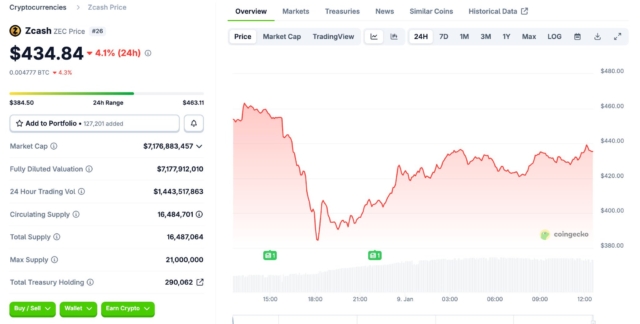
$ZEC, which had shown remarkable strength even during the recent market downturn, has finally broken down, shedding nearly 18% in the last 24H and over a third of its value in the last week. Is the privacy narrative over?

Bitcoin.com News
-
Historic: Bolivia to integrate stablecoins into its banking system as legal tender Bolivia's Economy Minister, José Gabriel Espinosa, stated that digital currencies will be integrated into the country's financial services, making it one of the first countries to accept cryptocurrencies as an alternative to traditional banking. Espinosa stated that this is part of a broader modernization drive. Economy Minister: Bolivia Pioneers the Acceptance of Digital Currency Banks Facts Bolivia is about to integrate digital currencies into its financial system, marking a significant step forward in Latin America. In a recent interview, José Gabriel Espinosa stated that the country will begin integrating digital currencies into its banking system, allowing banks to begin offering services using these tools. Among these services, he mentioned savings accounts, credit cards, and loans, all of which are crypto-based. The focus of the proposal will be on stablecoins, which, due to current exchange rate controls, offer citizens an alternative to protect against devaluation and inflation. Espinosa stated that this measure will be used to enable stablecoins to "start acting as legal tender." "You can't regulate cryptocurrencies globally, so you have to accept them and use them effectively," he said, noting that this new approach could help increase financial inclusion in the country. Why it matters Bolivia's latest crypto measures complete a change in the situation that had previously prevented banks from providing services to customers who recently purchased cryptocurrencies, integrating these instruments into its payment system. Cryptocurrency adoption in Bolivia has surged since the lifting of the ban on crypto trading. Trading volumes increased by more than 100% shortly after the ban was lifted. Importantly, this change could make stablecoins a key component in energy supply. The government previously vetoed this opportunity with an executive order, but it was eventually overturned by newly elected President Rodrigo Paz. Looking ahead: Although Bolivia is a small economy in a large world, its adoption of cryptocurrencies and stablecoins could serve as a model for other countries to follow. If positive, we will have to wait and see how this project plays out and how it impacts existing financial systems.
Bitcoin.com News
-
Historic: Bolivia to integrate stablecoins into its banking system as legal tender Bolivia's Economy Minister, José Gabriel Espinosa, stated that digital currencies will be integrated into the country's financial services, making it one of the first countries to accept cryptocurrencies as an alternative to traditional banking. Espinosa stated that this is part of a broader modernization drive. Economy Minister: Bolivia Pioneers the Acceptance of Digital Currency Banks Facts Bolivia is about to integrate digital currencies into its financial system, marking a significant step forward in Latin America. In a recent interview, José Gabriel Espinosa stated that the country will begin integrating digital currencies into its banking system, allowing banks to begin offering services using these tools. Among these services, he mentioned savings accounts, credit cards, and loans, all of which are crypto-based. The focus of the proposal will be on stablecoins, which, due to current exchange rate controls, offer citizens an alternative to protect against devaluation and inflation. Espinosa stated that this measure will be used to enable stablecoins to "start acting as legal tender." "You can't regulate cryptocurrencies globally, so you have to accept them and use them effectively," he said, noting that this new approach could help increase financial inclusion in the country. Why it matters Bolivia's latest crypto measures complete a change in the situation that had previously prevented banks from providing services to customers who recently purchased cryptocurrencies, integrating these instruments into its payment system. Cryptocurrency adoption in Bolivia has surged since the lifting of the ban on crypto trading. Trading volumes increased by more than 100% shortly after the ban was lifted. Importantly, this change could make stablecoins a key component in energy supply. The government previously vetoed this opportunity with an executive order, but it was eventually overturned by newly elected President Rodrigo Paz. Looking ahead: Although Bolivia is a small economy in a large world, its adoption of cryptocurrencies and stablecoins could serve as a model for other countries to follow. If positive, we will have to wait and see how this project plays out and how it impacts existing financial systems.

Bitcoin.com News
-
Anthropic rolls out @claudeai Opus 4.5, calling it their best model yet for coding, agents, and complex reasoning.

Bitcoin.com News
-
Crypto Clarity Act Gets New Hope for Action in December as Coinbase Chief Pressures DC Growing optimism in Washington is raising expectations for crypto clarity in the U.S., as Coinbase CEO Brian Armstrong's renewed efforts signal increased momentum behind legislation he hopes will soon reach the president's desk, promising clearer standards, greater confidence, and future growth. Armstrong rekindles DC's fire with bold push for the CLARITY Act Growing legislative momentum in Washington is reshaping expectations for crypto regulation in the U.S. Coinbase (Nasdaq: COIN) CEO Brian Armstrong said on social media platform X on November 18th that he is back in the capital to push for market structure legislation, indicating that the Digital Asset Market Clarity Act could reach the president's desk soon. [bn_top_ad] The Coinbase CEO explained: I'm back in DC to push for market structure legislation. There's been a lot of great progress since my last visit, which is great. I hope to have the CLARITY Act updated in December and get it to the president's desk soon after. His latest visit follows a trip in October, where he met with lawyers in detail. He stated at the time: "I've met with 25 senators over the past two days, trying to clarify the market structure. I'm pleased to report that there's a high urgency and momentum!" He also told policymakers: "We appreciate the hard work of senators from both parties, contributing to clear rules for digital assets, even during the government shutdown. Building a better financial system requires strong rules that protect consumers and foster innovation here in the United States." Read more: Coinbase CEO Meets with 25 Senators in 48 Hours as U.S. Crypto Regulation Nears Progress Armstrong also emphasized on November 18th: This bill will further unlock crypto in the U.S. with clear rules that will benefit all businesses, protect customers, and allow creators to push forward! His repeated visits to Washington, D.C., reflect the bipartisan dialogue entering its final stages. Analysts say the CLARITY Act could regulate exchanges, brokers, and coin offerors, reducing uncertainty around custody, settlement, and liquidity. Supporters say clear standards could increase institutional participation and preserve U.S. capacity, while critics say clearer laws could enhance consumer protections. Crypto advocates suggest that legislation could improve capital markets and help maintain U.S. leadership as other jurisdictions advance digital asset frameworks. FAQ What drives the momentum behind the CLARITY Act? The bill is gaining momentum as policymakers seek standardized digital asset regulations to reduce uncertainty and expand institutional participation. How will the new rules on crypto market structure affect U.S. exchanges? They could regulate operations for exchanges, brokers, and coin offerors, clarifying custody, settlement, and liquidity requirements. Why are industry leaders promoting blockchain-based investments? They claim that blockchain-based fundraising is more efficient, transparent, and fair for entrepreneurs and investors. What role does Washington play in pushing for crypto legislation? Frequent meetings with lawyers and officials reflect the expanding bipartisan support for clear digital asset regulations.

Bitcoin.com News
-
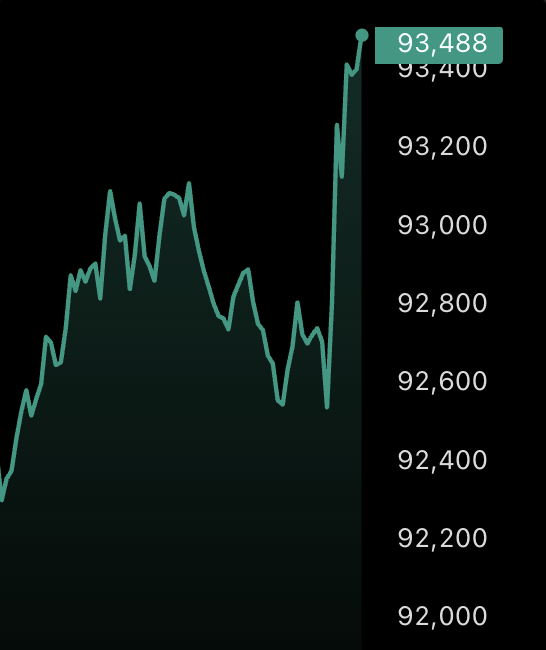
Bitcoin retraces back to $92,000, holding onto it's 6-month low.

Bitcoin.com News
-
Bitcoin retraces back to $92,000, holding onto it's 6-month low.

Bitcoin.com News
-
Bitcoin, Ether ETFs Extend Losing Streak as Solana ETFs Hold Firm Bitcoin slipped under the $93,000 mark Sunday for the first time since May, stamping in a bearish death cross and dragging its losing streak even further into the red. Bitcoin Buckles, Igniting Fresh Waves of Extreme Fear Bitcoin, the world’s largest cryptocurrency, tapped an intraday low of $92,929 before clawing back to $94,625 by 8 p.m. EST, off by roughly a percentage point over 24 hours with $66.14 billion in trading volume powering the action. By the time 8 a.m. rolled around on Monday, BTC had inched a bit higher, holding steady at $95,305. Yesterday’s move beneath $93,000 arrived right after a confirmed death cross on the daily chart — the 50-day moving average dipping under the 200-day moving average — a technical formation widely treated as a bearish cue that has often preceded deeper drawdowns. An hour later, despite Strategy buying nearly a billion worth of bitcoin, BTC’s price trickled downward to $93,506. By 9 a.m., bitcoin is exchanging hands at $93,607 per coin after the flush. BTC/USD 1-hour chart via Bitstamp on Nov. 17, 2025. A death cross doesn’t seal any fate; it simply reflects shifts in momentum and trend, and plenty of outcomes are on the table. Meanwhile, market sentiment has crumbled into “extreme fear,” with the Crypto Fear & Greed Index (CFGI) revisiting levels last seen in May as retail traders buckle and social-dominance alarms flare. Profit-taking after October’s all-time high above $126,000, persistent dormant coin distribution, and waning hopes for a December Federal Reserve rate cut all nudged the market lower. Toss in worries about an artificial intelligence (AI) bubble and an array of doom-and-gloom narratives, and the tone has taken a hit. Also read: Strategy Nears 650,000 Bitcoin After Its Latest 8,178 BTC Grab Broader risk-off vibes have also pressed on assets like equities, with technology names sliding and institutional outflows from spot bitcoin exchange-traded funds (ETFs) accelerating for five straight weeks. Bitcoin has now wiped out nearly all gains logged since early 2025, marking its longest consolidation and losing streak in ages, amplified by thin weekend liquidity and fading spot demand.

Bitcoin.com News
-
Bitcoin slips back below $94,000

Bitcoin.com News
-
Bitcoin dips back under $95K

Bitcoin.com News
-
Bitcoin exchange reserves have dropped to a new all-time low of 2.39M $BTC, signaling tightening supply as price holds near $105K.

Bitcoin.com News
-
According to @al62crypto: - Google searches for “crypto privacy” are at record highs - Zcash’s shielded supply is soaring past 4M $ZEC - Tools like Railgun, Zashi, and Aleo’s USAD are driving growth

Bitcoin.com News
-
Uniswap leadership has proposed activating the long-debated “fee switch” — diverting part of protocol revenue to burn UNI and boost its value. The plan also includes burning $800M in tokens and closing the Uniswap Foundation. $UNI is up 40%

Bitcoin.com News
-
Bitcoin blasts back over $105,000

Bitcoin.com News
-
IMG_1160

Bitcoin.com News
-
TRON Integrated by Dynamic, Streamlining Wallet Connectivity for Developers Worldwide Geneva, Switzerland, November 5, 2025 – TRON DAO, the community-governed DAO dedicated to accelerating the decentralization of the internet through blockchain technology and decentralized applications (dApps), today announced that Dynamic, a leading wallet infrastructure provider, has integrated the TRON network into its platform, streamlining wallet connections for developers building on one of the world’s most active blockchains. This integration makes it easy for any developer to add TRON wallet support to their app and accelerates developer onboarding to TRON’s vast ecosystem of decentralized finance that hosts a circulating supply of over $77 billion in USD Tether ( USDT) stablecoin. By providing seamless wallet integration through a single SDK, Dynamic enables developers to connect with TRON’s extensive user base of over 343 million user accounts without the complexity of custom wallet implementations. Developers often face significant technical overhead when building across multiple chains, with some requiring specific wallets, which also require unique or even custom integrations. “Dynamic’s integration is a significant milestone for the TRON developer community,” said Sam Elfarra, Community Spokesperson for the TRON DAO. “Simplifying wallet connectivity allows developers to concentrate on innovation and user experience rather than technical complexity. By eliminating wallet integration complexity, developers are empowered to focus on innovation rather than infrastructure.” Dynamic’s flexible wallet SDK combines authentication, secure key management, and stablecoin accounts to deliver four critical advantages to the TRON ecosystem: Accelerated Development Cycles: A single SDK integration replaces multiple custom wallet connectors, reducing implementation time from weeks to minutes. Enhanced User Onboarding: Consistent, streamlined connection flows improve conversion rates. Expanded Market Access: Direct path to TRON’s immense transaction volume and dominant stablecoin liquidity. Future-Proof Infrastructure: Automated updates and security patches maintain reliable connections without requiring additional developer resources. “Building on a network as powerful as TRON should be effortless,” said Itai Turbahn, co-founder and CEO of Dynamic. “By simplifying wallet integration to a single SDK, Dynamic makes it faster for developers everywhere to launch on TRON and reach its thriving stablecoin ecosystem.” As stablecoins continue to be adopted as a critical infrastructure for global commerce, TRON’s dominance in this sector positions it at the forefront of innovation in digital finance. The network currently processes over $24 billion in daily transfer volume and remains a driving force in global stablecoin adoption among both institutions and users across the globe. This integration also enables developers from other ecosystems to seamlessly expand into TRON without rebuilding their wallet infrastructure. Dynamic and TRON’s shared commitment to interoperability accelerates the development of sophisticated, yet accessible applications that will continue to transform global financial systems. Dynamic’s rapid product iteration and alignment with evolving wallet standards give developers secure, reliable infrastructure that keeps pace with the speed of crypto innovation. As blockchain technology continues to evolve, TRON and Dynamic are establishing new standards for developer accessibility and user experience. By removing technical barriers and streamlining integration processes, this collaboration accelerates the development of next-generation financial applications built on TRON’s proven infrastructure. About TRON DAO TRON DAO is a community-governed DAO dedicated to accelerating the decentralization of the internet via blockchain technology and dApps. Founded in September 2017 by H.E. Justin Sun, the TRON blockchain has experienced significant growth since its MainNet launch in May 2018. Until recently, TRON hosted the largest circulating supply of USD Tether ( USDT) stablecoin, which currently exceeds $77 billion. As of October 2025, the TRON blockchain has recorded over 343 million in total user accounts, more than 11 billion in total transactions, and over $24 billion in total value locked (TVL), based on TRONSCAN. Recognized as the global settlement layer for stablecoin transactions and everyday purchases with proven success, TRON is “Moving Trillions, Empowering Billions.”

Bitcoin.com News
-
Own Your Name. Use It Everywhere: Freename Domains Come to Bitcoin.com Wallet Sending crypto just got as easy as sending an email. Bitcoin.com has partnered with Freename, the world’s leading Web3 domain platform, to let Bitcoin.com Wallet app users send and receive crypto using human-readable domain names — like yourname.sat or even yourname.com — instead of long, confusing wallet addresses. This means no more copying and double-checking strings of letters and numbers. Just type a name you recognize — and send. “We believe crypto shouldn’t feel like a cryptic code. It should feel like sending a message or email,” said Corbin Fraser, CEO of Bitcoin.com. “By integrating human-readable domains into our wallet, we’re making self-custody and peer-to-peer payments as intuitive as possible.” Own Your Name. Use It Everywhere. Through Freename, anyone can register a .sat or other personalized Web3 domain and connect it to their Bitcoin.com Wallet. Once set up, that name becomes your universal identity across crypto — usable for sending, receiving, and even building your Web3 presence. Bitcoin.com has also added a new “Domains” section inside the Wallet’s Web3 Explorer, where users can easily browse and register domains through Freename — starting with the .sat top-level domain. “Partnering with Bitcoin.com brings human-readable domains into millions of wallets, helping people turn their digital identity into something they own and use everywhere.” Said Mattia Martone, COO and Co-Founder of Freename. “ Bitcoin.com shares our vision of making blockchain identity simple and universal. This partnership brings that vision to millions of people around the world.” Why It Matters Crypto was meant to be peer-to-peer — but technical friction has always stood in the way. By replacing cryptographic addresses with human-readable names, Bitcoin.com and Freename are helping restore the original spirit of crypto: direct, simple, and personal exchange between people, without intermediaries. With support for .sat, .anyname, and even .com domains, Bitcoin.com Wallet is now one of the first self-custodial wallets to make naming the new standard for transactions — bridging the familiar world of the internet with the freedom of Web3. Why Freename stands out from other crypto domain services While many platforms let you register blockchain-based domains, Freename offers a distinct set of advantages that matter for everyday users. Web2 + Web3 interoperability: Freename is an ICANN-accredited registrar, meaning it supports traditional domain endings (like .com) and Web3 domains in the same place. Create and monetize your own TLDs: With Freename you can not only grab yourname.sat, but you can establish your own top-level domain (TLD) and earn when others register under it. Bridge between the familiar and the new: Because domains like .com are tokenized on-chain alongside Web3 domains, your established web2 presence can work with your crypto identity — reducing friction for users new to crypto. Utility beyond wallet addresses: Freename domains offer extra use-cases, such as connecting to websites, email, or payments — making the domain identity more than just a wallet alias. In short: while other domain services are strong in either pure Web3 or pure Web2, Freename brings both worlds together — which fits perfectly with Bitcoin.com’s mission of making crypto accessible to everyone. About Freename Freename is the leading platform for registering and managing Web3 domains. It empowers individuals and brands to own their digital identity across the internet and blockchain — creating domains that are memorable, portable, and censorship-resistant.

Bitcoin.com News
-
Consensys — developer of MetaMask and key Ethereum infrastructure — is reportedly preparing for an IPO, with JPMorgan and Goldman Sachs as lead underwriters. A listing would mark a major milestone for Ethereum’s ecosystem and crypto’s integration with Wall Street.

Bitcoin.com News
-
Bitcoin dips to $112,500 after the S&P 500 breaks above $6,900 for the first time today

Bitcoin.com News
-
The first Solana-linked ETF, $BSOL from Bitwise, hits the market.

Bitcoin.com News
-
Bitcoin Price Watch: Bullish Momentum Builds Above $113K as Traders Eye $115K Break Bitcoin is flexing its digital muscles at $113,710, backed by a $2.25 trillion market cap and a cool $26.39 billion in 24-hour trading volume. With prices bouncing between $111,216 and $113,800 today, it seems the world’s largest cryptocurrency is doing its best impression of a tightrope walker—with laser eyes. BITCOIN CHART OUTLOOK On the daily chart, bitcoin is recovering from a significant correction that saw the price retreat from a high near $126,272 to a low around $103,530. The rebound is forming a short-term uptrend, although volume data reveals a lack of strong buying conviction, suggesting the rally may not yet be fully supported by market participation. Current daily candles show a continuation pattern, but the diminished volume points to a fragile trend that could face resistance near the $115,000–$116,000 region. The 4-hour chart reveals a well-defined double bottom structure near $106,000, a technical pattern often interpreted as a potential reversal signal. Price action has since moved upward with small-bodied bullish candles and a notable breakout approaching $113,000, supported by a surge in volume. While the trend structure favors upward continuation, the movement lacks the acceleration typical of more aggressive rallies. Momentum may taper off as the price approaches previously tested resistance between $114,500 and $115,000, suggesting a possible consolidation or pause in the trend. On the 1-hour chart, bitcoin has broken out from a previously range-bound pattern with a sharp thrust from $111,000 to $113,800, powered by high volume—a classic move often driven by breakout traders. The price is now consolidating above the breakout level, with potential support forming near $112,800 to $113,000. Should volume sustain, this level may serve as a launchpad for further short-term gains. However, any volume drop or rejection near $114,500 could signal exhaustion and open the door to short-term retracement. Oscillators remain largely neutral across the board, with the relative strength index (RSI) at 52 and the stochastic at 68, both indicating a lack of extreme momentum in either direction. The commodity channel index (CCI) holds at 4, while the average directional index (ADX) reads a low 19, further confirming a trend that is developing but not yet fully matured. However, positive momentum is observed, with the momentum indicator reading 5,174 and the moving average convergence divergence (MACD) level at -1,313—both suggesting a tilt toward positive price pressure. Moving averages present a more bullish tilt across most timeframes, especially the exponential moving averages (EMAs), with the 10, 20, 30, 50, 100, and 200-period EMAs all trending above the current price level. Simple moving averages (SMAs), however, offer some resistance, particularly the 30, 50, and 100-period SMAs, which remain above the current price, implying friction as bitcoin attempts to maintain upward momentum. The alignment of EMAs below the current price generally reflects a supportive structure, though mixed SMA signals warn traders to tread carefully near historical resistance zones. Bull Verdict: With breakout confirmations on lower timeframes, bullish momentum from the momentum indicator and moving average convergence divergence (MACD), and a supportive alignment of exponential moving averages (EMAs), bitcoin appears poised to challenge upper resistance levels. Continued strength above $113,000 and a decisive push through the $115,000 zone could signal the next leg higher—pending volume cooperation. Bear Verdict: Despite recent gains, the rally’s soft volume and mixed simple moving average (SMA) signals suggest structural vulnerability beneath the surface. If bitcoin fails to hold above $113,000 or shows rejection near $113,500–$115,000, the recovery may stall, opening the door for a retest of lower support zones between $111,000 and $109,000.

Bitcoin.com News
-
CZ has accepted Peter Schiff’s challenge to debate Bitcoin versus tokenized gold, highlighting Schiff’s professionalism and non-personal approach despite their differing views on $BTC and crypto.

Bitcoin.com News
-
Bitcoin Price Watch: Bear Flag or Base Formation? The Charts Decide Bitcoin’s current price stands at $107,891, with a commanding market cap of $2.15 trillion and a 24-hour trading volume of $33.63 billion. Price action flirted between $106,222 and $108,142 in the past day, serving up volatility with a side of whiplash. Bitcoin Chart Outlook The daily chart paints a dramatic arc. After peaking near $126,272 earlier in October, bitcoin nosedived to $103,530, slicing nearly 18% in days. This aggressive correction was no silent slip — volume surged at the lows, hinting at a bout of panic selling. Recent candles are playing coy, showing smaller bodies and indecision. Translation: the bears are tired, and the bulls are peeking through the curtains. Momentum and commodity channel index (CCI) indicators both suggest the potential for a rebound, with momentum sitting at -13,883 and the CCI at -109, signaling bullish divergence. BTC/USD 1-day chart via Bitstamp on Oct. 19, 2025. Moving into the four-hour chart, bitcoin looks like it’s building a base — or baiting traders into a bear flag. The asset is consolidating between $106,000 and $108,000 after the plunge, and while price action remains cautious, it’s not quiet. Higher lows are forming, and that’s a subtle shift in tone. Volume confirms the move, as green bars rise post-bounce. The exponential moving averages (EMAs) and simple moving averages (SMAs) across the 10, 20, 30, 50, and 100 periods are all flashing red lights, with every one of them above the current price. Translation? The path of least resistance remains down — unless the bulls bring backup. BTC/USD 4-hour chart via Bitstamp on Oct. 19, 2025. On the one-hour chart, short-term traders have more to cheer about. A double-bottom near $103,530 set the stage for a recovery, with the price breaking out on volume around the $107,000 level. This isn’t a runaway rally, though. Traders are tentative, waiting for macro confirmation. Still, the awesome oscillator (AO) at -6,542 and the relative strength index (RSI) at 38 suggest we’re not in overbought territory — there’s room to run if momentum holds. The moving average convergence divergence (MACD) is dragging its feet at -2,087, still stuck in bearish mode, but the slow bleed could be setting up for a bullish cross. BTC/USD 4-hour chart via Bitstamp on Oct. 19, 2025. Looking at the oscillators holistically, there’s a mix of shrugs and side-eyes. The relative strength index (RSI), stochastic, and average directional index (ADX) are all giving neutral readings — a classic “wait and see” posture. Only the momentum and commodity channel index (CCI) are leaning bullish, while the MACD stands alone in the bearish corner. That divergence in indicators echoes the overall sentiment: we’re in a transition phase, neither fully bearish nor convincingly bullish. In summary, bitcoin is in limbo — but not without a pulse. Price is clinging to the lower end of the day’s range but refuses to roll over. The key levels to watch are $108,000 as a breakout trigger and $103,500 as a must-hold support. Until then, it’s all about playing the range, managing risk, and waiting for the market to declare its next move. Bull Verdict: If the higher lows hold and bitcoin can muster a close above $108,000 with volume to match, the stage could be set for a swift rebound toward $112,000 and beyond. Momentum is showing early signs of life, and the recent base-building behavior hints that buyers might be quietly preparing their next act. Bear Verdict: Despite the short-term bounce, bitcoin remains pinned below every major moving average, and the moving average convergence divergence (MACD) is still bleeding red. Until price breaks decisively above resistance, this rally risks being just another dead cat in a long descent. FAQ Where is bitcoin trading now? Bitcoin is currently trading at $107,891, consolidating just below key resistance at $108,000. What’s driving bitcoin’s price action today? A sharp pullback from early October highs and mixed technical signals are fueling market indecision. Is this a good time to enter the bitcoin market? Traders are watching for a breakout above $108,000 or a breakdown below $106,000 for clarity. What regions are showing the most trading activity? North America and East Asia are leading volume, especially on U.S.-based and South Korean exchanges.

Bitcoin.com News
-
Former IMF Chief Economist Warns About the Next $35 Trillion Financial Crash Gita Gopinath, former IMF Chief Economist, warns about the sudden rise of the U.S. stock market and the surge of an unavoidable correction, which could have catastrophic effects on the global economy. She estimates that losses could amount to over $35 trillion. The Facts: Gita Gopinath, former Chief Economist and Deputy Managing Director of the International Monetary Fund (IMF), has warned about the effects of a correction in the U.S. stock market, estimating it would have dire consequences for the world’s economy. In a recent article, Gopinath states that the recent growth of the stock market, propped up by the emergence of new and innovative technologies as artificial intelligence (AI), is due for a pullback. “There are good reasons to worry that the current rally may be setting the stage for another painful market correction,” she stressed, estimating that such an event would cause an international crash due to the interconnectedness of global markets and the reach of these investments in large economies, particularly in Europe. Comparing the predicted crash with the early 2000s dotcom burst, Gopinath estimates that the U.S. local economy would shed $20 trillion (3.5%) while international investors would be hit with $15 trillion in losses, almost 20% of the rest of the world’s gross domestic product (GDP). “A market crash today is unlikely to result in the brief and relatively benign economic downturn that followed the dotcom bust. The structural vulnerabilities and macroeconomic context are more perilous. We should prepare for more severe global consequences,” she concluded. Why It Is Relevant: Gopinath is just one of the many voices that have shown concerns about the predominance of AI as a growth pillar, which could be masking a slowdown in the traditional U.S. economy. JPMorgan estimates that companies with high exposure to AI account for 44% of the S&P 500’s total valuation, up from 22% in 2022. This has enabled American households to gain nearly $5 trillion in wealth over the last few years. This means that a crash would not only affect Wall Street but also Main Street equally, as investments in equity markets are now very popular due to their recent gains. An AI market drop would precede an economic recession in the U.S. that would affect not only investors directly but also the industries part of the supply chain for AI, including energy and semiconductors. Looking Forward: While there is no certainty in the occurrence of an upcoming AI-linked market crash, experts agree that maintaining a diversified portfolio and avoiding overvalued stocks could help investors manage a hypothetical downturn. Allocating a portion of these investments into safe-haven assets like gold, which has been on a tear recently, could also help in the case of a heavy correction.

Bitcoin.com News
-
Tom Lee's Bitmine buys $834M $ETH.

Bitcoin.com News
-
Strategy’s Michael Saylor posts “Just Bitcoin” as $BTC rebounds to $112.5K after dipping below $110K.

Bitcoin.com News
-
BlackRock’s $IBIT Bitcoin ETF Flow has seen massive inflows in early October, peaking at $970.0m on Oct 6th

Bitcoin.com News
-
Bitcoin Flat But Smart Money Is Moving In The cryptocurrency was trading sideways on Thursday morning, three days after notching a fresh all-time high on Monday. Institutional Buying Is Heating up, Even as BTC Trades Sideways DDC Enterprise Limited (NYSEAM: DDC) or “DayDayCook” pivoted from its Asian culinary business to become a bitcoin treasury firm with a $528 million investment earlier this year. Yesterday, the company announced a $124 million equity financing round to acquire even more bitcoin. Moral of the story: institutions remain bullish even with bitcoin retreating slightly from its new record high. Bitcoin Flat But Smart Money Is Moving In (DDC pivoted from Asian cuisine to bitcoin earlier this year after losing money for at least four years in a row.) Norma Chu, chair and CEO of DDC, founded the company in 2012 and then took it public in November 2023. The firm hemorrhaged money for at least four years in a row, almost got delisted, and had trading of its shares halted after its stock tumbled 95% in April 2025. In a display of remarkable tenacity, Chu managed to weather the storm and mapped out a new direction for her company, converting it to a bitcoin treasury firm with a relatively small initial purchase of 21 BTC. Today, DDC boasts 1,058 BTC worth more than $130 million at current prices, with plans to buy even more. “This financing round contributes not only capital, but also substantial strategic value and momentum as we advance DDC’s position as a global leader in the institutional Bitcoin space,” Chu said. Bitcoin treasury firms aren’t the only institutions showing bullish sentiment. Bitcoin exchange-traded funds (ETFs) now hold roughly $168 billion in assets or nearly 7% of the entire BTC market cap, according to Sosovalue.com. Blackrock’s Ishares Bitcoin Trust (IBIT) is now the 19th largest ETF in the U.S. with assets under management just shy of $100 billion. In short, smart money is betting on bitcoin regardless of daily price action. Overview of Market Metrics Bitcoin was up 0.31% at $122,732.44 according to Coinmarketcap at the time of reporting. The cryptocurrency was also up 2.18% for the week and has been trading between $121,191.40 and $124,167.09 since yesterday. Bitcoin Flat But Smart Money Is Moving In ( BTC price / Trading View) Twenty-four-hour trading volume fell 23.73% to $61.13 billion, and market capitalization inched up 0.11% to $2.44 trillion. Bitcoin dominance jumped 0.85% to 59.52% at the time of writing. Bitcoin Flat But Smart Money Is Moving In ( BTC dominance / Trading View) Total bitcoin futures open interest eased 0.91% to $89.73 billion according to data from Coinglass. Bitcoin liquidations climbed to a total of $144.69 million with a relative balance between short and long liquidations. Short sellers lost $79.55 million and long investors had $65.14 million wiped out.

Bitcoin.com News
-
TOP STORY: BTC breaks $124K again after Fed releases meeting minutes showing a high expectation for two more rate cuts this year

Bitcoin.com News
-
JUST IN: Gold breaks the $4,000 mark, reaching a new all time high.

Bitcoin.com News
-
Trump Tariff Stimulus Could Spark a Bitcoin Liquidity‑Led Bull Run The recent announcement of the Trump Administration regarding hypothetical stimulus checks to American taxpayers from tariff dividends has analysts speculating about its effects on the price of cryptocurrencies, which might be pushed up by the injection of fresh liquidity. The recent announcement of President Donald Trump regarding a possible distribution of the revenues accrued from tariffs to American taxpayers has sparked talks about a possible financial bull run, including the crypto market, from financial analysts. On Thursday, during an interview with One America News Network, Trump declared that while most of these funds would be used to pay debt, part of it would be given to the American people. “We’re thinking maybe $1,000 to $2,000 — it would be great,” he assessed, highlighting that tariff revenue would reach “over $1 trillion a year” in its final form. Even when it is not confirmed yet, analysts from Bitfinex, a cryptocurrency exchange, believe that this announcement itself might further contribute to a rise in crypto prices. Talking to Forbes, they stated: We suspect that Trump’s announcement of potentially considering a stimulus check for every citizen, funded by tariffs, could also contribute to a further rise in bitcoin’s price. “This could mirror what we witnessed following the COVID stimulus checks,” they added. Peter Zimmerman, a researcher at the Federal Reserve Bank of Cleveland, estimated that the COVID stimulus had a modest effect on the price of bitcoin, increasing trade volume by about 3.8% and a price increase of 0.07%. Nonetheless, the evolution of the bitcoin-linked investment product offering might amplify the effect of a similar fund injection this time. The relevance and growth of BTC as a mainstream asset could also put it in the sights of retail investors who would have ignored it before. While bitcoin broke record prices recently, bulldozing the $126K mark, ignoring the federal government shutdown, and setting itself as a safe haven asset, institutional demand and the current momentum indicate that the run still has legs to grow.

Bitcoin.com News
-
JUST IN: Strategy reports a massive $3.9B Bitcoin fair value appreciation in Q3 2025.

Bitcoin.com News
-
Latam’s Bitcoin Behemoth OranjeBTC Debuts on Brazil’s B3 OranjeBTC, which became the largest bitcoin reserve company in Latam, is set to debut on Brazil’s B3 on Oct. 7. The corporation, which will streamline its listing through a reverse IPO, aims to lead institutional investors’ shift into BTC. OranjeBTC to Debut as Largest Bitcoin Treasury Company in Brazil and Latin America Startups from all over the world are rushing to follow the bitcoin treasury company trend, and OranjeBTC is on the verge of pioneering the movement in Brazil. Even when Meliuz, a Brazilian cashback company, surged as the first national company to promote a bitcoin reserve shift, OranjeBTC is a firm whose main focus will be to amass bitcoin reserves and generate revenue through them. OranjeBTC, which already holds 3,650 BTC as part of its initial bitcoin cache, recently announced that it will start trading on B3, the main Brazilian stock exchange, on October 7th. Previously, it had revealed that it would achieve this milestone by leveraging the reverse Initial Public Offering (IPO) figure with Intergraus, a school chain company, trading with the OBTC3 ticker. Analysts remark that this IPO will be relevant to determine the actual demand for a local bitcoin-only business in a market that already has a presence of foreign BTC-linked investment options. Meliuz’s stock prices rose on the news of its bitcoin pivot back in May, but even after announcing good results, it has failed to rise to those levels again. Guilherme Gomes, CEO of OranjeBTC and a former Bridgewater Associates executive, believes that the company can serve as a conduit for investors to proxy into bitcoin through stock, an idea that could be useful for some. “ Bitcoin will change financial systems as we know it, and will reshape markets. Our main focus is bitcoin at the highest level,” he stressed. OranjeBTC invested nearly $385 million in BTC with the backing of Gemini’s Cameron and Tyler Winklevoss, bitcoiner Adam Back, FalconX, and Mexican millionaire Ricardo Salinas. The latest bitcoin rise has already put it in green numbers.

Bitcoin.com News
-
$ASTER continues its march upwards, and is approaching top 50 by market cap

Bitcoin.com News
-
Libra Probe Stalls in Argentine Congress: What's Happening? Libra Probe Stalls in Argentine Congress: What's Happening? The commission in charge of investigating the Libra incident failed to get hold of the testimonies of several government officials. Karina Milei, the sister of President Milei and General Secretary of the Presidency, has been summoned to testify before the commission but has failed to appear twice. The case of Libra, the alleged meme coin linked to President Javier Milei’s promotion, is still ongoing in Argentina. A congressional commission investigating the links between some government officials and the token launch is currently stalled due to the failed attempts to obtain the testimonies of these officials. Among these is Karina Milei, Javier Milei’s sister and General Secretary of the Presidency, who has failed to appear twice before the commission. Other relevant officials who have not attended the commission call are the Argentine Justice Minister Mariano Cuneo, the National Securities Commission (CNV) President Roberto Silva, and the Financial Information Unit (UIF) President Paulo Starc. Hayden Davis, CEO of Kelsier Ventures, one of the companies behind Libra, mentioned Karina Milei as the middleman in his relationship with President Milei, claiming that he exerted control over him through bribes. “I send money to his sister, and he signs whatever I say and does what I want,” he boasted in text messages. Due to her repeated absences, the commission voted to require a date to send a delegation to Karina Milei’s office and receive her testimony on the subject. If she fails to respond, the commission can appeal to national courts to force her to appear and testify. Manuel Adorni, the presidential spokesman, referred to this situation, stating that Karina Milei would “comply with all regulations and everything she considers prudent to do.” Nonetheless, local media sources claim that she has no intention to attend any summons issued by this commission. The launch of Libra and its subsequent downfall left tens of thousands affected, registering millions in losses. Nonetheless, President Milei has stated that most of the involved were “volatility operators.” “They knew very well the risk they were taking. If you go to the casino and lose money, it’s your problem,” he stressed in February.

Bitcoin.com News
-
Metaplanet acquires an additional 5,268 Bitcoin, bringing its total holdings to 30,823 $BTC.

Bitcoin.com News
-
1:12
SEC Chair Paul Atkins highlights the agency’s role in "carrying American leadership forward into new frontiers...to the blockchain and beyond."

Bitcoin.com News
-
JUST IN: JPMorgan upgrades Riot, one of America's largest Bitcoin mining operators, to Overweight as top Bitcoin mining play—citing undervalued $BTC production and AI infrastructure upside.

Bitcoin.com News
-
0:27
U.S. Treasury Secretary Scott Bessent gives an update on the Federal Reserve Chair candidates

Bitcoin.com News
-
Bitgo Files for US IPO, Aims for NYSE Listing Under ‘BTGO’ Bitgo Holdings Inc. filed a Form S-1 for an initial public offering and applied to list its Class A shares on the New York Stock Exchange under the symbol BTGO. Digital Asset Custodian Bitgo Seeks NYSE Debut With Dual-Class Shares Bitgo, a Delaware corporation based in Palo Alto, filed with the Securities and Exchange Commission (SEC) on Sept. 19, 2025. The preliminary prospectus leaves blank the number of shares and price range, with the company and certain selling stockholders offering shares. The underwriters have a 30-day option to purchase additional stock. The offering features a dual-class structure: Class A common stock carries one vote per share, while Class B carries 15 votes per share. Bitgo co-founder and CEO Michael Belshe is expected to control a majority of the voting power after the IPO, making Bitgo a “controlled company” under NYSE rules, even though the company says it does not currently intend to rely on related governance exemptions. The underwriting syndicate includes Goldman Sachs, Citigroup, Deutsche Bank Securities, Mizuho, Wells Fargo Securities, Keefe, Bruyette & Woods (a Stifel company), Canaccord Genuity, Cantor, Clear Street, Compass Point, Craig-Hallum, Wedbush Securities, Rosenblatt, and SoFi. Bitgo positions itself as an institutional platform spanning self-custody wallets, qualified custody, liquidity, and prime services, and infrastructure-as-a-service. The company says its qualified custody is 100% supported by cold storage, assets are structured to be bankruptcy remote, audits include SOC 1 Type 2 and SOC 2 Type 2, and insurance coverage for qualified custody is up to $250 million. Operationally, Bitgo reported approximately $90.3 billion in “Assets on Platform” for the six months ended June 30, 2025, more than 4,600 clients across 100+ countries, and support for over 1,400 digital assets as of the same date. The company reported $25.6 billion in assets staked for the quarter ended June 30, 2025. As of June 30, 2025, the company had about 565 full-time employees across the U.S., Canada, Europe, Asia, Latin America, and the Middle East. Bitgo’s summary financial data show total revenue of $3.081 billion for 2024 and $4.185 billion for the six months ended June 30, 2025 (in thousands), with a substantial portion tied to digital asset sales revenue and related costs. The 2024 digital asset sales cost was $2.531 billion, and it was $3.876 billion for the first half of 2025. The Bitgo filing further outlines revenue streams across digital asset sales, staking, subscriptions, and services (including custody and wallet fees, lending, and crypto-as-a-service), stablecoin-as-a-service, and interest income. For stablecoin-as-a-service, Bitgo states that issued coins are fully backed by segregated reserve assets; deposits from stablecoin holders appear as a liability, and interest on reserve assets is recognized as revenue. As of June 30, 2025, Bitgo stated that deposits from stablecoin holders were about $2.207 billion, matched by restricted cash and cash equivalents held for those holders. The Bitgo S-1 notes one active stablecoin-as-a-service client at the time of the prospectus, and fewer than ten active crypto-as-a-service clients, with fees tied to issuance, reserve management, processing, or use of specific infrastructure components. Regulatory disclosures indicate Bitgo’s trust subsidiaries are regulated in South Dakota, New York, and Dubai, with additional oversight in Germany, Switzerland, and Denmark, among others. The company says it is not registered as a broker-dealer or investment adviser at the parent level, while a broker-dealer subsidiary (Portum Capital LLC) is subject to SEC and FINRA oversight. Bitgo also highlights EU MiCA developments and says a subsidiary obtained a MiCA license from Germany’s BaFin in May 2025 to provide digital asset services in the EU. The prospectus emphasizes the company’s qualified-custodian framework, cold-storage model, and insurance, positioning these as institutional safeguards. Bitgo ties these operational features to its treasury approach and client relationships, noting integration with settlement rails it calls the Go Network. Bitgo’s Wall Street entrance is less about champagne corks and more about ice-cold custody, dual-class voting, and billions in staked assets. If the IPO succeeds, it won’t just put “BTGO” on the ticker—it’ll test whether digital asset custody has finally earned a permanent seat at Wall Street’s board table.

Bitcoin.com News
-
After 7 days of green, Bitcoin ETFs saw a $51M outflow while ETH funds slipped $1.9M, both closing red on Sept. 17. Is this just a pause or the start of a shift?

Bitcoin.com News
-
From Strategy to Metaplanet, Bitcoin treasury adoption spans the globe, with firms in the U.S., Europe, and Asia adding $BTC to their balance sheets

Bitcoin.com News
-
PayPal announces crypto integration for peer-to-peer payments allowing U.S. users to send Bitcoin, Ethereum and $PYUSD via payment links.

Bitcoin.com News
-
Bitcoin Knots Tightens Grip, Snags Over a Quarter of Network Nodes Five days ago, the alternative Bitcoin software client Bitcoin Knots sat at 19%. By this weekend, it had climbed past 25% of nodes, tying up a bigger slice of the network and giving the client a heftier presence than it had earlier in the week. Core’s Latest Uptick Looks Tepid Next to Knots’ Swaggering Node Jump As of Sunday, Sept. 14, 2025, Bitcoin Knots clients didn’t just tiptoe past the 25% mark—they strutted up to 25.45%, according to Coin Dance node metrics. Fans are hitching their wagons to Knots for its no-nonsense policy rules and its knack for tossing out unwanted transfer baggage, a combo many say keeps Bitcoin’s monetary backbone firm while boosting client diversity ahead of the fireworks in Bitcoin Core version 30. The gripes about Core’s looming v30 aren’t exactly whispers. At the top of the list: axing the old 80–90 byte OP_RETURN cap and rolling out bloated data allowances per transaction. Detractors warn this could turn Bitcoin into a spam magnet, confuse node operators, complicate data filtering, and, in a worst-case scenario, send nodes crashing in flames if malware finds a playground in cloud setups. Five days ago, on Sept. 9, 2025, Bitcoin Core counted 18,758 nodes. Today, that tally nudged up to 19,048—a modest 1.54% lift. Knots, however, wasn’t playing small ball, jumping from 4,417 nodes to a hefty 6,518 and stealing the show from Core’s slow crawl. Knots has clocked a hefty 47.60% jump in the same stretch, turning its growth spurt into a headline act while leaving Core’s modest climb looking like a warm-up lap. On the other hand, some Bitcoin Core loyalists have cried foul, accusing Knots node operators of puffing up their numbers with a Sybil stunt—allegedly making nearly 40% of Knots nodes little more than clones or fakes to pad their stats. Those cries, though, have been met with raised eyebrows and skepticism, and Knots’ growth continues undeterred. Not following the debate? This article offers a clear breakdown of what’s happening. In recent times, Bitcoin’s node wars are starting to feel less like quiet software choices and more like a high-stakes popularity contest. To supporters, Knots is flexing swagger while Core clings to its traditional crown. Whether this trend is a passing fashion or a lasting shift, the message is clear: diversity is no longer optional, it’s the network’s latest power play.

Bitcoin.com News
-
Bitcoin Rebounds, Altcoins Explode: Weekly Gains Push Market Cap Past $4 Trillion Bitcoin ended the week nearly 5% higher, pushing its market cap back above $2.3 trillion while several high-cap altcoins saw significant double-digit gains. Crypto Market Rebounds After Bearish Stretch After nearly two weeks of a bearish sentiment, the crypto economy rebounded, closing the week with a market capitalization of just under $4.17 trillion. Bitcoin (BTC) ended the seven-day period on Sept. 13 with a gain of nearly 5%, pushing its market capitalization back above $2.3 trillion. According to Bistamp data, BTC peaked at $116,805 on Sept. 12 before settling in the $115,000 to $116,000 range. A Bitcoin.com News report indicated that BTC’s technical structure was still bullish, suggesting that a breach of the $117,000 resistance could open a path to $120,000 in the short term. However, the report also warned that if BTC fell below $114,770, a retreat to $113,500 could be triggered. While bitcoin’s dominance fueled the overall performance of the crypto economy, the top two altcoins—ethereum ( ETH) and XRP—posted even stronger gains, rising 8.2% and 10.8%, respectively. After spending much of September struggling to break the $4,600 mark, ETH surged to a peak of $4,768—the first time it had traded above $4,750 since Aug. 25. XRP, which had traded below $3 until Sept. 9, briefly rose to $3.18—its highest level in more than three weeks—before declining to $3.10. It was one of more than eight high-cap altcoins that closed the week with double-digit gains. Other altcoins posting similar gains during the period included SOL, up 17.5%; DOGE, 35.7%; ADA, 12.4%; LINK, 10.8%; HYPE, 18.8%; SUI, 12.6%; and XLM, 12.8%. BNB Hits New All-Time High BNB also had a milestone-setting day on Sept. 13, notching another all-time high of $942 and bringing its gain over a twelve-month period to more than 60%. Some pro- BNB analysts now say it’s only a matter of time before it breaches the $1,000 mark. The period’s biggest gainers were ERN, which rose by more than 2,100%, and MXY, the native token of the controversy-hit decentralized exchange MXY Finance, which closed 902% higher. The losing side was led by FORM, which dropped by 28.5%, followed by GEMS at 22.8% and REX at 22.2%. The centralized crypto exchange token dubbed huobi (HT) was notable as the top altcoin with double-digit losses.

Bitcoin.com News
-
Michael Saylor’s $250M Bitcoin buy in 2020 sparked a treasury shift. Now over 50 companies hold 10+ $BTC, with a sharp rise in 2025 following Strategy’s $70B success.

Bitcoin.com News
-
Vivopower’s Tembo to Accept Ripple’s RLUSD for Global Transactions Vivopower’s EV subsidiary is slashing cross-border payment costs by adopting RLUSD stablecoin, unlocking instant settlements and boosting blockchain-driven growth across key developing markets. Vivopower International Plc (NASDAQ: VVPR) announced on Sept. 8 that its electric vehicle subsidiary, Tembo e-LV, will begin accepting Ripple USD (RLUSD) stablecoin for payments from partners and customers. The company framed the decision as a response to inefficiencies in international wire transfers, including cost and delays, which are particularly acute in developing markets. A company statement emphasized the benefits of the shift: With RLUSD, it is possible for international wire transfers to be effectuated almost instantaneously and at a fraction of the cost of conventional wire transfers. “Furthermore, given that RLUSD is pegged 1:1 against the U.S. dollar and is fully backed by USD deposits, short-term U.S. treasuries, and other cash equivalents, it provides the capital stability that non-stablecoin digital assets cannot offer,” Vivopower added. Tembo operates across emerging and developed regions such as Southeast Asia, Africa, and the Middle East, where streamlined transactions can materially reduce costs for customers. RLUSD, which is issued on both the XRP Ledger and ethereum, was designed to meet institutional compliance and transparency standards while supporting near-instant settlements. Ripple Labs has seen its stablecoin’s market capitalization increase more than tenfold since the start of 2025, reflecting broader institutional adoption. By integrating RLUSD, Tembo expects to cut transaction costs while strengthening its ability to serve clients operating in industries ranging from mining to agriculture. For Vivopower, the move is consistent with its repositioning into an XRP-focused digital asset enterprise. The company is building a treasury strategy around XRP holdings and Ripple Labs equity while supporting decentralized finance infrastructure tied to the XRP Ledger. Tembo’s acceptance of RLUSD reflects the company’s aim to combine sustainable vehicle solutions with blockchain-enabled financial innovation, expanding its role in cross-border payments and digital finance.

Bitcoin.com News
-
Erased Gensler Texts Ignite Crypto Backlash as SEC Watchdog Faults 'Avoidable Errors' The crypto industry is denouncing the U.S. Securities and Exchange Commission after the agency’s inspector general said nearly a year of text messages from former Chair Gary Gensler’s government phone were irretrievably lost because of “avoidable errors.” SEC Agrees to Fixes After Gensler Text Loss; Crypto Sector Sees Double Standard The SEC’s Office of Inspector General (OIG) disclosed that texts were wiped amid technical and procedural failures inside the Office of Information Technology, spanning Oct. 18, 2022, to Sept. 6, 2023—an interval that overlapped with major crypto enforcement actions, litigation, and market events. The OIG detailed a chain of mistakes: a mobile-device sync failure flagged in July 2023, an automated “inactive device” wipe on Aug. 17, 2023, and a later factory reset that erased remaining data and logs. The official report was published Sept. 4, 2025. Erased Gensler Texts Ignite Crypto Backlash as SEC Watchdog Faults 'Avoidable Errors' The watchdog further said the problems reflected broader gaps in change management, backups, logging, and vendor coordination, including for “Capstone” officials whose communications are federal records. The SEC told the OIG it has since disabled agency texting with limited exceptions and put interim backups in place for senior officials. The agency also notified the National Archives and Records Administration in June 2025 and agreed to all five OIG recommendations with a target to complete changes by November. Erased Gensler Texts Ignite Crypto Backlash as SEC Watchdog Faults 'Avoidable Errors' Partial reconstruction efforts produced roughly 1,500 messages from matching processes, of which about 38% were “mission-related,” according to the report. The OIG said a portion of the unrecovered material likely qualified as federal records that should have been preserved indefinitely. Reaction from crypto lawyers, executives, and advocates was swift. Critics argued the agency applied a double standard by penalizing financial firms more than $2 billion for failing to retain “off-channel” communications while losing the chair’s texts during an aggressive period of crypto enforcement. They said the deletions could impair Freedom of Information Act responses and discovery in ongoing matters, including high-profile cases against exchanges. The OIG did not find evidence of deliberate destruction, characterizing the incident as preventable missteps rather than intent. Still, prominent industry figures used the report to renew calls for independent oversight of regulators’ communications and for clearer retention rules covering modern messaging tools used by senior officials. Erased Gensler Texts Ignite Crypto Backlash as SEC Watchdog Faults 'Avoidable Errors' The controversy comes against the backdrop of the FTX collapse, court rulings on crypto exchange-traded fund matters, and lawsuits involving major crypto platforms. With trust already strained, the disclosures have intensified friction between the Biden administration’s SEC and digital-asset firms that have long criticized what they describe as “regulation by enforcement.”

Bitcoin.com News
-
Erased Gensler Texts Ignite Crypto Backlash as SEC Watchdog Faults 'Avoidable Errors' The crypto industry is denouncing the U.S. Securities and Exchange Commission after the agency’s inspector general said nearly a year of text messages from former Chair Gary Gensler’s government phone were irretrievably lost because of “avoidable errors.” SEC Agrees to Fixes After Gensler Text Loss; Crypto Sector Sees Double Standard The SEC’s Office of Inspector General (OIG) disclosed that texts were wiped amid technical and procedural failures inside the Office of Information Technology, spanning Oct. 18, 2022, to Sept. 6, 2023—an interval that overlapped with major crypto enforcement actions, litigation, and market events. The OIG detailed a chain of mistakes: a mobile-device sync failure flagged in July 2023, an automated “inactive device” wipe on Aug. 17, 2023, and a later factory reset that erased remaining data and logs. The official report was published Sept. 4, 2025. Erased Gensler Texts Ignite Crypto Backlash as SEC Watchdog Faults 'Avoidable Errors' The watchdog further said the problems reflected broader gaps in change management, backups, logging, and vendor coordination, including for “Capstone” officials whose communications are federal records. The SEC told the OIG it has since disabled agency texting with limited exceptions and put interim backups in place for senior officials. The agency also notified the National Archives and Records Administration in June 2025 and agreed to all five OIG recommendations with a target to complete changes by November. Erased Gensler Texts Ignite Crypto Backlash as SEC Watchdog Faults 'Avoidable Errors' Partial reconstruction efforts produced roughly 1,500 messages from matching processes, of which about 38% were “mission-related,” according to the report. The OIG said a portion of the unrecovered material likely qualified as federal records that should have been preserved indefinitely. Reaction from crypto lawyers, executives, and advocates was swift. Critics argued the agency applied a double standard by penalizing financial firms more than $2 billion for failing to retain “off-channel” communications while losing the chair’s texts during an aggressive period of crypto enforcement. They said the deletions could impair Freedom of Information Act responses and discovery in ongoing matters, including high-profile cases against exchanges. The OIG did not find evidence of deliberate destruction, characterizing the incident as preventable missteps rather than intent. Still, prominent industry figures used the report to renew calls for independent oversight of regulators’ communications and for clearer retention rules covering modern messaging tools used by senior officials. Erased Gensler Texts Ignite Crypto Backlash as SEC Watchdog Faults 'Avoidable Errors' The controversy comes against the backdrop of the FTX collapse, court rulings on crypto exchange-traded fund matters, and lawsuits involving major crypto platforms. With trust already strained, the disclosures have intensified friction between the Biden administration’s SEC and digital-asset firms that have long criticized what they describe as “regulation by enforcement.”

Bitcoin.com News
-
Erased Gensler Texts Ignite Crypto Backlash as SEC Watchdog Faults 'Avoidable Errors' The crypto industry is denouncing the U.S. Securities and Exchange Commission after the agency’s inspector general said nearly a year of text messages from former Chair Gary Gensler’s government phone were irretrievably lost because of “avoidable errors.” SEC Agrees to Fixes After Gensler Text Loss; Crypto Sector Sees Double Standard The SEC’s Office of Inspector General (OIG) disclosed that texts were wiped amid technical and procedural failures inside the Office of Information Technology, spanning Oct. 18, 2022, to Sept. 6, 2023—an interval that overlapped with major crypto enforcement actions, litigation, and market events. The OIG detailed a chain of mistakes: a mobile-device sync failure flagged in July 2023, an automated “inactive device” wipe on Aug. 17, 2023, and a later factory reset that erased remaining data and logs. The official report was published Sept. 4, 2025. Erased Gensler Texts Ignite Crypto Backlash as SEC Watchdog Faults 'Avoidable Errors' The watchdog further said the problems reflected broader gaps in change management, backups, logging, and vendor coordination, including for “Capstone” officials whose communications are federal records. The SEC told the OIG it has since disabled agency texting with limited exceptions and put interim backups in place for senior officials. The agency also notified the National Archives and Records Administration in June 2025 and agreed to all five OIG recommendations with a target to complete changes by November. Erased Gensler Texts Ignite Crypto Backlash as SEC Watchdog Faults 'Avoidable Errors' Partial reconstruction efforts produced roughly 1,500 messages from matching processes, of which about 38% were “mission-related,” according to the report. The OIG said a portion of the unrecovered material likely qualified as federal records that should have been preserved indefinitely. Reaction from crypto lawyers, executives, and advocates was swift. Critics argued the agency applied a double standard by penalizing financial firms more than $2 billion for failing to retain “off-channel” communications while losing the chair’s texts during an aggressive period of crypto enforcement. They said the deletions could impair Freedom of Information Act responses and discovery in ongoing matters, including high-profile cases against exchanges. The OIG did not find evidence of deliberate destruction, characterizing the incident as preventable missteps rather than intent. Still, prominent industry figures used the report to renew calls for independent oversight of regulators’ communications and for clearer retention rules covering modern messaging tools used by senior officials. Erased Gensler Texts Ignite Crypto Backlash as SEC Watchdog Faults 'Avoidable Errors' The controversy comes against the backdrop of the FTX collapse, court rulings on crypto exchange-traded fund matters, and lawsuits involving major crypto platforms. With trust already strained, the disclosures have intensified friction between the Biden administration’s SEC and digital-asset firms that have long criticized what they describe as “regulation by enforcement.”

Bitcoin.com News