

Bloomberg Crypto
@0x377c85e37c50d75591c6a126d7e42511df527167
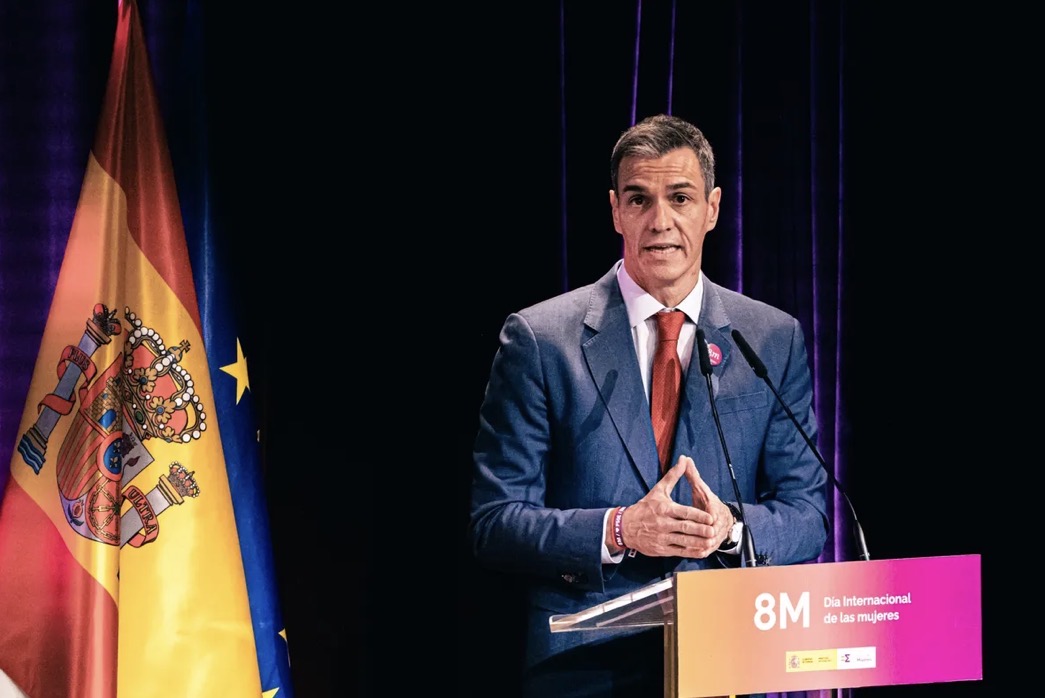
Residents of Castile and León, a region in northern Spain, head to the polls Sunday in the country’s first election since the start of the war in Iran. Prime Minister Pedro Sánchez called the war “illegal” and placed blame on President Donald Trump, who threatened to cut off all trade with Spain.
The region has been governed by the center-right People’s Party, or PP, since 1987 and it’s expected to hold onto power this weekend. Still, the vote will serve as a fresh test of Sánchez’s Socialist Party, or PSOE, which has suffered two defeats in less than three months in Extremadura and Aragón.
Read More: Why Spain’s Sanchez Is Standing Up to Trump on Iran: Explainer
Ballots will also show whether the far-right party Vox maintains its upward trend and reaches the 20% some polls predict, potentially becoming a kingmaker in the regional government. After the Extremadura and Aragón elections, Vox put coalition talks with PP on hold amid tough negotiations.
A poor showing by Sánchez’s Socialists could be a warning sign ahead of a June election in Andalusia, Spain’s most populous region, and the general election next year.
Who Leads the Polls?
Surveys point to a clear PP victory under regional President Alfonso Fernández Mañueco, who took office in 2019. His party is projected to win more than 30 of 82 seats in the regional parliament.
No poll gives PP an outright majority, making Vox — expected to improve on its previous 13 seats — essential for governing. PSOE won 28 seats last time and could fall below that level, while other left-wing parties are also losing support.
Will the Iran War Matter?
Most Spaniards oppose the conflict in Iran, and Sánchez has gained domestic and international visibility as one of Europe’s most vocal critics of the US and Israeli invasion.
The issue has featured in campaign rallies across parties. Sánchez is seeking to tap into sentiment similar to 2003, when mass protests targeted the PP government over its support for the US-led Iraq war. “There is only one consonant that changes,” Deputy Prime Minister María Jesús Montero said in Parliament on Thursday.
Experts disagree on how much the issue will influence voters. PP and Vox have not explicitly rejected US intervention, but neither have they endorsed it, while in 2003 the right participated in the conflict. Foreign policy has only shaped Spanish elections at specific moments in the country’s history.
Read More: Trump’s Attacks on Spain Hand Struggling Sanchez Unlikely Boost
Key Campaign Issues
Castile and León is Spain’s largest region by area, bigger than Portugal. Its nine provinces are home to 2.3 million people out of Spain’s more than 49 million inhabitants.
Agriculture, depopulation, immigration and the quality of public services have dominated the campaign, along with the handling of devastating wildfires that swept the region last summer.
Competition between PP and Vox for conservative voters and the far right’s potential role in the next regional government have also featured prominently, as has opposition to the central government.
Why Vox Result Matters
In the last general election, Vox won 12.3% of the vote and has grown since. It left regional governments it shared with PP and has sharply criticized the party, accusing it of aligning too much with the left. Vox has since polled around 17% in the past two regional elections.
Four years ago, it won 17.6% in Castile and León, an unusually strong result, and could approach 20% this time.
If Vox continues to gain ground, it could raise the price of its support for PP not only in regions but also in the next general election, scheduled for next year, where polls show the right-wing bloc leading. That could pose challenges for PP given differences with Vox over the EU, free trade and Spain’s political decentralization. On the left, some believe a strong Vox showing could mobilize discouraged voters seeking to block a reactionary government.
What’s Next for Sánchez?
General elections are scheduled for July 2027 and Sánchez has said he will serve out the term. Early elections are not uncommon and depend largely on the prime minister’s decision.
The opposition has long demanded a vote, citing the government’s difficulty passing legislation in Spain’s most fragmented parliament in recent history.
- There are no comments on this media yet.