
Crypto Whale Data
@0x1d7a9641dcccfe07c722bede8b3c2221cc19d4ca
Senate, House reach agreement on housing bill banning CBDC through 2030
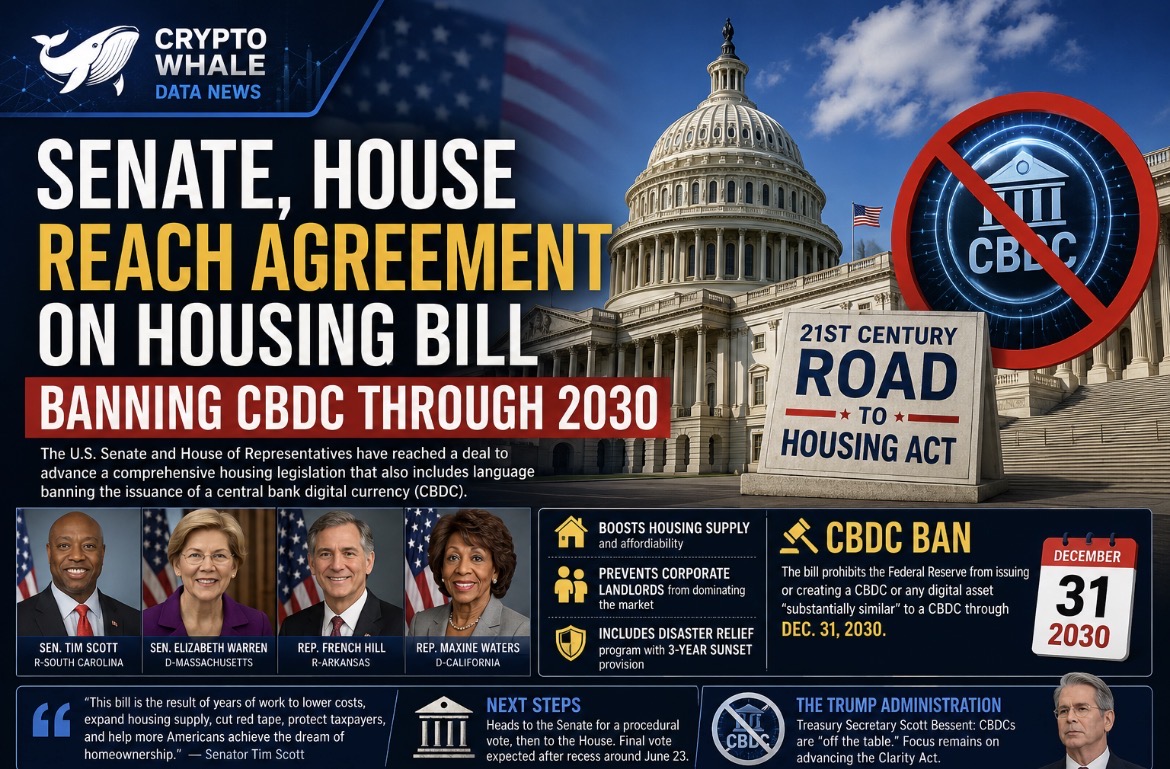
The U.S. Senate and House of Representatives have reached a deal to advance a comprehensive housing legislation that also includes language banning the issuance of a central bank digital currency (CBDC).
On Tuesday, Senator Tim Scott, Senator Elizabeth Warren, Rep. French Hill, and Rep. Maxine Waters released an updated version of the "21st Century ROAD to Housing Act," which reflects bipartisan, bicameral agreement on the bill.
The legislation contains a housing affordability package to boost housing supply in the U.S. and make it more affordable by preventing corporate landlords from dominating the market. New changes to the bill include a three-year sunset provision for a disaster relief program, which was a compromise to address concerns from the House.
"This bill is the result of years of work to lower costs, expand housing supply, cut red tape, protect taxpayers, and help more Americans achieve the dream of homeownership," Scott said in a joint statement. "It is time to move forward, get this bill across the finish line, and deliver real relief for the American people.”
CBDC ban
The 21st Century ROAD to Housing Act includes language banning the Federal Reserve from issuing or creating a CBDC or any digital asset "substantially similar" to a CBDC, effective until Dec. 31, 2030.
While attaching an anti-CBDC provision to a housing bill is unusual, it highlights a common legislative strategy of hitching unrelated policies to must-pass legislation. House Republicans pushed for the inclusion of the anti-CBDC provision, as previously reported by journalist Eleanor Terrett.
The current Trump administration also has a solid stance against CBDCs. Last month, U.S. Treasury Secretary Scott Bessent reiterated that CBDCs are clearly "off the table," and that the administration will focus on getting the digital asset-focused Clarity Act across the finish line.
The updated legislation will now head for its first procedural vote at the Senate, Politico reported Tuesday, citing Senate Majority Leader John Thune. The bill would then move to the House for another vote, reportedly expected to happen immediately after lawmakers return from recess around June 23, potentially clearing the way for the president's final sign-off.