
Crypto Whale Data
@0x1d7a9641dcccfe07c722bede8b3c2221cc19d4ca
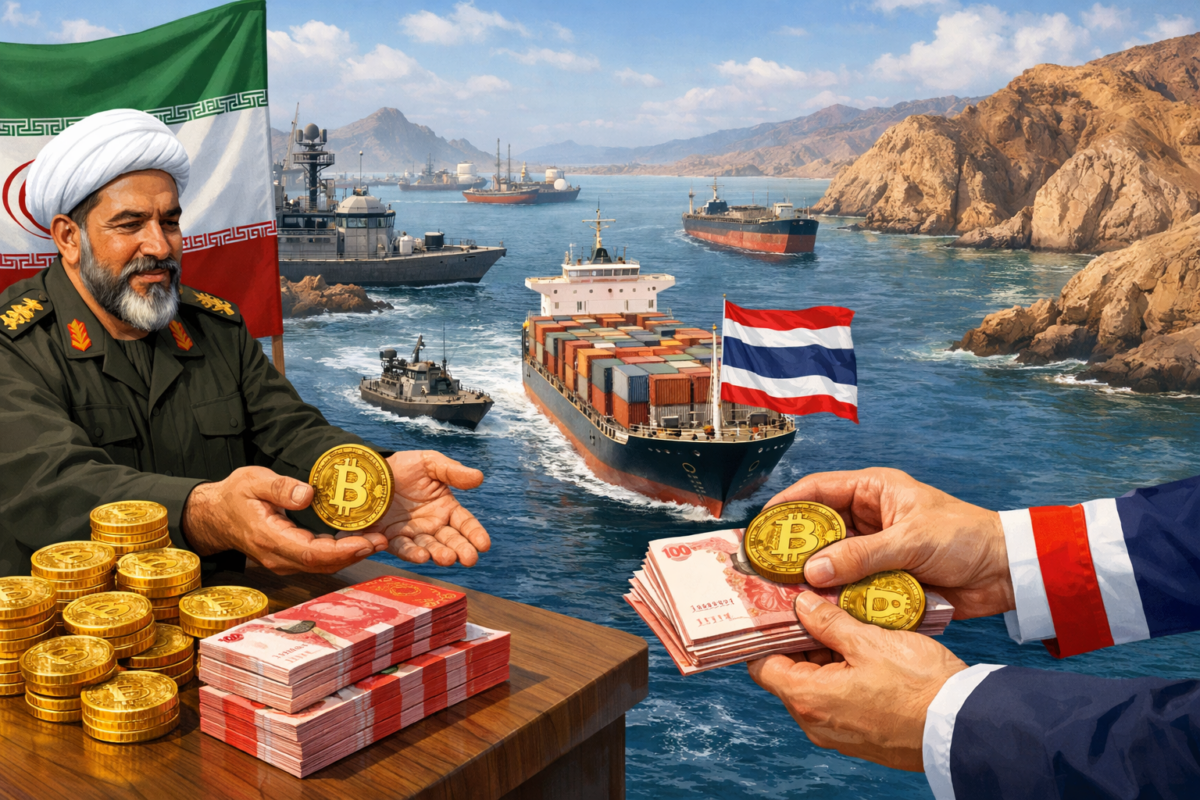
Iran has begun extracting payments of up to $2mn per tanker for passage through the Strait of Hormuz, as the informal permits-for-passage system allowing only tankers from “friendly countries” through develops quickly, according to The Financial Times citing shipping data.
“Iran is charging $2mn per tanker to pass through the Strait of Hormuz. The Financial Times reported the payment. The IRGC confirms it by radio. And the world’s most important chokepoint has been converted from a military blockade into a toll road,” according to the report.
American military planners were not expecting Iran to be able to keep the Strait open for the transits of selected oil tankers when preparing for this war. However, Tehran has introduced an informal system which allows tankers from certain countries to pass through the states. According to estimates around 90 tankers have traversed the chokepoint since the war broke out on February 28, Iran has continued to export its oil unabated and is earning a reported $150mn a day from allowing tankers from China, India, Bangladesh and others to sail through the narrow waterway.
Since the business began about a week ago, a bureaucracy is now being built up that effectively transfers what once was an open international waterway governed by the maritime right of innocent passage into a toll road that is entirely controlled by Tehran.
US President Donald Trump demanded the passage be opened by the US Navy, but the Navy has declared the passage “too dangerous to traverse.” Trump called on his Nato allies to send warships, but they have all refused. During an EU summit on March 19, the European powers said that they would not send any naval support until after the war was over.
The International Maritime Organization (IMO) has also suggested creating a “safe corridor” in order to allow ships into the Persian Gulf to supply essentials, similar to the Black Sea Grain Initiative introduced in the Ukraine conflict in 2022 to allow Ukrainian grain exports to reach international markets. The gulf states are almost entirely dependent on the import of food and other basics, as there is little domestic agricultural production in the region. The 100-odd tankers trapped in the Gulf also need to be resupplied.
The permits-for-passage system described relies on direct coordination with Iran’s Islamic Revolutionary Guard Corps. There is no central control as the Strait is currently controlled by one of the IRGC’s 31 autonomous cells acting under standing orders issued ahead of the war as part of its Decentralized Mosaic Defence doctrine (DMD).
“A tanker operator contacts intermediaries. The intermediaries negotiate with the IRGC. A fee is agreed, reportedly up to $2mn per voyage. Payment is made in cash, cryptocurrency, or barter. The vessel receives clearance. The IRGC hails the tanker on VHF radio, verifies its Automatic Identification System (AIS) transponder data, and grants passage,” the report said.
“Roughly 89 to 90 vessels, including 16 oil tankers, have successfully made the journey between March 1 and March 15 under some form of IRGC clearance,” according to Lloyd’s List Intelligence. Not all ships were required to pay. Iranian-linked ship passes for free and other ships given permission via government-to-government negotiations, such as ships belonging to India, have also been given permits gratis, according to reports. On March 18 one ship that tried to traverse the strait without permission and with its AIS off was struck by an Iranian missile and turned back, according to reports.
The additional costs are compounding already elevated shipping expenses. “The $2mn sits on top of war-risk insurance that has surged to 3 to 5% of hull value where coverage exists at all,” according to Shanaka Anslem Perera, an independent analyst. Pre-war, the cost of insurance was a fraction of a percentage point of a tanker’s hull value. For a Very Large Crude Carrier (VLCC), the workhorse of the oil business, valued at $120mn, that implies premiums of $3.6mn to $6mn for a single voyage, alongside charter rates that have risen to as much as $800,000 per day.
“The total cost of moving a single cargo of crude through Hormuz now exceeds what it cost to move an entire fleet through the strait six months ago,” according to Perera.
These costs are feeding directly into global prices. “The $2mn is not a bribe. It is a tax levied by the IRGC on global commerce, collected at the narrowest point of the world’s most concentrated energy transit route, and passed through to 4bn people downstream,” Perera said. “The IRGC did not just close the strait. It reopened it selectively, on its terms, at its price.”
- There are no comments on this media yet.