
Crypto Whale Data
@0x1d7a9641dcccfe07c722bede8b3c2221cc19d4ca
Vitalik Buterin sketches near-term vision for Ethereum's role in an AI-driven future
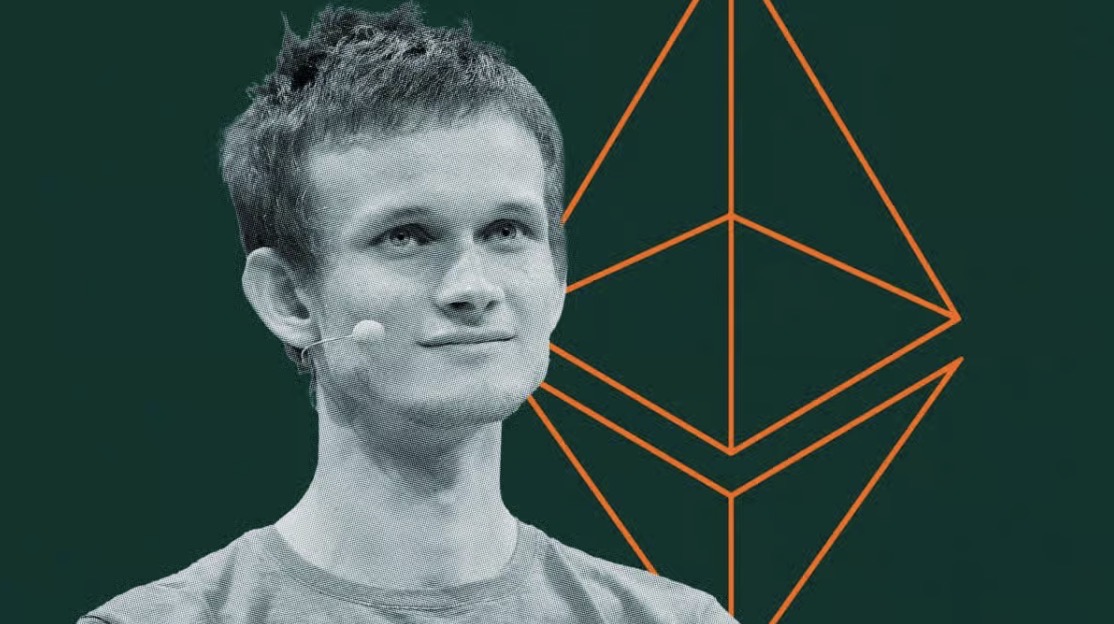

Ethereum co-founder Vitalik Buterin has outlined an updated framework for how blockchain technology can intersect with artificial intelligence, arguing that Ethereum’s role lies less in pursuing artificial general intelligence and more in shaping how AI systems interact, coordinate, and govern in the real world.
In a post shared to X on Monday, Buterin revisited and revised ideas he first outlined two years ago on the overlap between crypto and AI.
According to him, the two fields are often discussed from “completely separate philosophical perspectives.” He cautioned against framing progress as a race toward AGI, describing that mindset as an undifferentiated form of acceleration rather than a deliberate choice about direction.
“To me, Ethereum, and my own view of how our civilization should do AGI, are precisely about choosing a positive direction rather than embracing undifferentiated acceleration of the arrow,” Buterin wrote.
Rather than focusing on building autonomous superintelligence, Buterin’s updated view centers on practical, near-term applications where Ethereum could serve as part of a broader stack enabling privacy, decentralization, and human agency in an AI-saturated world.
Tooling and mechanics
One pillar of that vision involves tooling that allows people to interact with AI systems in more trustless and private ways. Buterin pointed to local large language models, cryptographic payment mechanisms for AI services, and client-side verification techniques that reduce reliance on centralized intermediaries when accessing AI capabilities.
Another focus is Ethereum’s potential role as an economic coordination layer for AI-related activity.
In that context, Buterin described onchain mechanisms that could support AI agents transacting with one another, posting security deposits, or building reputational histories. This could enable more decentralized AI architectures rather than systems run entirely within a single organization, Buterin said.
Buterin also revisited a long-standing cypherpunk ideal: minimizing trust by maximizing verification. He argued that LLMs could make that vision more practical by handling tasks that humans cannot realistically perform at scale, such as independently verifying smart contracts, transaction proposals, or protocol trust assumptions.
Governance
In the governance and markets domain, Buterin suggested that AI could help unlock ideas that have struggled to function in practice due to human attention limits. Prediction markets, decentralized governance systems, and complex voting mechanisms could become more viable, he said, if AI tools are used to scale human judgment rather than replace it.
He stated that the combined vision is aligned with what he has previously described as “defensive acceleration,” or d/acc — using technology to strengthen decentralized cooperation and societal resilience while avoiding the concentration of power.
The post builds on Buterin’s earlier analysis of four broad crypto-AI overlap areas — AI as an actor, interface, rule-set, or objective — first published in January 2024. It also aligns with his broader recent calls for rethinking DAO design beyond token-based voting models, including the use of zero-knowledge proofs and AI to reduce governance capture and decision fatigue.
Buterin accompanied the post with a simple two-by-two chart mapping Ethereum’s AI-related ambitions along axes of infrastructure versus impact and survival versus flourishing, underscoring that the ideas span both defensive and transformative use cases.
“There’s a lot to build,” he wrote.
Vitalik Buterin maps Ethereum’s role at the intersection of AI | Image: Vitalik Buterin/X